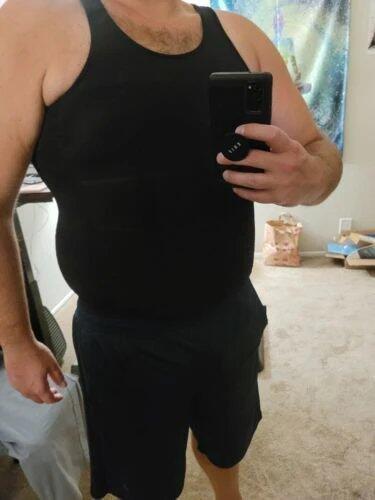
How Should an Undershirt Fit? Tight vs Loose, Size & Length
You put on an undershirt in your usual size. It looks fine while you stand still, then the hem pulls out of your waistband when you reach up. You size down and the bunching improves, but the armholes start to feel tight. You size up and the length works, but the torso turns loose. That is the clue: undershirt fit is not one “tight or loose” decision.
Quick answer: An undershirt should sit close enough to stay smooth under your outer shirt, but it should not restrict normal breathing or movement. Check five zones separately: torso, armholes, sleeves, neckline and hem. Then move in it. If only one zone fails, changing the whole size can create a second problem. Fix a length problem with more length, a local fit problem with a better cut, and a true size problem only when several areas point in the same direction.
How Should an Undershirt Fit? Check Five Fit Zones
The useful standard is not “as tight as possible.” A good undershirt should behave like a quiet first layer: close enough that it does not create extra folds, stable enough to stay where you put it, and comfortable enough that normal movement does not turn the garment into the problem.
Instead of judging the whole shirt at once, check the areas that can fail independently.

| Fit zone | What you want | Common failure |
|---|---|---|
| Chest and torso | Fabric follows the body without loose folds or hard restriction. | Bagging at the waist, deep wrinkles, strong pulling or a squeezed feeling. |
| Armholes | Close enough to lie cleanly, with room for normal arm movement. | Digging into the armpit, pulling across the upper torso or a large loose opening. |
| Sleeves | They lie flat and stay out of the way of the outer shirt. | Fabric bunches high in the armpit or extends beyond a short outer sleeve. |
| Neckline | It lies flat without curling or bunching. | The collar puckers, presses uncomfortably or appears where you wanted it hidden. |
| Hem | Enough length for the way you wear it, especially if it needs to stay tucked. | The hem creeps upward, rolls, untucks or forces constant readjustment. |
The key distinction: a garment can be the correct size in one zone and the wrong proportion in another. That is why “buy smaller” and “buy bigger” are often incomplete fixes.
Should an Undershirt Be Tight or Loose? Check the Torso First
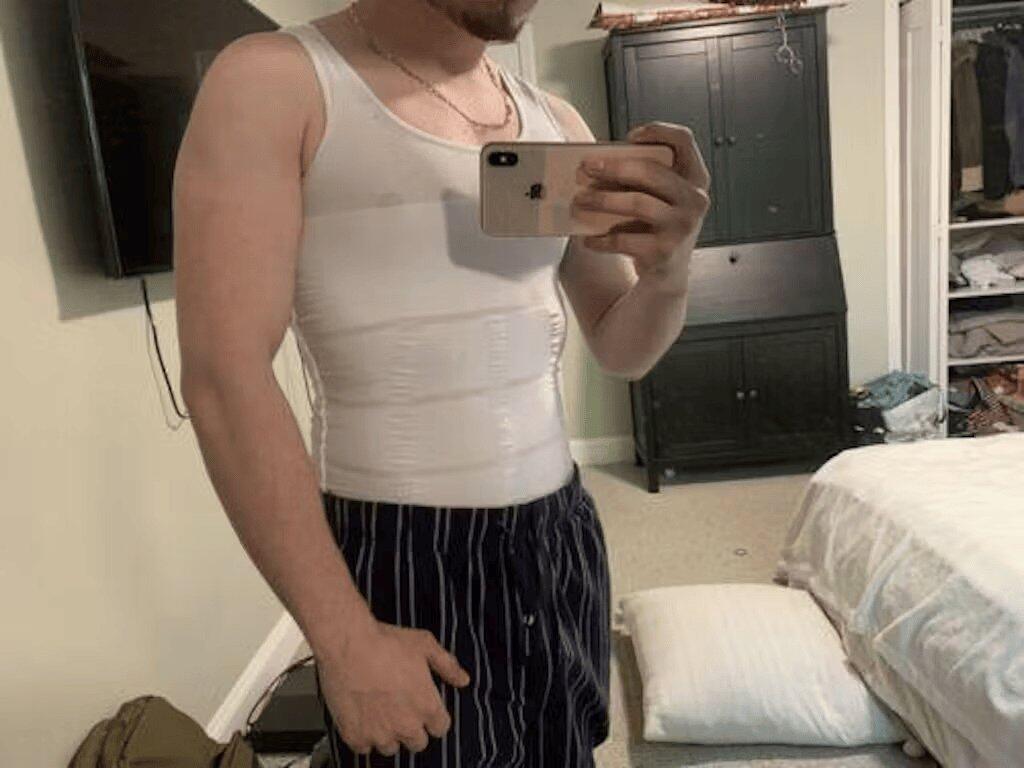
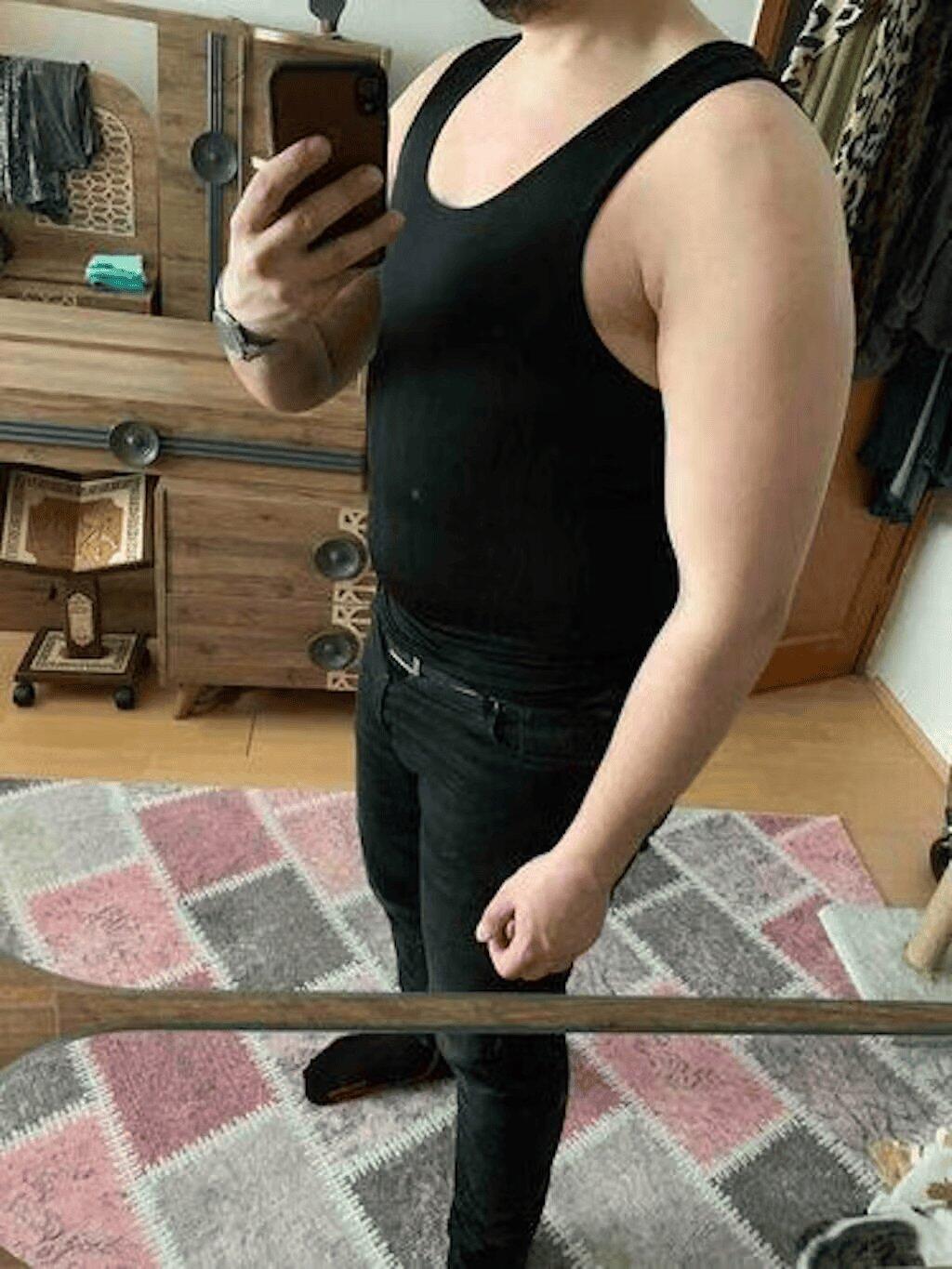
An undershirt normally works better as a closer layer than a regular outer T-shirt, but close-fitting and restrictive are not the same thing. Look at what the fabric does instead of trying to assign a universal level of tightness.
Too loose
If the torso has enough spare fabric to form repeated folds before you even put on the next layer, that fabric still has to go somewhere. It can gather at the waist, shift when you sit, or create extra texture under a fitted shirt.
Close-fitting
The fabric can follow the chest and midsection without hanging away from the body. You should still be able to breathe normally, reach forward and raise your arms without feeling as if the undershirt is fighting the movement.
Too tight
Tightness becomes a fit problem when normal breathing or movement feels restricted, when the armholes dig in, or when the shirt keeps pulling itself out of position as you move. A visually smooth torso is not a win if the garment only stays smooth because it is too small.
This is why the phrase “snug but not tight” is only a starting point. The better test is whether the undershirt stays smooth and lets you move normally.

How Should Undershirt Armholes and Sleeves Fit?
Armholes are easy to miss because men often judge an undershirt from the front. But a local armhole problem can make an otherwise correct torso feel like the wrong size.
If the opening presses into the armpit or creates obvious pulling when you reach forward, do not assume the entire garment needs to be larger. Compare another cut in the same nominal size if you can. A different armhole shape or sleeve attachment may solve the local problem without adding unnecessary width through the torso.
Sleeves need their own check too. Under a short-sleeve polo, T-shirt or button-up, the undershirt sleeve should not keep peeking out simply because it is longer than the outer sleeve. If the torso fits but the sleeve is the only thing failing, changing the whole size is a blunt solution to a local problem.
Useful test: cross your arms, reach forward and raise both arms. If the discomfort appears mainly at the armhole or sleeve while the torso still feels right, test a different cut before changing size.

How Long Should an Undershirt Be to Stay Tucked?
There is no useful universal inch measurement for every man because torso length, trouser rise and garment pattern all change where the hem lands. The practical standard is simpler: if the undershirt is meant to stay tucked, it needs enough usable length to remain below the waistband through the movements you actually make.
Stand normally, tuck the undershirt, then raise both arms. Sit fully in a chair. Bend to pick something up. If the torso fit still feels right but the hem repeatedly escapes the waistband, you have learned something important: the problem may be length, not overall size.
That distinction matters because sizing up usually changes more than length. It can add width through the chest, waist, sleeves and armholes. If all you needed was a longer hem, a long or tall cut can be a more precise fix. The same length-versus-width problem shows up more broadly for tall, skinny men who need more garment length without extra width.
The reverse matters too. If a longer cut stays tucked but the body is loose, that does not mean you should accept the extra fabric. Look for a cut that combines the torso fit you need with the length you need.

What Size Undershirt Should I Wear?
Start with the manufacturer’s current size chart rather than assuming your dress-shirt or T-shirt label transfers perfectly. Then judge the garment on your body using the fit zones above.
There is no universal rule that men should always size down for undershirts. Current brand guidance already varies. Fruit of the Loom’s men’s undershirt size guide maps size to chest measurement and tells shoppers who fall between listed ranges to choose the next larger size. Hanes describes its slim, tapered Perfect Flex undershirt as true to size. Those are brand-specific examples, but they show why “always size down” is not a reliable general rule.
Use the label as a starting point, not the verdict. The right size should give the garment enough room to function without leaving excess fabric everywhere.
Signs the whole size may be too large
The torso is loose, armholes are oversized, sleeves hang or flare, and the garment shifts around even before you add the outer shirt. When several zones fail in the same direction, testing a smaller size is reasonable.
Signs the whole size may be too small
The chest or torso feels compressed when that is not the garment’s intended job, the armholes dig in, normal movement pulls strongly across multiple areas, and the hem rises because the shirt is being dragged upward by tension. When several zones point small, test the next size rather than trying to “break it in” through discomfort.
Wrong Size or Wrong Cut? Use This Undershirt Fit Diagnostic
The most useful question is not “What size am I?” It is “What changed when I changed size?”
| What happens | What it suggests | What to test next |
|---|---|---|
| Torso fits, but the hem keeps untucking. | Length may be the main problem. | Try a longer or tall cut before sizing up everywhere. |
| Size up fixes length, but the torso becomes baggy. | The larger size solved one measurement and damaged another. | Look for more length with a closer torso cut. |
| Torso looks smooth, but the armholes dig in. | The local opening or upper pattern may be wrong for you. | Compare another cut in the same size before going larger. |
| Only the sleeves show under your outer shirt. | Sleeve length is the local mismatch. | Try a shorter-sleeve undershirt or a sleeveless format. |
| Everything looks fine standing, then the shirt rides up when you move. | Static fit passed; movement fit failed. | Check usable length, hem stability and where tension starts. |
| The undershirt lies flat, but the outer shirt still feels bulky. | The first layer may not be the only problem. | Recheck the outer shirt’s cut, fabric and neckline interaction. |
This is the difference between changing size and changing the garment block. Size changes the whole package. A better cut changes the relationship between measurements.

The Undershirt Movement Test: Reach, Sit, Bend, Recheck
A mirror check catches obvious looseness or tension. It does not show you what the undershirt will do through a normal day.
- Stand naturally. Let the fabric settle. Do not pull the hem down just before judging it.
- Reach forward. Check the chest, upper back, armholes and sleeves for new restriction.
- Raise both arms. See how much the hem travels and whether it returns when your arms come down.
- Sit fully. Check whether fabric piles at the waist or the hem pulls out of the waistband.
- Bend and straighten. Recheck the tuck, neckline and any twisting through the torso.
A small amount of fabric movement is normal. The failure is repeated displacement that forces you to keep fixing the shirt, or restriction that appears during ordinary movement.

Why Undershirts Bunch, Ride Up or Show Under Clothes
These symptoms look similar from the outside, but they do not all have the same cause.
If it bunches at the waist
First check whether the torso is simply too loose. Then check whether the hem is too short to remain anchored below the waistband. Excess width and insufficient length can both create a pile of fabric in the same area.
If it rides up
Watch where the movement begins. If the hem rises when you lift your arms but the torso remains comfortable, you may need more usable length. If the whole garment is pulled upward by tightness across the chest, shoulders or armholes, more length alone may not solve it.
If the neckline or sleeves show
That may be a mismatch between two garments rather than a bad undershirt size. A crew neckline can fit perfectly and still be visible under an open collar. A short undershirt sleeve can fit correctly and still extend beyond an even shorter outer sleeve.
Diagnose the symptom before reaching for a different size. It is faster than cycling through S, M, L and XL while changing five measurements at once.
When the Undershirt Fits but the Outer Shirt Is the Problem
An undershirt can pass every fit check and still interact badly with the layer above it. If the main issue is whether a neckline stays hidden under an open collar, whether you should wear a base layer at all, or how it behaves specifically under tailoring, use the separate guide to wearing an undershirt under a dress shirt.
If the decision is really about choosing a sleeveless A-shirt, tank, muscle tank or another cut, see the guide to types of tank tops for men. Those are garment-format decisions, not reasons to make a correctly fitting undershirt smaller or larger.
When a Compression Undershirt Is a Different Job
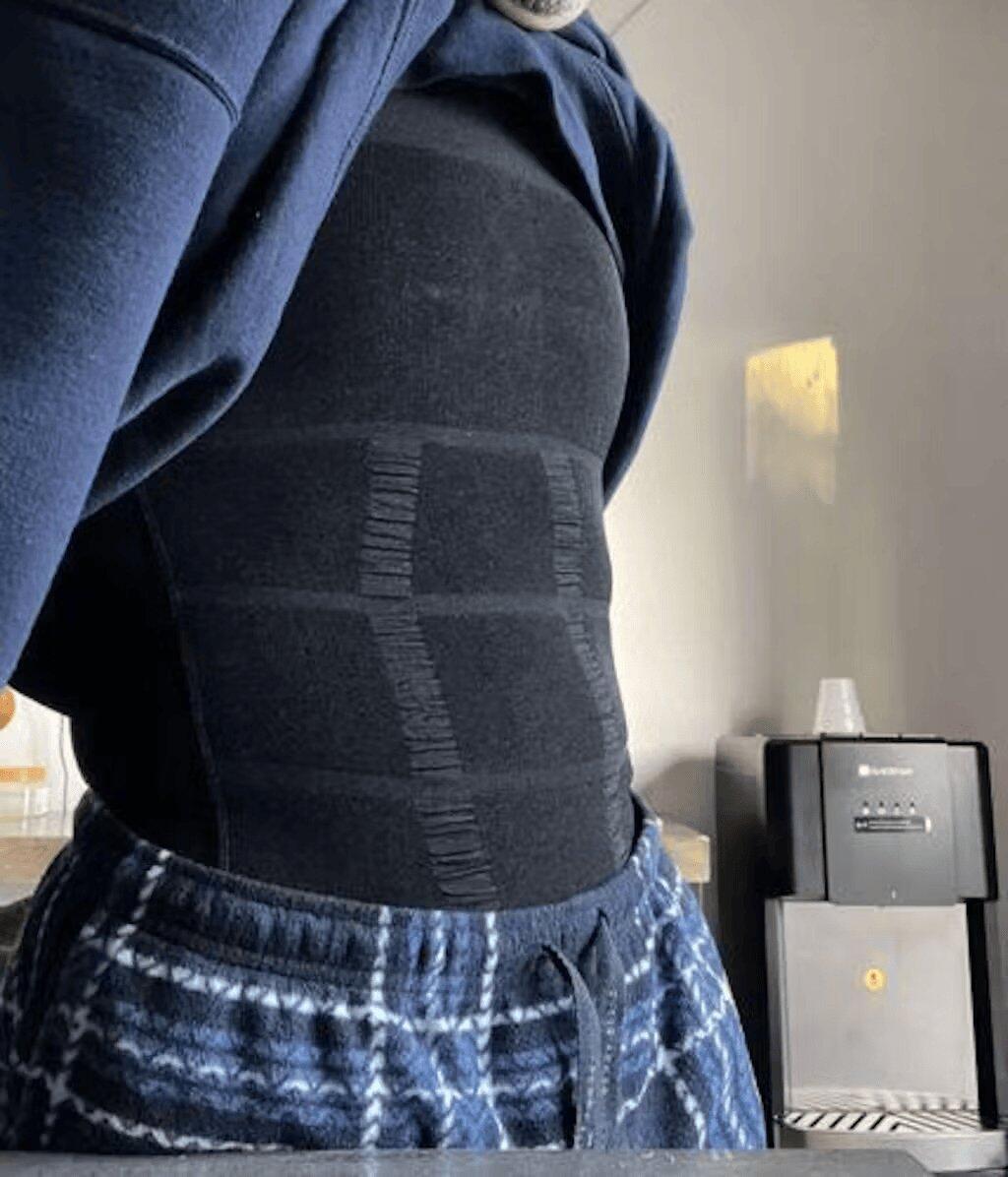
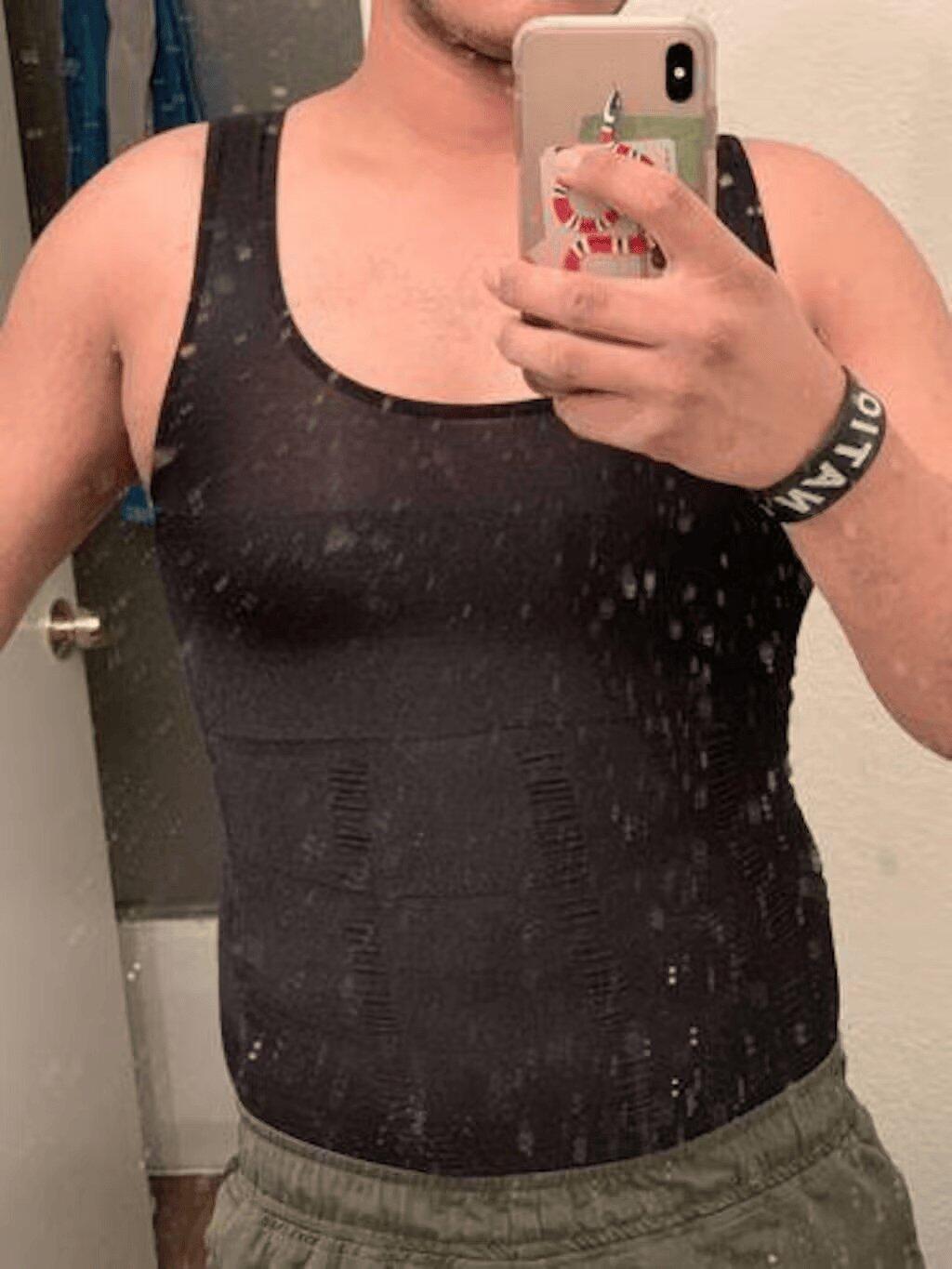
Do not turn a regular undershirt into do-it-yourself shapewear by buying it smaller and smaller. A normal base layer is trying to sit cleanly under clothing. A compression garment is intentionally built to apply firmer support and needs its own sizing rules.
If your regular undershirt bunches, rides up or feels restrictive, fix the fit first. If your actual goal is a firmer shaping layer for the chest and midsection, start with our men’s slimming undershirt guide. If that category matches what you want, the VEROSHAPE Men’s Compression Tank is the current product option.
60-Second Undershirt Fit Check
- Torso: close enough to avoid loose folds, without unwanted compression.
- Armholes: clean and comfortable when you reach forward.
- Sleeves: flat, not bunching, and not peeking beyond the outer sleeve.
- Neckline: lies flat and suits the outer shirt you plan to wear.
- Length: stays where you need it through arms-up, sitting and bending.
- Movement: no normal action creates strong restriction or constant readjustment.
- Diagnosis: if only one zone fails, change that variable before changing the whole size.

Best final check: put on the outer shirt you actually plan to wear. The undershirt has passed when it feels stable, stays unobtrusive and does not create a new fit problem underneath.
FAQ: Undershirt Fit, Size and Length
Should undershirts be tight or loose?
An undershirt should usually fit closer than an outer T-shirt, but it should not restrict normal breathing or movement. If it bunches, it may be too loose or too short; if it digs into several areas or restricts movement, it may be too small.
Should I size down for an undershirt?
Not automatically. Start with the brand’s size chart and judge the actual garment. If your current size is loose in several zones, a smaller size may help. If only the hem is too short or the armhole is wrong, changing the whole size can create a new problem.
How long should an undershirt be?
If you wear it tucked, it should have enough usable length to stay below the waistband when you reach, sit and bend. A fixed inch rule is less useful than testing the garment with your torso length and trouser rise.
Why does my undershirt keep riding up?
Common fit causes include insufficient length, excess looseness at the waist, or tension higher on the torso that drags the garment upward. Watch where the movement starts before deciding whether you need a new size or a different cut.
Can an undershirt fit correctly and still show at the collar?
Yes. A neckline can fit correctly but be too high for the way you wear your outer shirt. That is a neckline-and-layering mismatch, not necessarily an overall sizing problem.