How Should a Polo Shirt Fit Bigger Men? Complete Style Guide 2026
Your polo looks fine on the hanger. Then you put it on, and the chest pulls, the belly catches the fabric, or sizing up makes the whole thing look boxy.
That is the polo problem for a lot of bigger men: the shirt may fit one part of the body and fail everywhere else.
The goal is not to hide in a huge polo. The goal is to make the shoulder, chest, placket, belly, sleeve, length, and first layer work together so the polo looks intentional instead of strained.
Quick answer: A polo should sit cleanly at the shoulders, avoid pulling across the chest or placket, skim the belly without clinging, leave the sleeves close but not tight, and land long enough to cover the waistband during normal movement without turning into a tunic.
Why Polo Fit Breaks on Bigger Men
Most polo fit advice assumes the body scales evenly from the shoulders to the waist. Bigger men often have a more specific problem: the shoulders may be close, while the chest, stomach, or love handles need different room.
That is why sizing up can feel like the obvious fix and still create a worse polo. The extra size may reduce chest pull, but it can also drop the shoulder seam, widen the sleeve opening, lengthen the hem, and make the whole torso look boxier.
The better move is to judge fit by pressure points instead of the label. If the polo is clean at the shoulder but stretched at the placket, the issue is not solved by pretending the shoulder fit does not matter. If the stomach area is calm but the sleeves flare, the shirt may be giving you room in the wrong places.
The bigger-man polo trap: A polo can be too tight and too big at the same time. It can pull across the chest while still looking loose at the waist, or fit the belly while making the shoulders look sloppy.
The Quick Polo Fit Check for Big Guys
Before thinking about brands, check the areas that decide whether a polo looks clean on your body.
| Fit area | Good sign | Problem sign | What it usually means |
|---|---|---|---|
| Shoulders | Seam sits near the natural shoulder point | Seam drops down the arm | The polo may be too large or cut too boxy |
| Chest | Fabric sits flat without hard pulling | Placket bends, buttons strain, or fabric stretches | The chest is too tight or the fabric has too much cling |
| Belly | Fabric skims over the stomach | Fabric sticks, tents, or catches on the waistband | The body cut, fabric, or length is wrong |
| Sleeves | Sleeves lightly frame the upper arm | Sleeves cut in or flare outward | The arm opening does not match your build |
| Length | Hem covers the waistband during normal movement | Hem rides up or hangs too low | The polo is too short, too long, or unstable when moving |
| Collar and placket | Collar sits flat and the open buttons look controlled | Collar collapses or the placket spreads open | The neckline, fabric, or chest tension is fighting the fit |
Do this check standing, sitting, and after raising your arms. A polo that only works while you stand still is not really a good fit.

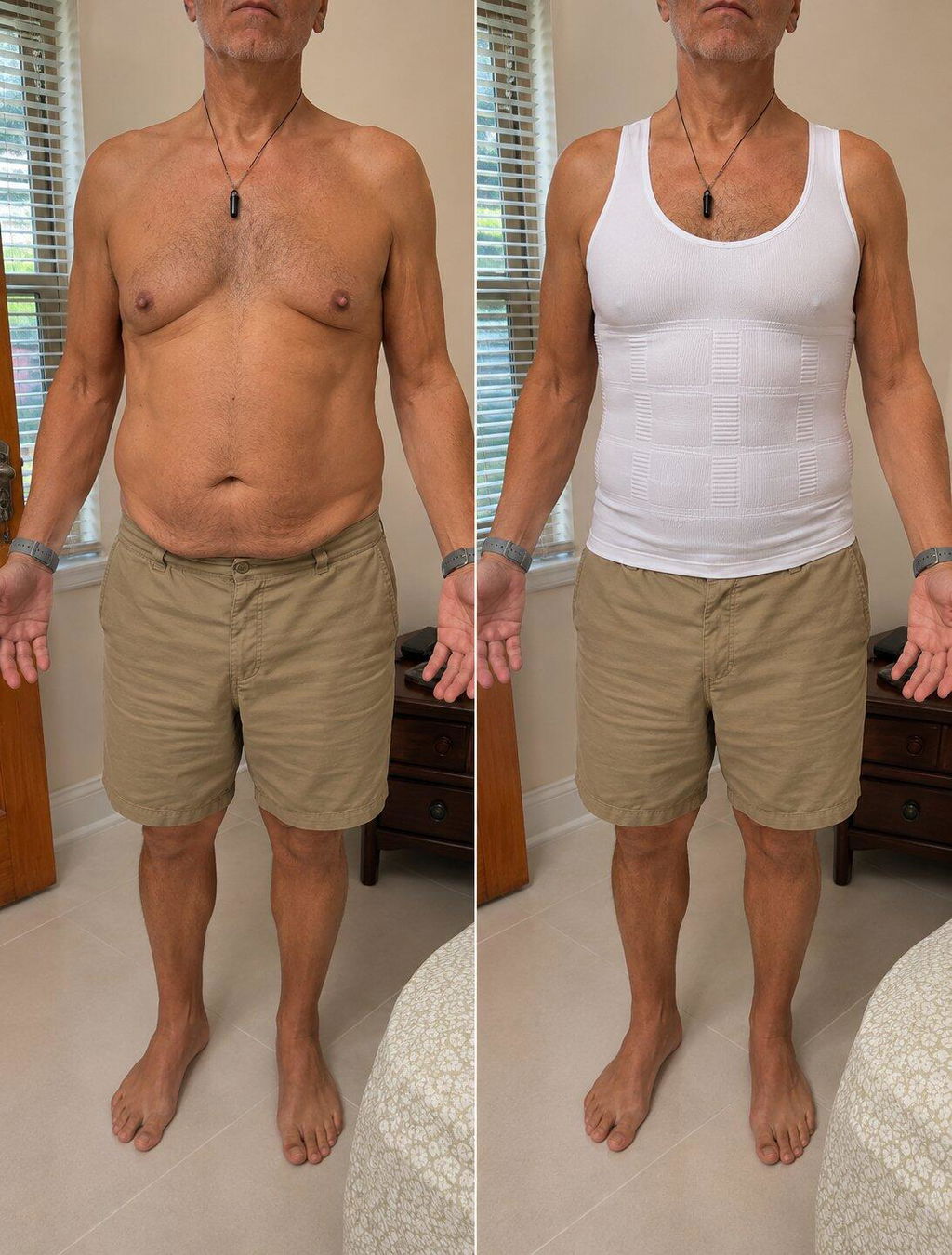
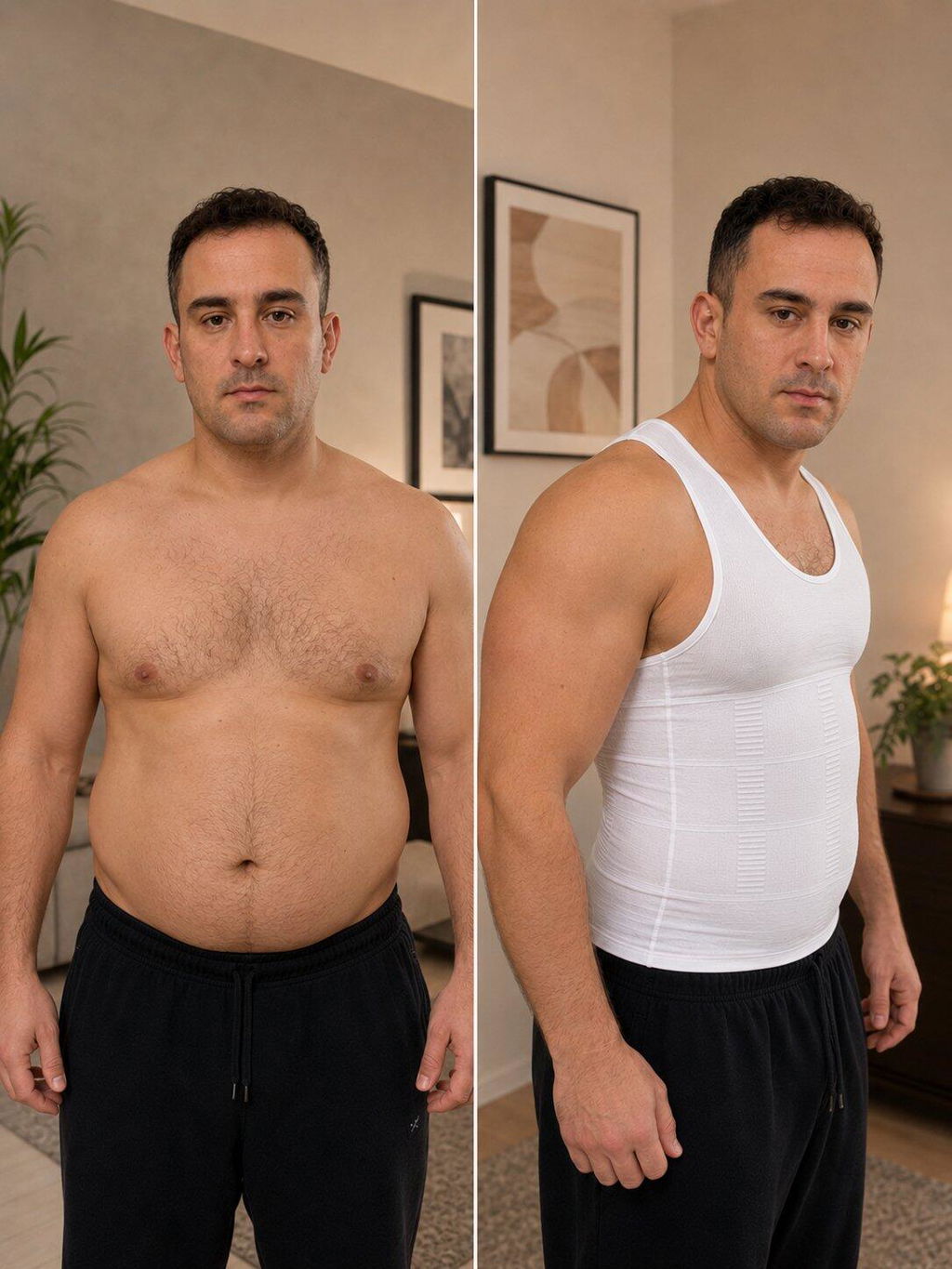
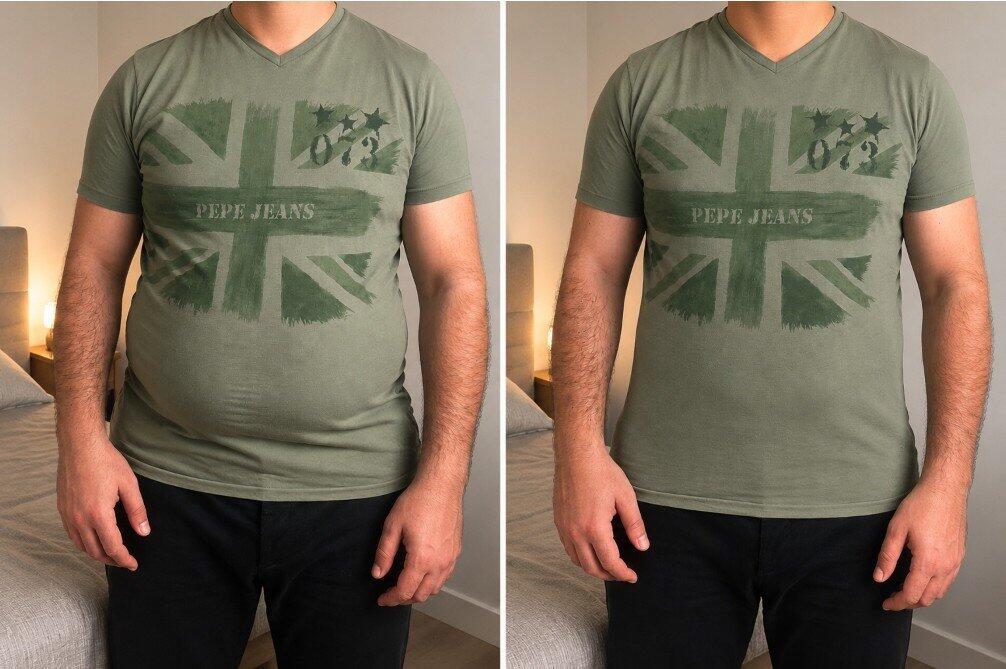
Same polo, different first layer: If the polo is close but still shows chest, belly, or side outline, the next test is not automatically another size. It is whether the layer underneath helps the outer fabric sit cleaner.

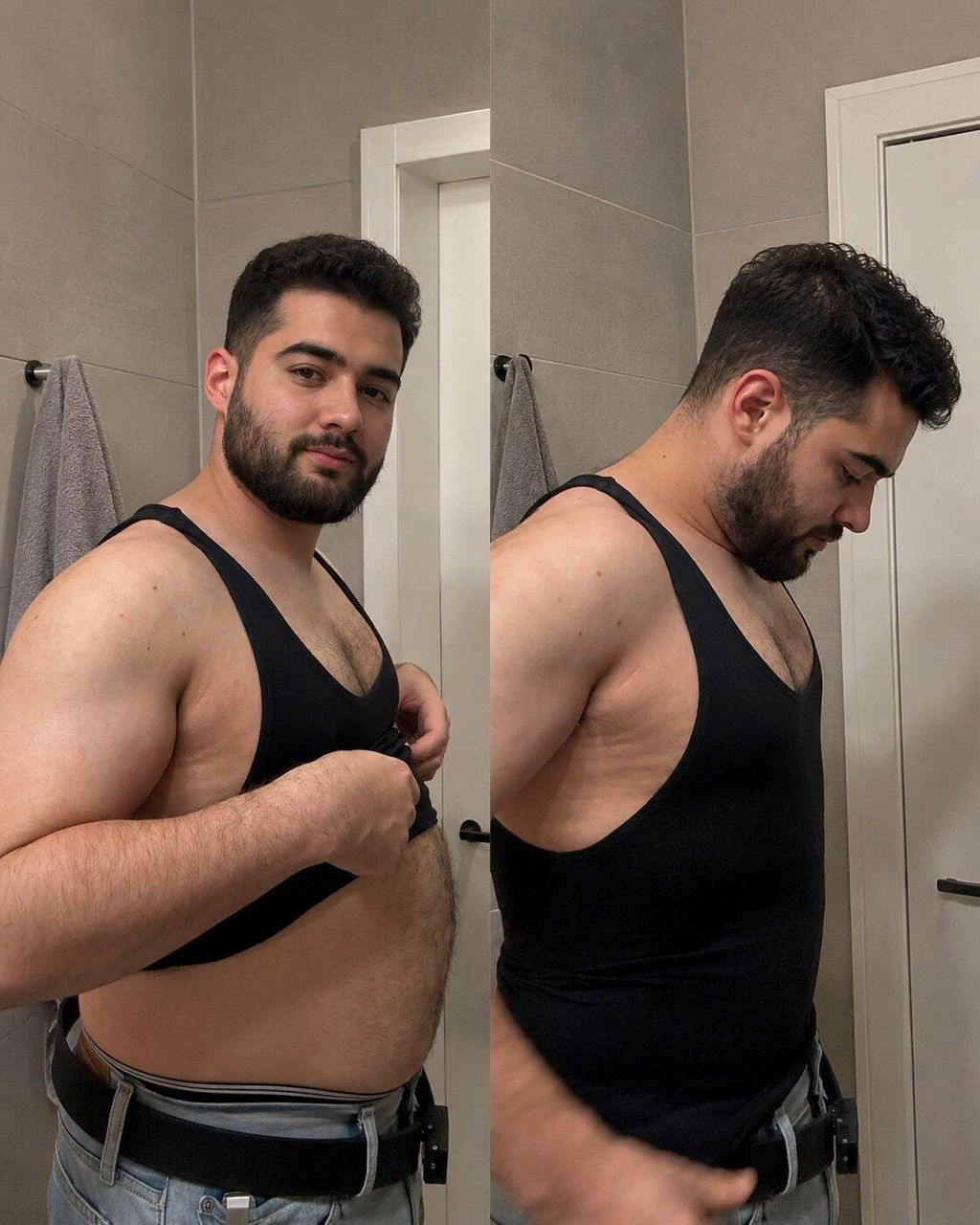
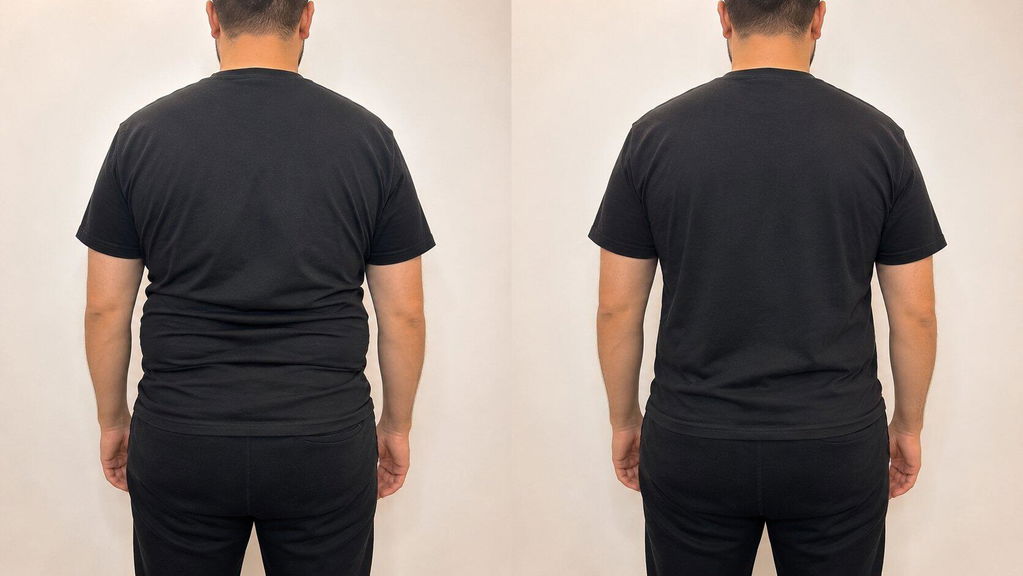
Same polo. Same model. Different first layer. If the polo is close but still pulls at the chest, clings at the belly, or shows love handles, the next thing to check is not automatically another polo size. It is the layer underneath.
This is still a clothing-fit decision: neckline, length, fabric tension, and how the outer polo drapes over the base layer. For the full clothing-mechanics breakdown, compare a compression tank worn under a polo before changing polo size again.
Chest, Moobs, and Placket Pulling
If your polo pulls across the chest, the first sign is usually the placket. The fabric starts to bend, the buttons look strained, or the area between the collar and mid-chest refuses to sit flat.
This is where men often describe the problem as chest fat, moobs, man boobs, or simply a polo that is too tight up top. The wording changes, but the fit issue is the same: the polo is drawing attention to tension instead of letting the fabric fall cleanly.
The wrong fix is buying a polo that is huge everywhere. A shirt that only solves the chest by making the waist and sleeves sloppy is not a better fit; it is a tradeoff.
How much room should you have in the chest?
You want enough room that the placket stays vertical and the fabric does not pull into hard horizontal tension. You do not want so much room that the upper body collapses into a boxy shape.
If the polo is close but chest visibility is still the main issue, fabric texture and the first layer matter. A textured polo can reduce the look of sharp outlines compared with a thin, smooth, clingy polo.
If your specific issue is nipples showing through a polo, route that problem to the visibility test in our guide on nipples showing through a shirt. That sub-intent already has its own article, so this guide keeps the focus on polo fit for bigger men.
Belly, Love Handles, and Side Drape
A polo can pass the shoulder test and still fail around the stomach. The common signs are fabric clinging at the front, catching above the waistband, or curving around the love handles in the side view.
The belly test is not about making the stomach disappear. It is about whether the polo falls over the midsection with enough structure to keep the outfit calm.
Stand sideways in the mirror and look at the line from the chest to the hem. If the polo grabs the stomach and then kicks outward, the cut or fabric is fighting you. If it hangs straight but looks oversized everywhere else, the shirt may be too large rather than better fitted.
| Belly fit issue | What you see | Better move |
|---|---|---|
| Cling | Fabric sticks to the stomach or side seams | Try a more textured or slightly heavier polo |
| Tenting | Polo falls from the belly and floats away from the body | Check length, hem shape, and whether the size is too large |
| Waistband catch | Hem gets stuck above the belt or belly | Use a better length and test movement before buying |
| Love handle outline | Side seam curves around the waistline | Avoid thin stretch fabric and check the first layer underneath |
| Boxy shape | Shoulders and sleeves look wider than your frame | Keep shoulder fit clean while allowing controlled stomach room |
For a deeper stomach-focused guide, read our article on how shirt drape changes around the stomach. This polo guide stays focused on the way collar, placket, sleeve, fabric, and hem work together.

Piqué vs Fine Knit vs Performance Polos
Fabric can make the same size look completely different. A structured piqué polo, a fine knit polo, and a slick performance polo may all say “XL,” but they will not sit on the body the same way.
For bigger men, texture is usually your friend. A textured or slightly heavier fabric can soften chest and belly outlines because it does not collapse against every contour as quickly as a very thin smooth knit.
Fine knits can look sharp when the fit is perfect, but they are less forgiving when the chest, stomach, or love handles are the pressure points. Shiny stretch or dry-fit-style polos can also cling in areas where you want the fabric to skim.
| Polo fabric | Why it can work | What to watch |
|---|---|---|
| Piqué cotton | Texture and structure can help the shirt fall cleaner | Some versions feel thick or warm in summer |
| Jersey knit | Soft and comfortable | Can cling at the belly and chest if too thin |
| Fine knit | Can look polished | Often needs a better fit because it shows tension quickly |
| Performance / dry-fit | Useful for activity and stretch | Can stick to underboob, belly, or love handles when it is too slick |
| Heavier cotton blend | Can give more shape and less cling | Needs a clean cut so it does not become bulky |
If chest visibility is your main issue, textured polos can help, and our guide to textured shirts that reduce chest visibility explains that clothing problem in more detail.

Length, Tuck, Sitting, and Movement
Polo length matters more for bigger men because the shirt has to stay controlled over a moving midsection. A polo that looks correct while standing can ride up when you sit, reach, or raise your arms.
Untucked, the hem should cover the waistband and land cleanly without swallowing the legs. Tucked, the polo needs enough length to stay put without pulling the chest and belly downward.
The arms-raised test
Raise both arms as if reaching for a shelf. If the polo exposes the belly or gets stuck above the stomach when your arms come back down, the length or first layer is not working for daily movement.
The seated test
Sit down and check the placket, belly, and side seams. If the buttons strain only when seated, the shirt may look fine in a mirror but fail in real use.
Tucked or untucked?
For casual wear, most bigger men will find untucked polos easier if the hem is designed to land cleanly. For work or dressier settings, a tucked polo can work when the pants rise, waistband, and shirt length support it.
The point is not that one method is always better. The point is that the polo, pants, and base layer have to behave as a system.

Can You Wear an Undershirt or Compression Tank Under a Polo?
Yes, you can wear an undershirt or compression tank under a polo if the neckline stays hidden, the sleeves do not create lines, and the layer does not add bulky edges under the outer shirt.
This is where a sleeveless base layer can make more sense than a normal undershirt. Short-sleeve undershirts can show through the sleeve opening, while a tank avoids that sleeve-line problem.
If your polo fits correctly but still shows chest, belly, or side outline, the issue may be the first layer underneath rather than the polo itself. That is why the first layer needs to be checked as part of the fit system before buying another oversized polo.
Summer Heat, Sweat, Neckline, and Visibility
The biggest objection to wearing anything under a polo is simple: it might feel too hot, show at the collar, or make the outfit look less natural.
The answer is not to add a random undershirt and hope it disappears. The layer has to pass four tests: neckline, armhole, color, and heat.
| Underlayer test | What to check | Why it matters |
|---|---|---|
| Neckline | Open one or two polo buttons and check if the layer shows | A visible neckline makes the fix obvious |
| Armhole | Move your arms and check the sleeve opening | The base layer should not create sleeve lines under short sleeves |
| Color | Match black under dark polos and test white carefully under light polos | Contrast can show through thinner fabric |
| Heat | Walk, sit, and move before deciding | A layer that feels fine for two minutes may not work for a full summer day |
| Hem | Check whether the layer stays down after movement | A short layer can roll and add bulk at the waist |
VEROSHAPE Compression Tank is a sleeveless base layer available in black and white, with a neckline designed to sit low enough under a polo with up to two buttons open when sized correctly.
It is also designed with a longer lower section that can be tucked under the pants to help the base layer stay in place during normal movement.
A cleaner polo fit often starts with the layer underneath: low-profile neckline, no sleeve lines, controlled torso outline, and enough length to stay put.
Compare Low-Profile Undershirts for Polos
If your main problem is chest, belly, or love-handle outline under polos, start with a guide built around hidden layers rather than buying another oversized polo.

Polo Fit Mistakes Bigger Men Should Avoid
The wrong polo usually fails in one of two ways: it is too tight where the body needs room, or too loose everywhere else.
| Mistake | Why it fails | Better move |
|---|---|---|
| Buying only for chest room | The waist, sleeves, and shoulders may become sloppy | Find a cut that gives chest room without collapsing the frame |
| Wearing thin shiny polos | They can cling to the belly, moobs, or love handles | Try textured, matte, or slightly heavier fabric |
| Ignoring the placket | Pulling buttons make the chest tension obvious | Check the placket standing and seated |
| Letting the hem ride up | The polo exposes the waistband or belly during movement | Use the arms-raised test before buying |
| Using a visible undershirt | The collar or sleeves can distract from the polo | Use a sleeveless, low-profile layer when layering is needed |
| Going too oversized | Extra fabric adds width and can look borrowed | Keep shoulders clean and add controlled room through the torso |
Where VEROSHAPE Fits In
After you have checked the polo itself — shoulder, chest, placket, belly, sleeves, fabric, and length — the next question is whether the first layer is helping or hurting the way the polo drapes.
VEROSHAPE Compression Tank is a sleeveless compression tank top designed to be worn under shirts and polos. Its neckline is designed to sit low enough under a polo with up to two buttons open, and its longer lower section can be tucked under the pants to help the layer stay in place during normal movement.
The goal is not to make a polo pretend your body is different. The goal is to help the outer polo sit smoother across the chest, belly, and sides while you wear it.
Before choosing any compression layer, check fit first. A polo that is too tight will still pull. A polo that is too thin may still cling. The base layer helps most when the polo already fits close enough, but the outer fabric still needs a smoother surface underneath.

Related Reading
If you want the broader style context: Use the polo styling for a dad bod guide after this article. This page handles polo fit mechanics; that guide handles the wider outfit and confidence context.
About the Author
Mike Sterling is the founder of VEROSHAPE. VEROSHAPE focuses on men’s compression clothing and the clothing-mechanics problems that happen under normal shirts: chest outline, belly drape, side visibility, base-layer fit, and whether the outer garment sits cleanly.
Read more about Mike Sterling and the VEROSHAPE approach to men’s compression clothing.
FAQ — How Should a Polo Fit Big Guys?
Should a polo be tight or loose on a bigger man?
A polo should be neither tight nor oversized. It should sit cleanly at the shoulders, leave enough room through the chest and belly, and avoid extra fabric that makes the torso look boxier.
How should a polo fit if you have moobs?
The placket should stay flat and vertical, and the fabric should not pull hard across the chest. If the chest area still shows through, try a more textured polo or a hidden sleeveless base layer.
How should a polo fit around the belly?
The fabric should skim the stomach without clinging, tenting, or catching above the waistband. Check the side view and sit down before deciding whether the fit works.
Are polo shirts good for big guys?
Yes, polo shirts can work well for big guys when the shoulder line is clean, the placket does not pull, the fabric has enough structure, and the length stays controlled during movement.
What polo fabric is best for bigger men?
Textured piqué or slightly heavier matte fabrics usually work better than thin, shiny, clingy fabrics because they help the polo fall cleaner over the chest, stomach, and sides.
Can you wear a compression tank under a polo?
Yes, if the tank is sleeveless, low-profile at the neckline, and hidden when the polo is worn normally. The underlayer should help the outer polo drape smoother without showing at the collar or sleeves.
How long should a polo be on a bigger man?
Untucked, the hem should cover the waistband and stay controlled when you raise your arms. It should not hang so low that it shortens your legs or makes the shirt look oversized.
What should I do if sizing up makes my polo look sloppy?
Look for a different cut instead of only a bigger size. The best polo for a bigger man gives room through the chest and belly while keeping the shoulders, sleeves, and length controlled.
Editorial source note
- This article uses Ayoub-provided SEMrush, SERP, GSC, Reddit/community, internal-link, and product-source inputs.
- No external study is cited because no `APPROVED-STUDIES.md` source was supplied for this article.
- Reddit language is synthesized and paraphrased; no Reddit comment is copied as a published quote.
- Product language is limited to clothing mechanics and confirmed product details.