How to Hide Moobs in Summer Without Heavy Layers
The shirt can look fine when you leave home, then start following your chest more closely after a hot walk, a humid commute or an hour outside. The hoodie or overshirt that made you feel covered in winter is suddenly the reason you are overheating. The summer problem is not simply “wear less.” It is choosing the least-hot outfit that still keeps the outer fabric from behaving like a second skin.
To hide moobs in summer, reduce cling before adding coverage. Start with a matte shirt that has enough structure to sit away from the chest, enough room to avoid horizontal pulling, and enough opacity for daylight. Use one layer for long outdoor exposure, an open short-sleeve button-up when you need more visual structure, and a tank-style base layer only when the extra heat and pressure are acceptable for the activity.

Why moobs can show more in summer
Thin does not always mean less visible
A thin shirt may feel like the obvious hot-weather choice, but thinness, opacity, stretch, shine and cling are separate properties. A very light knit can stretch across the chest, transmit more light and copy the shape underneath even when the size label looks correct.
The better question is not “Is this shirt lightweight?” It is “Does this shirt keep its own shape when it touches the chest?” A shirt that is light but slightly structured can be more useful than a softer shirt that collapses onto every contour.
Moisture can turn drape into wet cling
When moisture builds between skin and fabric, the shirt can develop more contact and friction against the surface instead of moving freely. That is the practical wet-cling problem: a shirt that originally skimmed the chest can begin tracing it after walking, commuting or sweating.
A textile study designed to measure wet cling found that sweating conditions and air movement affected fabric–surface friction, while standard moisture-property measurements did not reliably predict wet-cling force in the tested knits. A “moisture-wicking” label therefore does not tell you, by itself, how a real shirt will cling to your chest.
Winter layering stops being a wearable solution
Men describing this problem often rely on hoodies, jackets, flannels or multiple shirts during cooler months, then find that the same system becomes impractical in hot and humid weather. The failure is not a lack of willpower. The outfit is asking the body to carry too much fabric for the climate and the amount of movement.
This page deals only with that summer trade-off. For the year-round system—including general fit, outerwear and broader shirt choices—use the complete guide to hiding man boobs under a shirt.

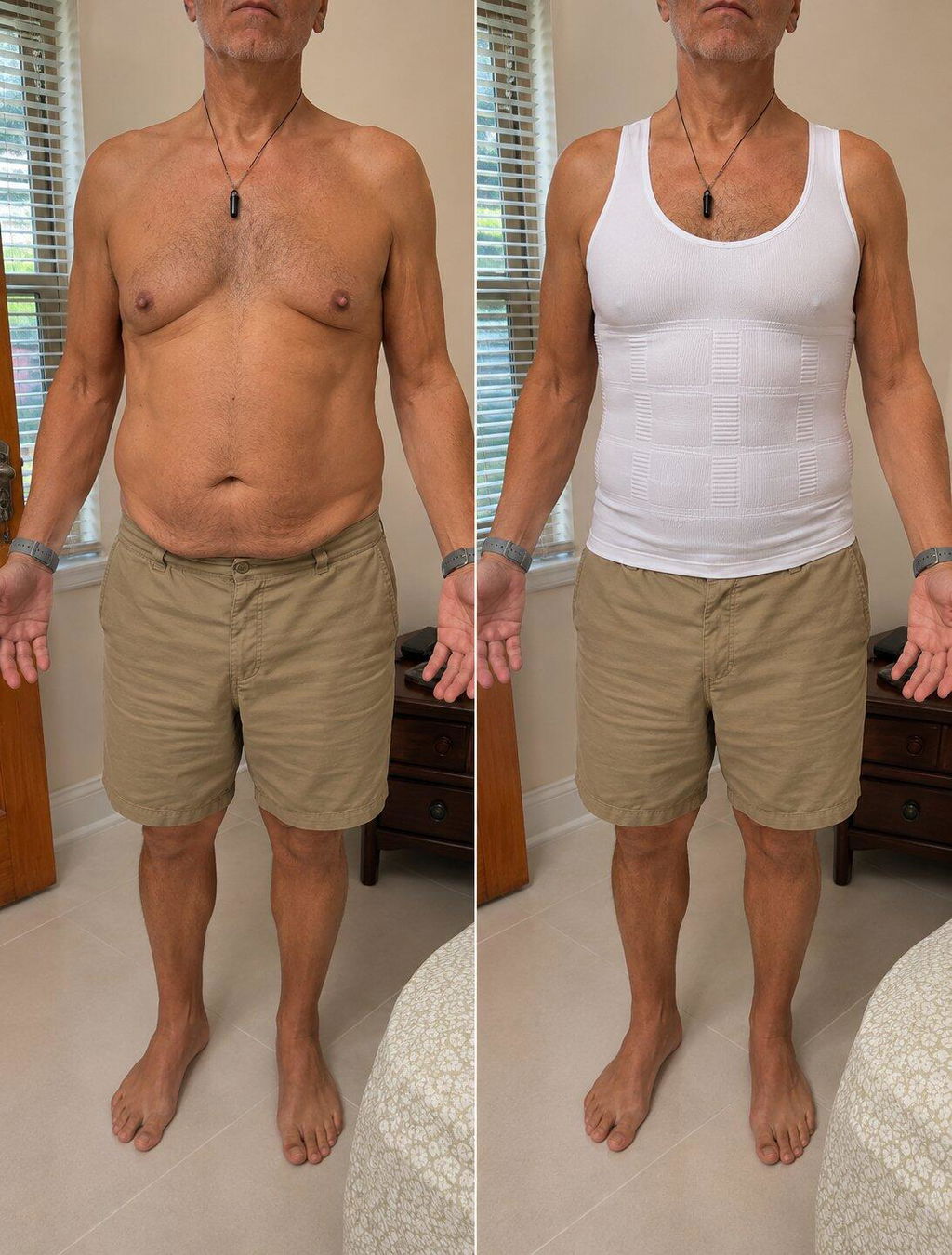
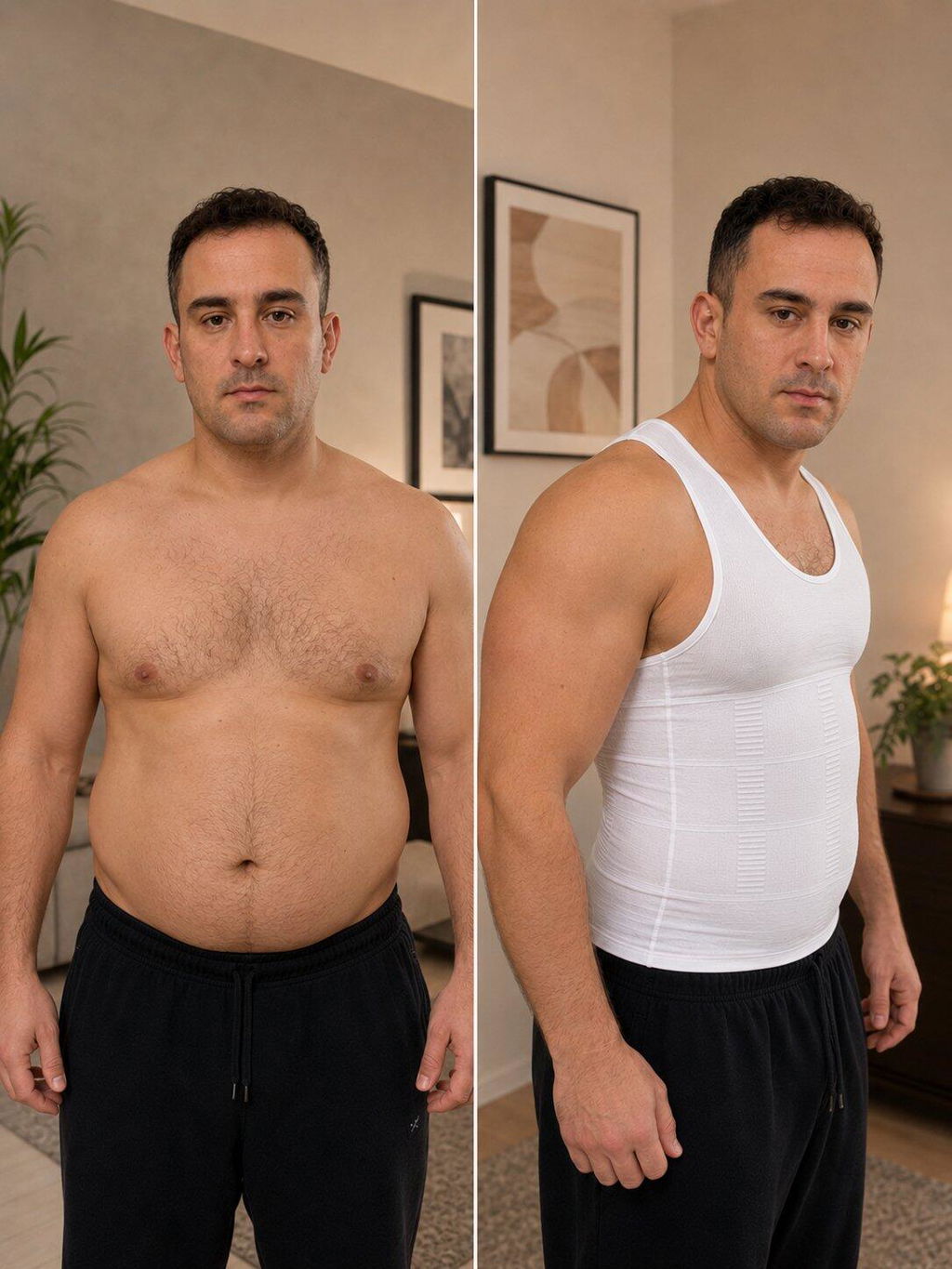
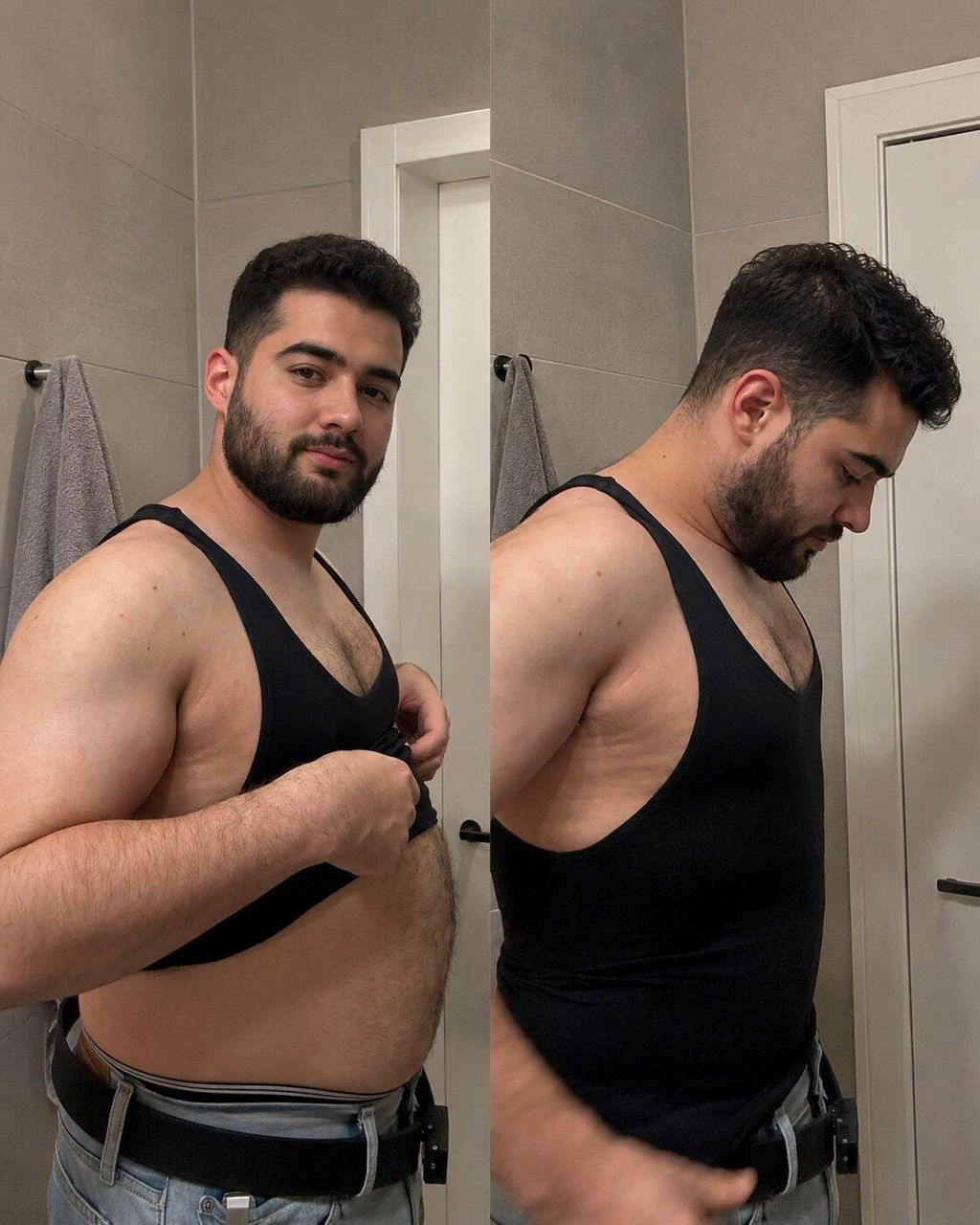
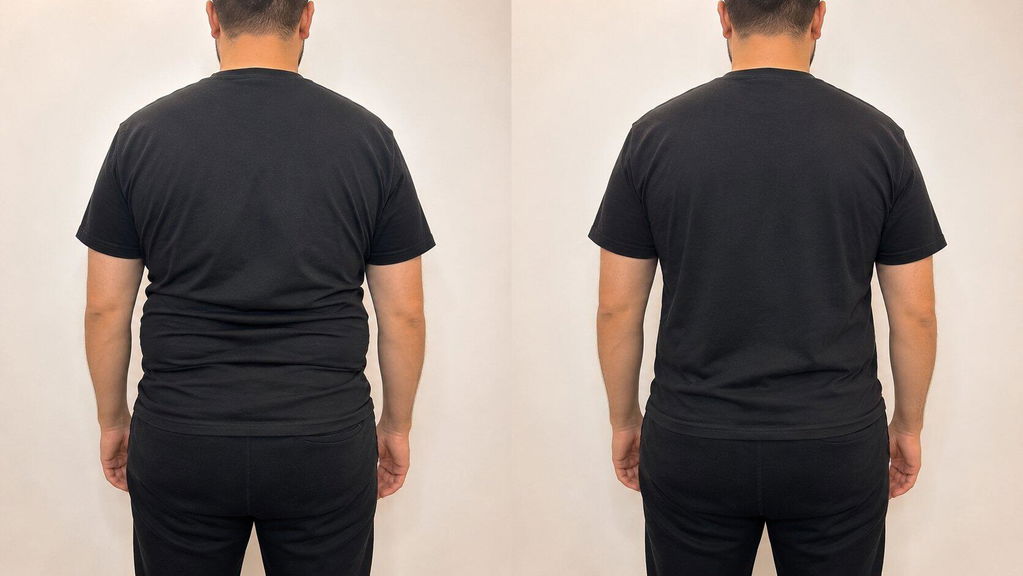
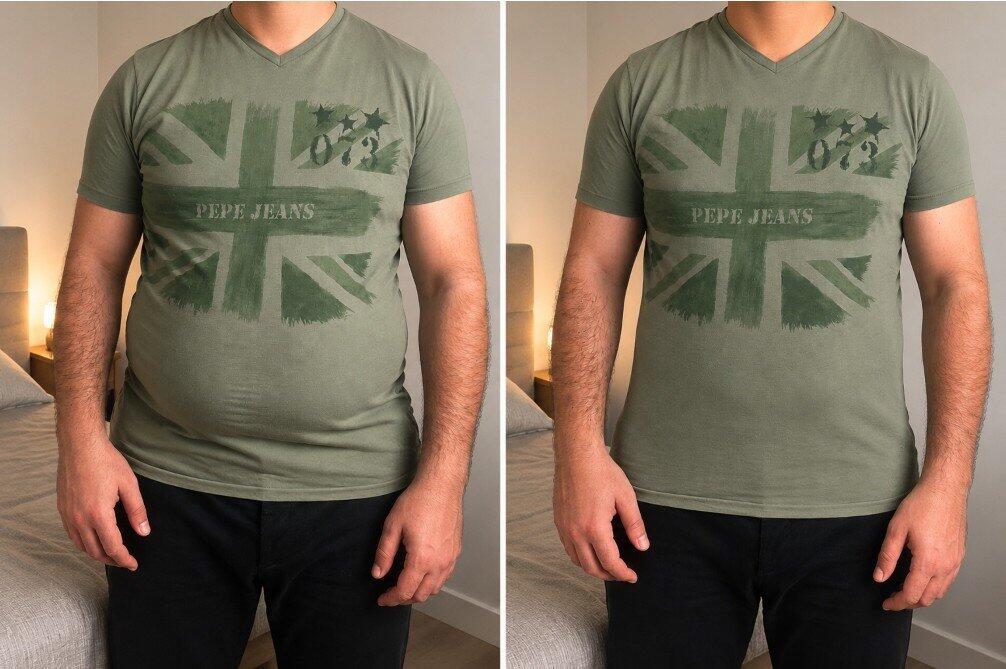
What the illustration is showing The body is unchanged. The comparison explains how an outer summer shirt may sit more smoothly over a base layer while worn. Readers comparing clothing-based chest-smoothing options can use the man boobs compression shirt guide before deciding whether any extra layer suits the weather and activity.
Start with the outer shirt before adding a layer
Give the chest room without making the whole shirt baggy
The shoulder seam should sit where the shoulder ends, while the chest should have enough room to avoid horizontal pulling. This is different from buying a shirt that is oversized everywhere. Extra width at the waist, sleeves and shoulders can add bulk without solving cling at the chest.
Pinch a small amount of fabric at the chest, raise both arms, sit down and turn to a 45-degree angle. If the shirt becomes taut across the most projected area, the cut is still too close even when the front view looks acceptable.
Check five properties, not one fabric name
Use colour and pattern as support, not the whole strategy
Darker colours and broken patterns are repeatedly used because they can make shadows and small changes in outline less obvious. They cannot rescue a shirt that is transparent, stretched or glued to the chest by moisture.
For a deeper comparison of cuts, weights and shirt categories, see which shirt fabrics and cuts hide man boobs best.
Choose one of three summer outfit systems
The best system is the one you can still tolerate at the hottest and most active part of the day. Do not build the outfit around the air-conditioned room if you first have to walk twenty minutes in humidity.
System 1: One structured outer shirt
Use this as the starting point for long outdoor exposure, heavy walking or low tolerance for layers. The goal is one shirt with a matte surface, manageable weight and enough body to avoid immediate cling.
A structured T-shirt or woven short-sleeve shirt can work here. A polo is less predictable: a matte, textured polo may hold its shape, while a thin, shiny or highly stretchy version can follow the chest closely.
System 2: A simple tank plus an open short-sleeve button-up
This system adds visual structure without using a jacket. The open shirt creates two vertical edges down the torso, while the base handles coverage under the opening.
Check the armholes and side view before leaving home. A very low armhole may expose the side of the chest, while a visible neckline or strap can make the underlayer look accidental.
System 3: A compression tank plus a light outer shirt
This system offers more control over how the outer shirt sits, but it also adds pressure and another layer. It is more reasonable for a limited-duration event, a commute followed by air conditioning, a dinner or an office day than for prolonged exercise in extreme heat.

| Situation | Heat exposure | Movement | Best starting system | Main risk to test |
|---|---|---|---|---|
| Long outdoor walk | High | High | One structured outer shirt | Wet cling after sweating |
| Commute to air-conditioned office | Medium, then low | Medium | Light tank plus woven shirt | Underlayer visibility |
| Outdoor meal or date | Medium | Low | Open short-sleeve button-up system | Side exposure and transparency |
| Formal or fitted-shirt event | Controlled | Low | Compression tank plus structured shirt | Heat, neckline and comfort |

A tank can be useful because it leaves the arms uncovered, but that does not make every tank cool or breathable. Use the lightweight compression tank for men category guide to compare the format, then judge the actual garment against your heat tolerance, neckline and intended duration.
Does a compression tank make you hotter?
It can, especially when the garment is tight, the environment is very hot, the activity is demanding or the outer shirt adds another insulating layer. The honest answer is not “compression is fine in summer” or “compression is impossible in summer.” It is a trade-off that changes with the day.
In a controlled study of cycling at approximately 40°C, the tested upper-body compression garment produced higher core temperature, heart rate and perceived thermal sensation than the tested conventional T-shirt. That study does not prove that every compression tank produces the same response during normal daily wear.
Compression may be a reasonable trade-off when:
- Your activity is light and the wear period is limited.
- Most of the day will be indoors or air-conditioned.
- The outer shirt is already light enough for the weather.
- You already tolerate close-fitting base layers without pain or irritation.
- You want a smoother-looking outer shirt rather than a perfectly flat chest.
Skip it or shorten the wear period when:
- You will be exercising or walking outside for a long period in extreme heat.
- The garment restricts breathing, causes pain, irritates the skin or makes you feel unwell.
- You need several extra layers to hide the compression garment itself.
- You are considering a smaller size only to create more pressure.
Compression changes how clothing sits while the garment is worn. It does not remove chest fat, treat gynecomastia or guarantee invisibility under every shirt.
Linen, cotton and performance fabrics: what actually matters
Do not shop by fibre name alone
Fibre content is only part of the result. Construction, thickness, finishing, weave or knit structure and fit all affect how a garment handles air, moisture and contact with the body.
A study of specific cotton, cotton/linen and linen knitted fabrics found different trade-offs across tested comfort properties depending on composition and finishing. It does not support the blanket claim that every linen shirt is cooler or better than every cotton shirt.
Moisture-wicking does not automatically mean no cling
In one 33°C and 60% relative-humidity exercise trial, the tested fitted polyester/elastane shirt retained less sweat than the tested cotton shirt. That finding applies to the garments and conditions tested; it does not prove that all synthetic shirts are cooler, more comfortable or less clingy than all cotton shirts.
The wet-cling study is the useful counterweight: moisture-management measurements alone did not reliably predict wet-cling force in the tested fabrics. You still need to test the actual shirt.

Readers dealing specifically with diagnosed or suspected gynecomastia can use the clothing-focused guide on how to hide gynecomastia under a shirt. This summer article does not diagnose chest tissue or discuss treatment.
Five summer mistakes that usually make the outfit worse
1. Wearing the heaviest shirt you can find
A heavier shirt may improve opacity and structure, but it can become unwearable during high heat or long outdoor exposure. The goal is sufficient structure, not maximum weight.
2. Sizing up without checking the shoulders
A larger shirt can still cling at the chest while adding loose fabric everywhere else. Judge shoulder placement, chest tension and side view separately instead of treating size as the only variable.
3. Choosing the thinnest or shiniest “cooling” shirt
A performance label does not tell you how much the shirt will shine, stretch or cling when damp. Check the actual garment in daylight and after movement.
4. Building the outfit around a hoodie or jacket
A winter solution can become the most uncomfortable part of the summer outfit. Replace the heavy outer layer with structure inside the shirt system: a woven short-sleeve shirt, an open overshirt or a more stable single layer.
5. Treating maximum compression as the default
More pressure is not automatically better, especially when heat, movement and wear time increase. A tolerable system worn correctly is more useful than an aggressive layer you remove after twenty minutes.
A soft-looking chest can become more noticeable in particular shirts even when nothing about the body changed. The guide on why a soft chest shows through certain shirts explains that broader clothing interaction.
The five-minute summer shirt test
1. Check it in natural light
Stand near a window and look from the front, side and 45-degree angle. Check opacity, nipple contrast, chest shadow and reflected shine rather than focusing only on colour.
2. Move before deciding
Raise your arms, reach forward, sit down, stand up and turn the torso. A shirt that works only when you stand still is not ready for a commute, work shift or social event.
3. Recreate mild dampness
Lightly dampen a hidden test area and observe whether the fabric becomes darker, shinier or more body-following. This is a practical home check, not a scientific performance test.
4. Inspect the underlayer
Check the neckline, straps, armholes, side view and hem during movement. The underlayer should not create a new visibility problem while trying to solve the first one.

When a base layer is worth the trade-off
Use a base layer after you have corrected the free variables: outer-shirt fit, opacity, structure, shine and cling. A base layer is most useful when the shirt is already appropriate for the weather but still follows the chest more closely than you want.
It is not the right solution when the shirt itself is transparent, extremely tight or badly cut. Compression cannot turn every unsuitable outer shirt into a good summer shirt.
Compare the VEROSHAPE compression tank for under-shirt wear
VEROSHAPE is a men’s compression tank intended to be worn as a base layer under everyday clothing and to create a smoother-looking chest and torso while worn. Check the current product page, size options and garment details before deciding whether the extra layer suits your summer routine.
See the VEROSHAPE Compression TankMatch the system to the day you are actually having
Hot commute, cool office
A light base layer can be a reasonable compromise when the outdoor portion is limited and most of the day is climate-controlled. Test whether the neckline remains hidden after sitting and moving.
Long outdoor walking or travel
Start with one structured outer shirt and the lowest tolerable layer count. Carrying a second shirt can be more practical than wearing a heavy concealment system all day.
Summer work uniform or polo
When the outer garment is fixed, focus on fit, shine and how the fabric behaves after movement. A base layer may help the polo sit more smoothly, but it cannot remove excessive stretch or transparency from the polo itself.
Dinner, date or social event
A short-sleeve woven shirt, worn alone or open over a simple base, gives more control over structure without relying on a winter jacket. Choose the system based on how long you will be outside before the event, not only on the final venue.

Common questions about hiding moobs in summer
What is the best summer shirt to hide moobs?
The safest starting point is a matte shirt with enough structure to avoid immediate cling, enough chest room to prevent horizontal pulling and enough opacity for daylight. No single fibre or shirt style works in every climate, so test the real garment after movement and mild dampness.
Is linen good for hiding man boobs?
Sometimes. Linen shirts can offer airflow and a useful woven structure, but light colours, loose weaves and very thin constructions can create transparency or collapse. The available textile evidence does not support “linen is always cooler or better than cotton.”
Do dark colours hide moobs?
They can reduce some visible contrast and shadow, but colour cannot fix a shirt that is stretched, transparent or wet-clinging to the chest. Treat dark colour as support for good fit and fabric behaviour, not as the complete solution.
Is a compression tank too hot for summer?
It can be too hot for some people and some situations. Heat, activity, compression level, wear time and the outer layer all matter. Use it conditionally rather than treating it as the default for long outdoor exposure.
Can I hide moobs with only one layer?
Yes, a structured single outer shirt may be the best starting point when heat exposure or movement is high. The result depends on the shirt’s opacity, stretch, shine, fit and damp-cling behaviour.
What about the beach or pool?
This guide only covers appearance under clothing. Shirtless, swim and pool situations require a separate decision framework and are not solved by the outfit systems on this page.
Sources
- Gao, Deaton & Barker — A Novel Method for Measuring the Wet Cling Properties of Textiles
- Leoz-Abaurrea & Aguado-Jiménez — Upper Body Compression Garment: Physiological Effects While Cycling in a Hot Environment
- Taştan Özkan, Keskin & Demirtaş Özkaya — Thermal Comfort Properties of Cotton, Cotton/Linen and Linen Knitted Fabrics
- De Sousa, Cheatham & Wittbrodt — Moisture-Wicking Fabric Shirt Responses During Exercise in the Heat