Best Compression Shirts for Gynecomastia: How to Choose the Right One
The best compression shirt for gynecomastia is not simply the tightest one. It is the one that fixes the problem you can actually see through clothing—chest projection, nipple projection, shirt pulling or garment movement—without creating a worse problem somewhere else.
Quick answer: choose by the dressed result, not by how powerful the garment feels on a bare chest. Check the shirt over it, then sit, stand, walk and reach. If the chest looks better but the neckline shows, the waist rolls, the armholes dig in or the garment becomes hard to wear, more compression is not the answer.
What “best” should mean for a gynecomastia compression shirt
“Best” is often treated as a contest for the strongest possible compression. That is an incomplete way to choose. A garment can feel extremely tight and still fail the job you bought it for. It can leave nipple projection visible, create a line at the neckline, cut into the armhole, create a new edge at the waist or roll once you sit down.
A more useful definition is simple: the best compression shirt is the one that improves the specific appearance problem you care about while remaining wearable across the rest of your body.
That means two men can reasonably choose different garments even if both describe their problem as “gyno.” One may care most about a broad chest outline under a fitted T-shirt. Another may be less concerned with overall chest size and more bothered by nipple projection through a work shirt. A third may get a good chest result but reject the garment because the hem constantly rides up.
This is why the first step is not “How strong is it?” The first step is “What exactly am I trying to stop seeing through my clothes?”
Identify the visible problem before you choose the compression level
Chest projection and nipple projection are related, but they are not the same visual problem. A compression shirt can smooth the overall chest while a nipple outline still shows through a thin shirt. The reverse can also happen: the nipple outline may become less obvious even when the overall chest is not dramatically flatter.
| What you notice | What to check | What failure looks like |
|---|---|---|
| Chest projects forward | Compare the side profile under the shirt you actually wear | The chest still pushes the shirt outward even though the garment feels tight |
| Nipple outline shows | Look at the front under normal room light and your real outer shirt | The chest is smoother but the nipple point is still obvious |
| Shirt pulls across the torso | Check buttons, placket and fabric tension while standing and sitting | The garment compresses the chest but the outer shirt still strains or separates |
| Compression garment shows | Check neckline, armholes, side edges and hem | You replace one visible problem with another |
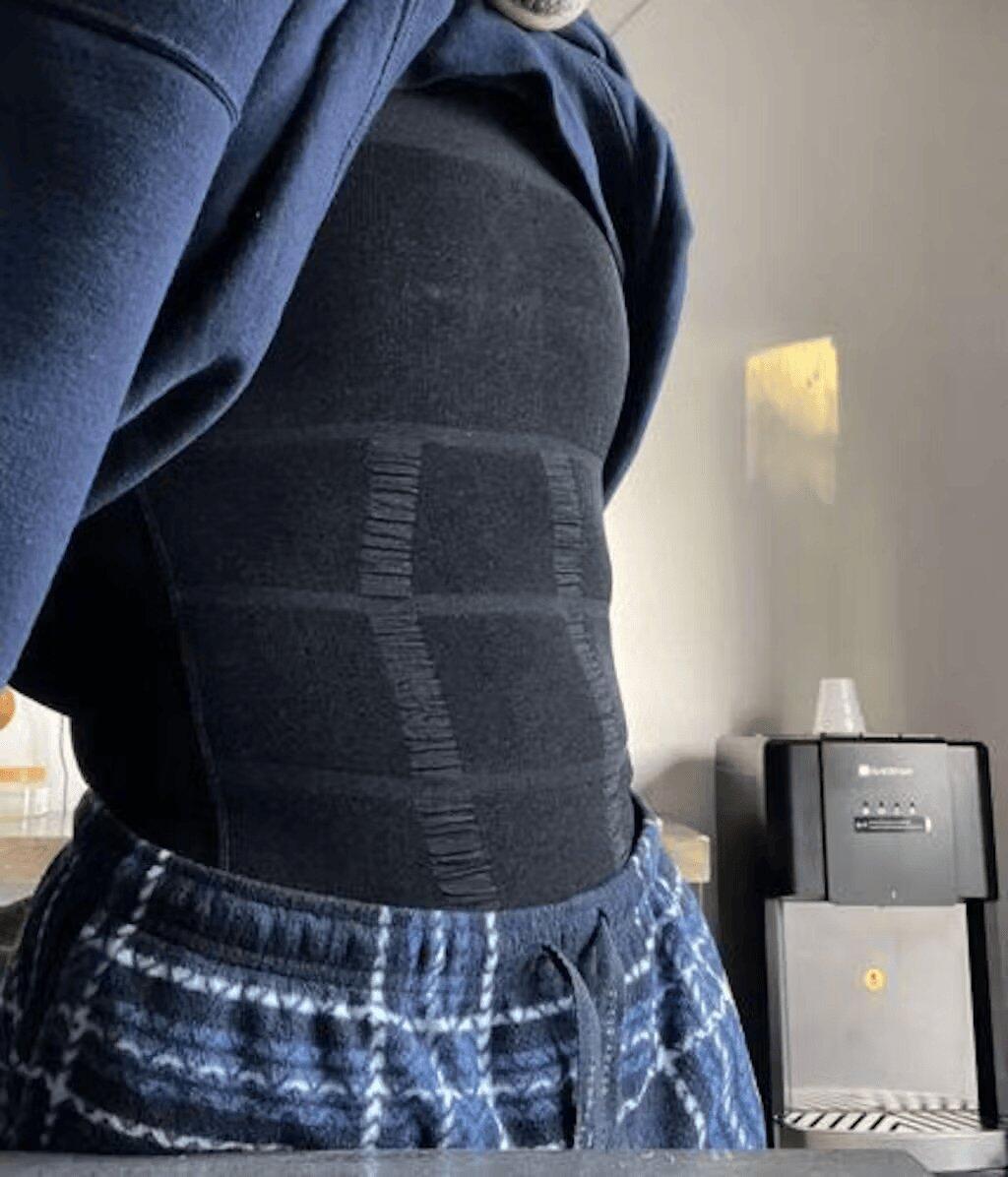
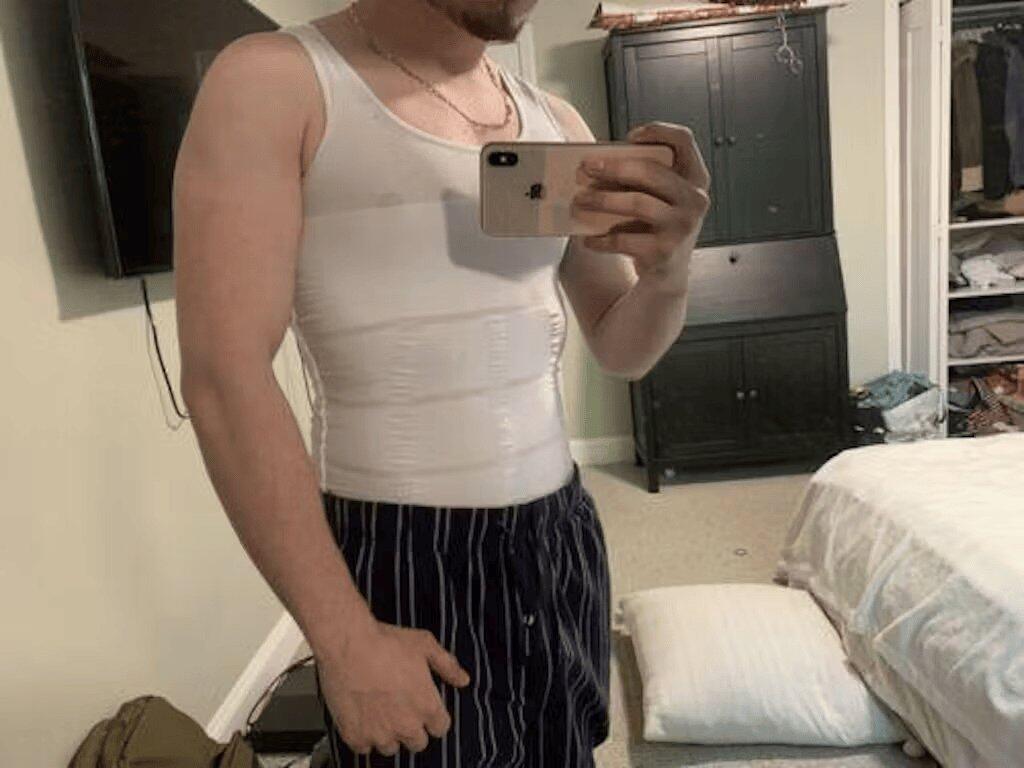
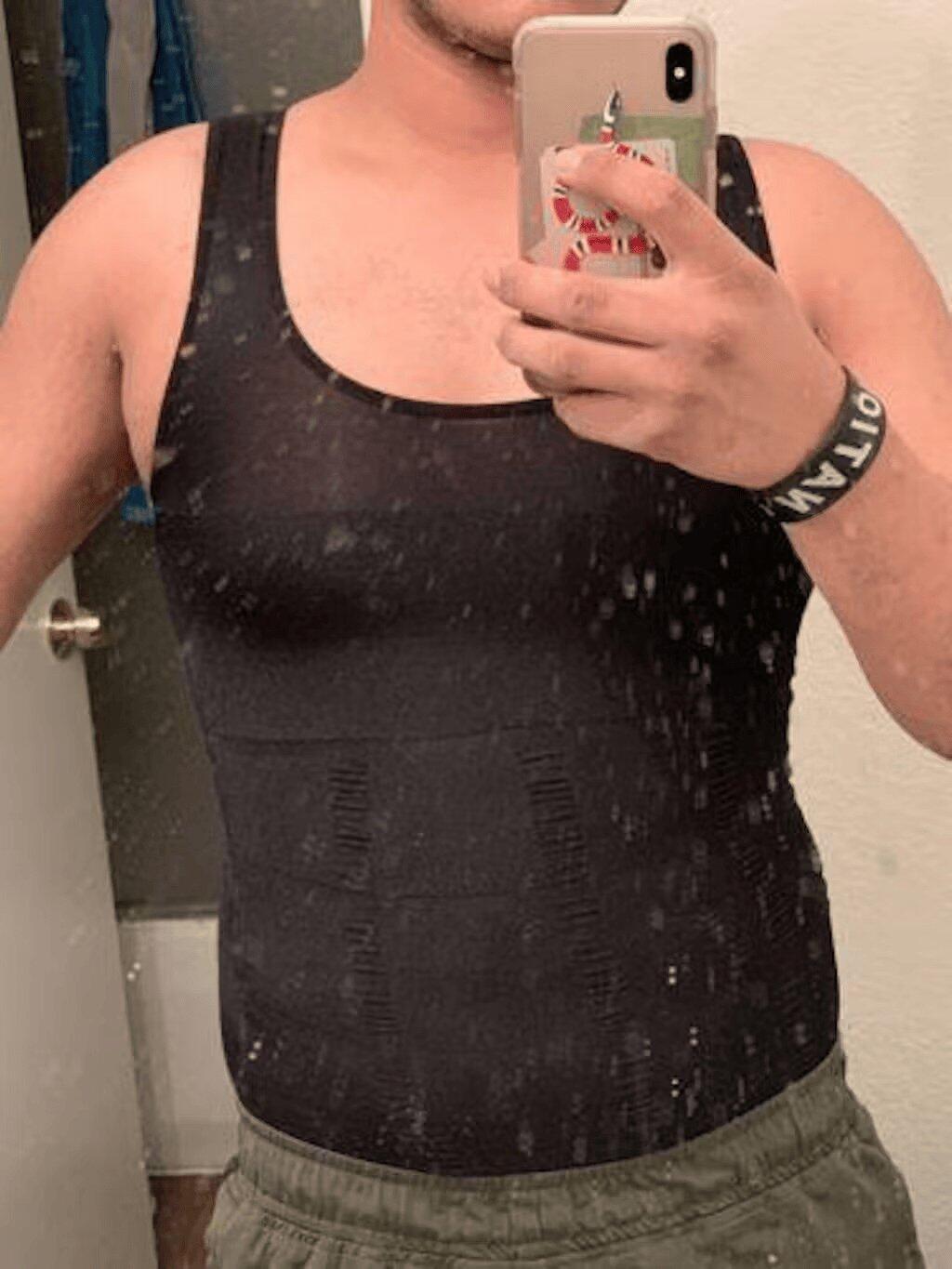
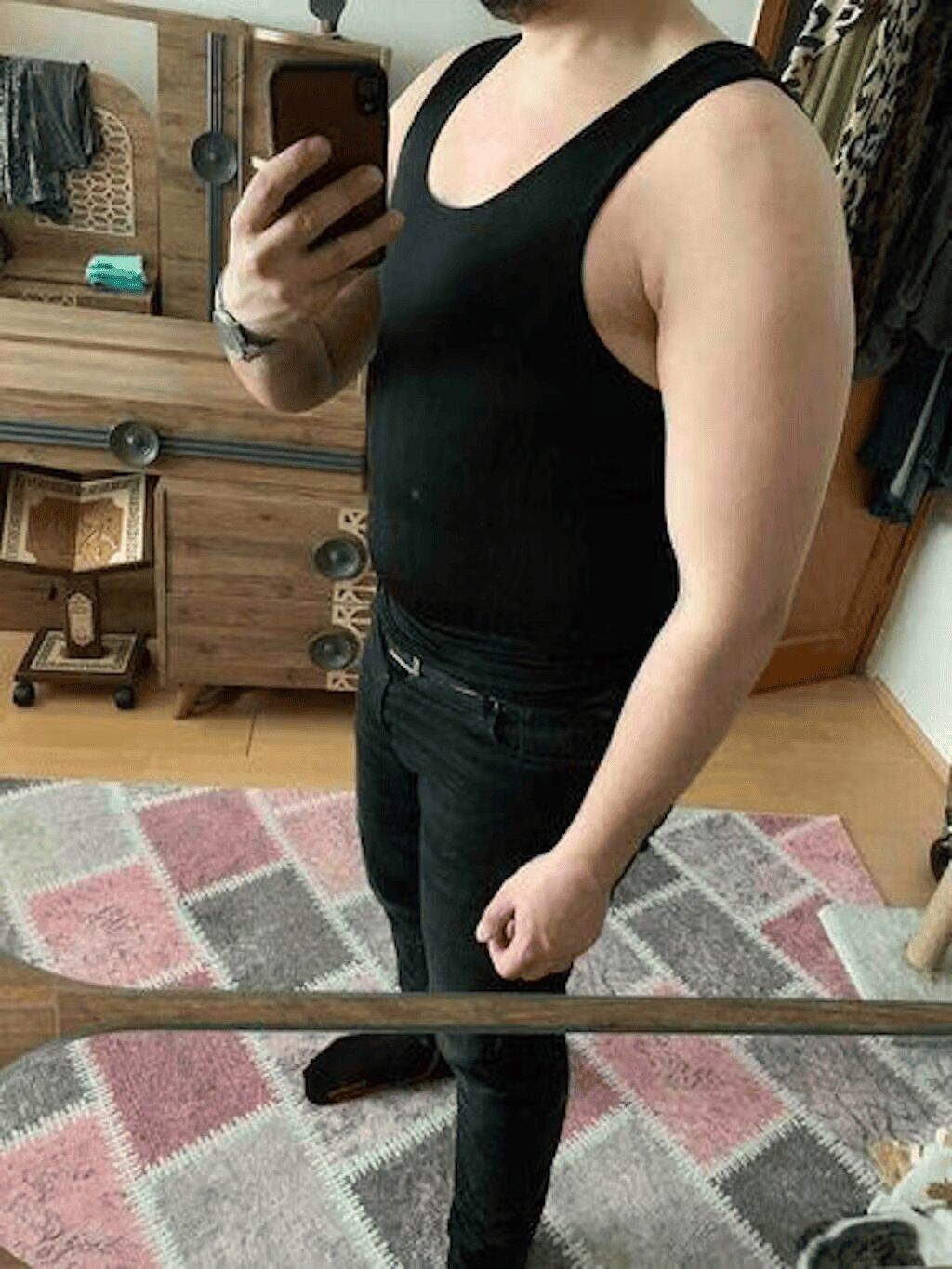
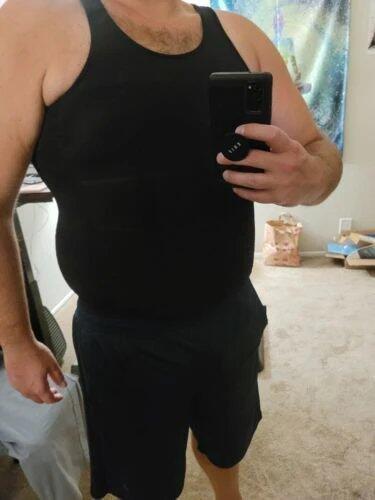
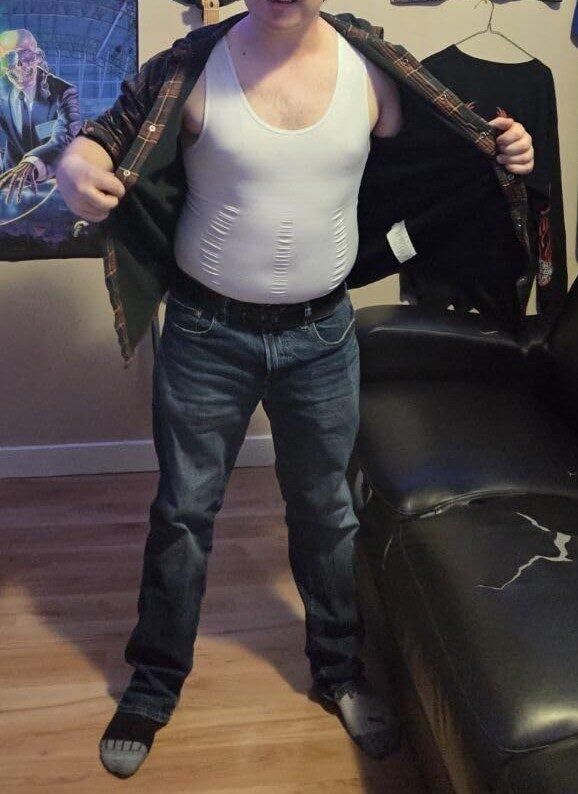
In our own wear experience, the useful change was not just what the chest looked like in the compression tank. Under a work shirt, nipple projection that had been visible before was no longer obvious to us, the chest outline looked smoother, and the lower front of the shirt sat more cleanly instead of pulling apart. That is one real wear observation, not a guarantee that every body, shirt or compression garment will behave the same way.
If nipples showing through shirts are your main problem rather than overall chest projection, our guide to stopping nipple show-through in men goes deeper on that specific issue.

How much compression is actually useful?
If you searched for the “most powerful” gynecomastia compression shirt, the useful answer is: the strongest garment is not automatically the best everyday choice. You need enough compression to improve the visible problem, but not so much that the fit creates a new one.
Too little compression can leave the chest nearly unchanged or allow the garment to shift. Too much can create digging at the armholes, stronger pressure at the ribs or abdomen, edge bulges, obvious garment lines or a fit you simply do not want to keep wearing.
Do not confuse unfamiliar snugness with persistent bad fit
The first time you wear a purpose-built compression garment, it may feel very different from a normal undershirt. In our own wear experience, the first few minutes felt like a firm, close “hug” compared with a loose everyday tank. Because breathing and normal movement remained comfortable, that unfamiliar sensation became much less noticeable as we wore it.
That does not mean you should tolerate pain, restricted breathing or pressure that keeps getting worse. A practical distinction is:
- Unfamiliar but acceptable: snug pressure, normal breathing, normal arm movement, no sharp digging, no rapidly worsening discomfort.
- Bad fit: breathing feels restricted, armholes or straps cut in, sitting makes the pressure excessive, edges create new bulges, or you need to keep adjusting the garment.
If the second list describes the fit, sizing down further is unlikely to solve the real problem.

A good chest fit can still be the wrong overall fit
Chest circumference matters, but it is not the whole fit. Real bodies do not scale evenly from shoulders to waist. A size that feels effective across the chest may still be wrong at the armholes, belly, side waist or hem. A longer torso can turn an otherwise good garment into one that rides up. Broad shoulders can make entry and arm movement uncomfortable even when the chest feels correct.
This is one of the most important reasons not to diagnose every problem as “not enough compression.” Sometimes the compression level is fine and the cut is wrong for your proportions.
Check these zones separately
- Shoulders and straps: pressure should feel distributed rather than concentrated into a narrow point.
- Armholes: look for digging, pinching or a visible ridge under the outer shirt.
- Belly and waist: stand first, then sit. Compression can feel noticeably different once the abdomen changes shape in a seated position.
- Torso length: the hem should stay where you put it through normal movement.
- Side waist: check whether the garment twists or shifts when you walk quickly, reach or stand back up.
In our own wear, abdominal compression became more noticeable once seated even though the garment felt comfortable while standing. We also found the long hem stayed very stable through normal movement, while the side/love-handle area could still move slightly during more active motion. That is exactly why “the chest feels right” is not enough information to approve the fit.

Run the outer-shirt outcome test
The compression garment is an underlayer. The real result is what happens after you put your clothes back on.
Use the shirt that actually matters to you: the fitted T-shirt you avoid, the shirt you wear to work or the dress shirt that tends to pull across the front. Then check the outcome, not just the compression garment.
Look for four things
- Chest projection: does the shirt fall more cleanly from the upper chest?
- Nipple projection: is the point or outline still visible through the fabric?
- Shirt tension: do buttons, plackets or stretch lines sit more naturally?
- Garment visibility: can you see the neckline, armhole edge, seam, hem or a new ridge?
A compression shirt that looks impressive on a bare torso can fail this test. If the chest is flatter but a thick neckline is now visible through the shirt, you have not actually solved the clothing problem. If the chest looks better but the garment creates a more obvious edge at the side, that is also a failure worth noticing.
If your compression layer is working but the remaining problem is the outer shirt itself, use our broader guide to hiding gynecomastia under a shirt rather than trying to solve every clothing issue with a tighter base layer.

Test the fit standing, sitting and moving
A five-second standing check misses the moments when many compression garments become annoying: sitting down, standing back up, reaching overhead, walking quickly or bending.
Before you decide to keep a garment, run a short movement sequence:
- Stand normally and note where the neckline, armholes and hem sit.
- Sit for a few minutes and notice whether abdominal pressure changes or the hem starts to roll.
- Stand back up without adjusting the garment first.
- Raise both arms, reach forward and bend normally.
- Walk around and check whether the chest area, waist or hem has shifted.
- Put the outer shirt back on and check the visible result again.
The point is not to demand zero movement. Clothing moves. The question is whether it returns to a usable position on its own or forces you to keep tugging at it.
Wearability matters here too. A garment that gives a stronger standing result but becomes too hot, restrictive or distracting for your actual day may be a worse choice than slightly lighter compression you can comfortably wear when you need it.
About our wear observations: VEROSHAPE's firsthand comments in this guide come from normal wear of its own compression tank in work, travel, sitting and movement situations. They are practical wear observations, not controlled performance tests or universal outcome claims.

Choose the garment type by the job it needs to do
There is no single compression format that is best for every man. The useful comparison is not “Which style is strongest?” but “Which category gives me enough appearance support without failing my real fit and comfort requirements?”
| Garment type | Usually makes sense when | Watch for |
|---|---|---|
| Athletic compression top | You want lighter, more general torso support and your visible problem is relatively mild | Uniform stretch may not give enough chest-specific control |
| Purpose-built compression tank or undershirt | You want a discreet everyday base layer intended to change how the chest and torso sit under clothing | Neckline, armholes, torso length and waist fit still need to work for your body |
| Firmer vest-style garment | You prioritize stronger flattening and accept a more structured, restrictive garment category | Heat, rigidity, visible edges and everyday wearability may matter more |
If a garment is designed primarily for postoperative or medical use, that falls outside this everyday garment-selection guide. This page is about appearance-support clothing, not postoperative care.

Keep it, exchange the size, change the cut or change the garment type?
The fastest way to make a better decision is to identify where the failure happens.
Keep it
Keep the garment when it improves the visible problem enough for your needs, stays acceptably discreet under your real clothes, lets you breathe and move normally, and remains usable when you sit and walk.
Exchange the size
Consider a different size when the basic cut works for your shoulders, torso and waist but the whole garment is clearly too loose to stay positioned or clearly too tight across multiple zones. Do not automatically choose a smaller size just because you want more flattening.
Change the cut or length
Change the cut when one body zone is controlling the failure: shoulder entry is difficult, armholes dig in, the torso is too short, the hem rides up, or the waist twists even though the chest compression itself feels appropriate.
Change the garment type
Change categories when the trade-off itself is wrong. If you need more chest control than a light athletic top can provide, a purpose-built compression undershirt may make more sense. If a very firm garment gives the visual result you want but is too restrictive for your normal day, a more wearable category may be the better everyday choice.

What a compression shirt can—and cannot—do
A compression shirt can change how your chest and torso look under clothing while you are wearing it. It cannot tell you what is causing chest fullness, and it is not a medical treatment for gynecomastia.
If you are looking for general background on the condition itself rather than garment selection, start with our overview of gynecomastia in men.
For clothing, keep the standard practical: the garment should solve the problem you can see under your clothes without creating a worse one elsewhere. If it passes the outer-shirt test, the sitting-and-movement check and the multi-zone fit check, you have a much stronger reason to keep it than “this feels like the most powerful compression I could find.”
Use the same checks in this guide—visible result, whole-torso fit, outer-shirt discreteness and movement—when you evaluate any option, including VEROSHAPE.
Explore the VEROSHAPE gynecomastia compression option
Review the current sizing and garment details, then compare them against the fit tests above before deciding.
View Gynecomastia Compression Shirt