How Should a Dress Shirt Fit a Man With a Belly or Fuller Chest?
The shirt looks right in the mirror. The shoulders sit cleanly, the waist looks sharper than usual, and nothing seems obviously tight. Then you sit at your desk. Two buttons near your stomach begin to separate, the front edge curves, and you pull the shirt down before anyone walks into the room.
That is the part most fitting-room checks miss. A dress shirt can look polished while you stand still and still be the wrong fit for the day you are about to live in it.
So how should a dress shirt fit when your chest or stomach is fuller? The answer is not “buy it loose.” It is to find the cleanest fit that stays stable when you sit, lean forward, raise your arms and keep the shirt tucked.
The shoulder seams should finish near the natural edge of your shoulders, the shirt should close without visible gaps, and the chest and stomach should have enough room for you to sit normally. The placket—the vertical strip holding the buttons and buttonholes—should remain mostly straight, while the tail stays below the waistband when you move. Judge the fit in motion, not only in front of a mirror.
The collar should close comfortably, the cuffs should reach the wrist, and the sleeves should allow normal movement. This guide concentrates on the harder fit problem: what happens through the shoulders, chest, stomach and tucked length when a torso does not match a standard shirt block.
The same checks apply to a button-up or button-down shirt worn for work. Once the shirt itself fits correctly, a different question is whether it works with denim; our guide to pairing a dress shirt with jeans explains how shirt formality, denim wash, tuck and proportion affect the combination.
Start With the Five-Position Dress-Shirt Fit Test
The best dress-shirt fit is the one that stays controlled through the positions you use during a normal day. A single upright pose cannot show whether the stomach has enough room, whether the front is long enough, or whether the hips will pull the tail out.
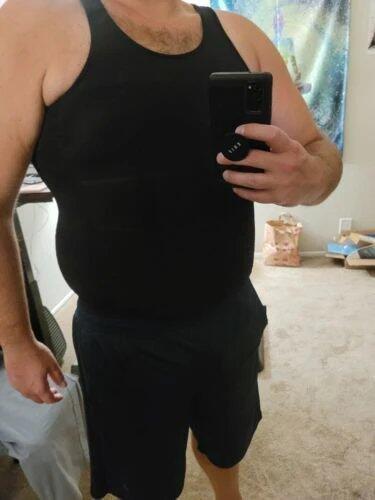
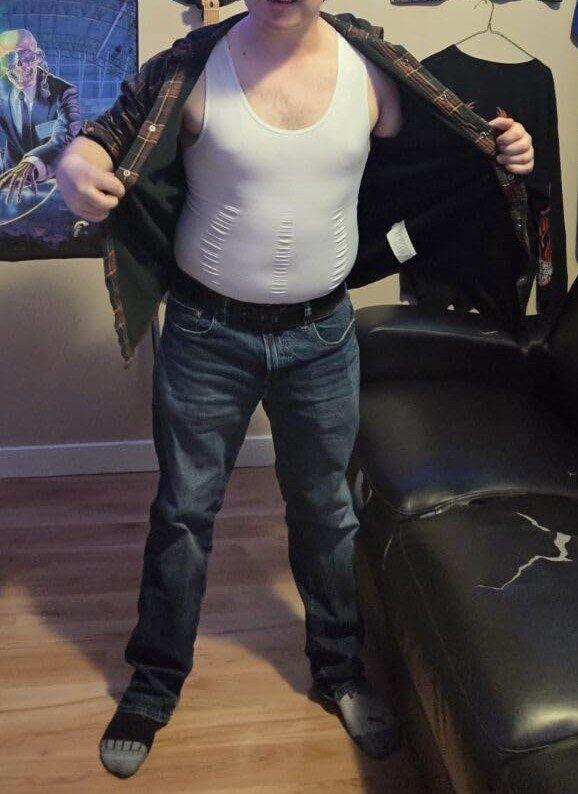
If the shirt passes these checks but still catches on the body instead of falling cleanly, the next variable is how a low-profile slimming undershirt works under a dress shirt. That is an optional fabric-management step, not a substitute for correct sizing.
Begin with the shirt fully buttoned and tucked as you plan to wear it. Stand naturally. Do not pull your shoulders back, hold your breath or flatten the stomach. Proper Cloth gives the same basic advice when taking body measurements: measure the chest and fullest part of the belly in a relaxed, sustainable position rather than a temporary pose. Its body-measurement guide explains why relaxed posture matters.
| Position | What to watch | What failure looks like |
|---|---|---|
| Standing naturally | Shoulder seam, sleeve fall, straight placket | Dropping shoulders, hard pull lines, excess fabric folding at the back |
| Sitting normally | Room across the chest and stomach | Buttons separating, placket bowing, fabric cutting into the waist |
| Leaning toward a desk | Front length and lower-button tension | Tail lifting, bottom buttons working harder than the upper ones |
| Raising both arms | Armhole mobility and tucked stability | Whole shirt rising, cuffs dragging back, tail leaving the waistband |
| Sitting while tucked | Hips, seat and front hem | Fabric bunching above the belt or pulling free at the sides |
Small wrinkles are normal. Woven fabric has to move. The warning signs are gaps that expose the layer underneath, a placket that stays curved after you settle into the chair, or a shirt that only looks right when you hold one careful posture.

How Should a Dress Shirt Fit Through the Shoulders, Chest and Stomach?
A fuller stomach does not automatically mean broader shoulders, a larger neck or longer arms. That is why simply moving from a large to an extra-large can solve one area while making the rest of the shirt look borrowed.
Where should the shoulder seam sit?
The seam should finish close to the point where the shoulder turns into the upper arm. If it falls far down the arm, the shirt is too broad through the yoke. If it sits inward and the sleeve head pulls upward, the shoulders are too narrow.
Protect this area first. A shirt that fits at the shoulders can often be adjusted through the waist or sleeves. A shirt with the wrong shoulder width is a poor starting point because changing the yoke affects the armholes, sleeves and balance of the whole garment.
How much room should the chest have?
The chest needs enough ease for a full breath, a forward reach and a seated posture without forcing the placket into a curve. It should not hang like a box, but it should not trace every change in the chest when you move.
How should the shirt fit around the stomach?
The stomach should have room to expand when you sit without opening the button line. This is the point where many dad bod dress shirts fail: the brand uses one torso shape for every man with the same neck and sleeve size.
A common fit pattern is sizing up for the stomach, then finding that the shoulder seam drops, the sleeves cover the hands and the back fills with loose fabric. The better answer is often a straighter body cut, a roomier midsection option or a made-to-measure pattern—not a larger version of the same tapered block.

What if the chest fits but the stomach is loose—or the reverse?
A fuller chest with a narrower stomach needs extra room high on the front without the same increase at the waist. Look for a fuller-chest option, less aggressive taper or made-to-measure measurements. If the stomach is fuller but the chest is not, a straighter body cut usually works better than moving the shoulder seam outward.
The strain location helps: a tight chest bends the placket higher and pulls near the armholes; a tight stomach creates lower horizontal lines near the waistband. One larger standard size often leaves excess fabric in the area that already fit.
A little ease while standing can make a shirt look cleaner over an eight-hour day. Removing every fold in the fitting room often removes the room needed for sitting, reaching and breathing. The goal is not the smallest shirt you can button. It is the closest fit that remains stable without asking you to manage it.
If the Buttons Pull When You Sit, the Fit Is Not Finished
Buttons that separate or form hard radial lines show that the shirt lacks room somewhere along the front. The direction and location of the tension help identify whether the pressure comes from the chest, stomach, hips or an over-aggressive alteration.
What do horizontal pull lines mean?
Horizontal lines usually mean the fabric is being stretched across the body. When those lines radiate from one button near the fullest part of the stomach, the midsection needs more ease. When they start higher and the placket bends over the chest, the upper body is too tight.
Is a little creasing normal?
Yes. Soft creases that appear only while moving are normal. A shirt becomes too tight when the gaps remain visible after you settle, the buttonholes distort, or the fabric creates enough force that you keep checking the front.
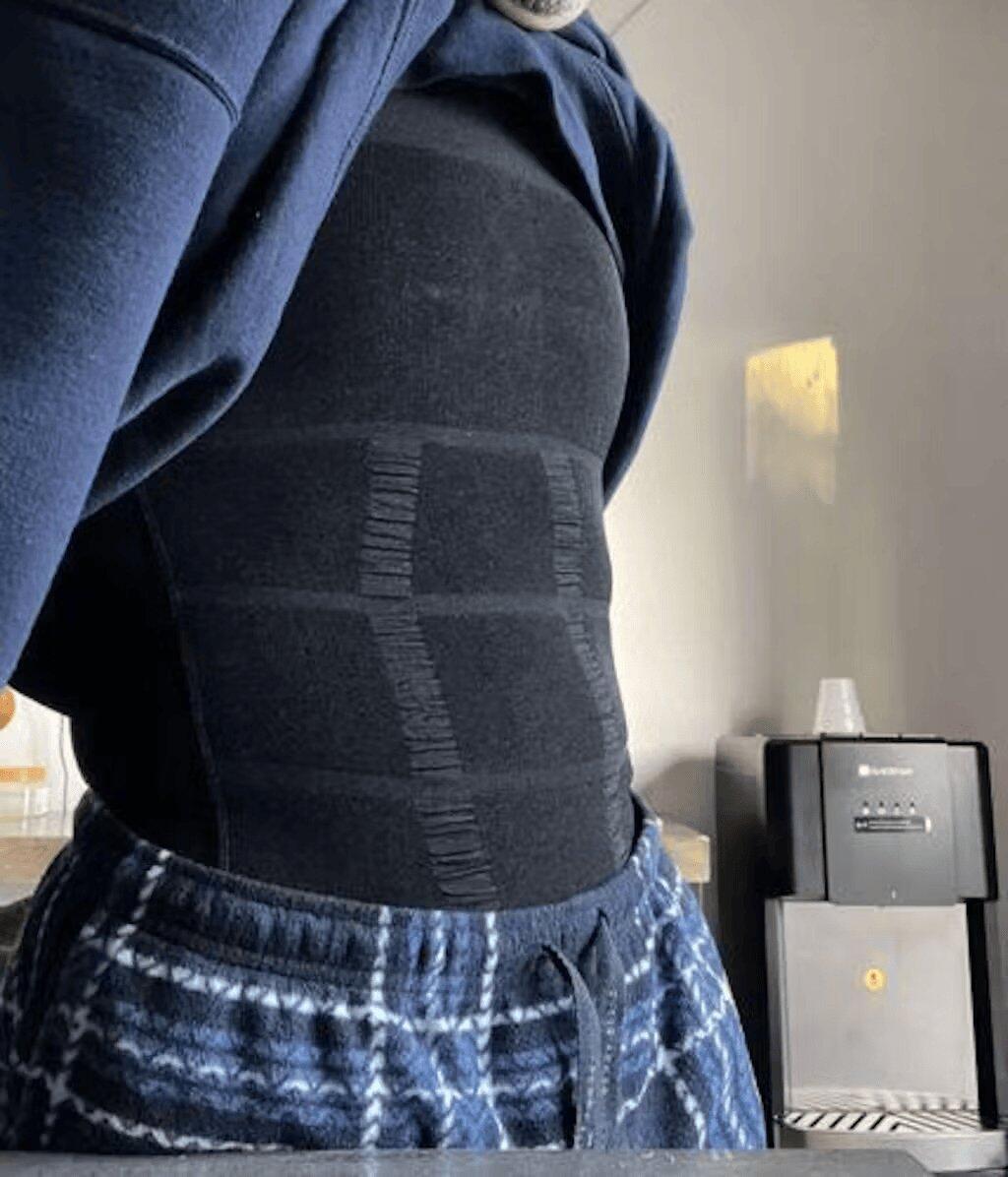
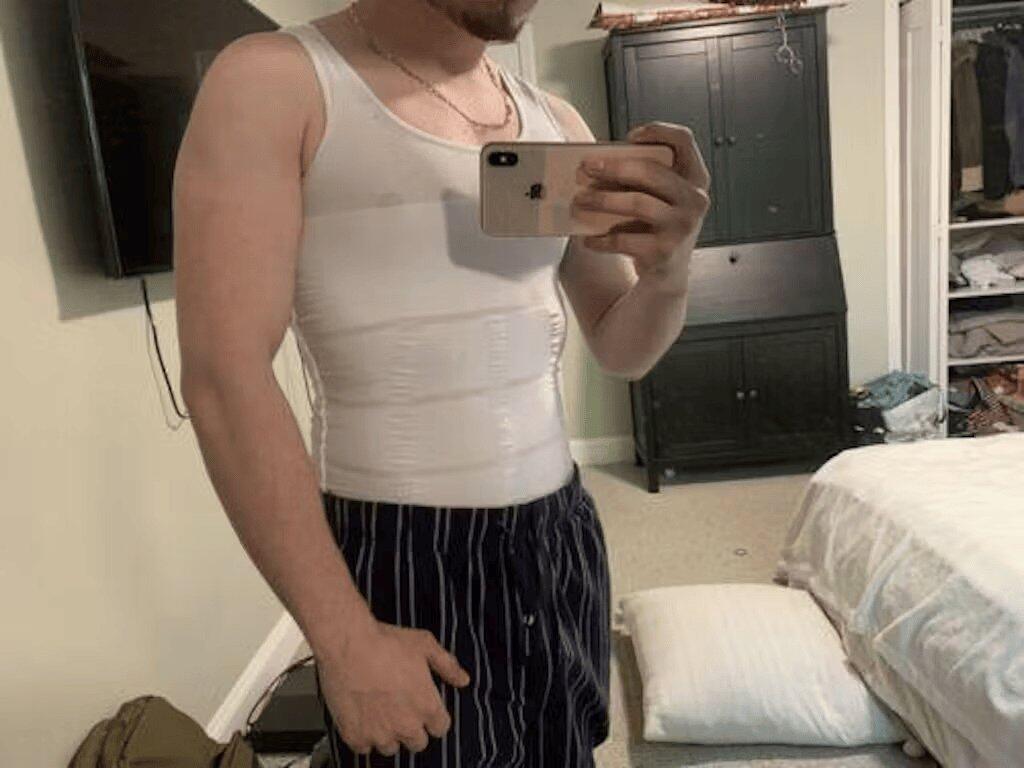
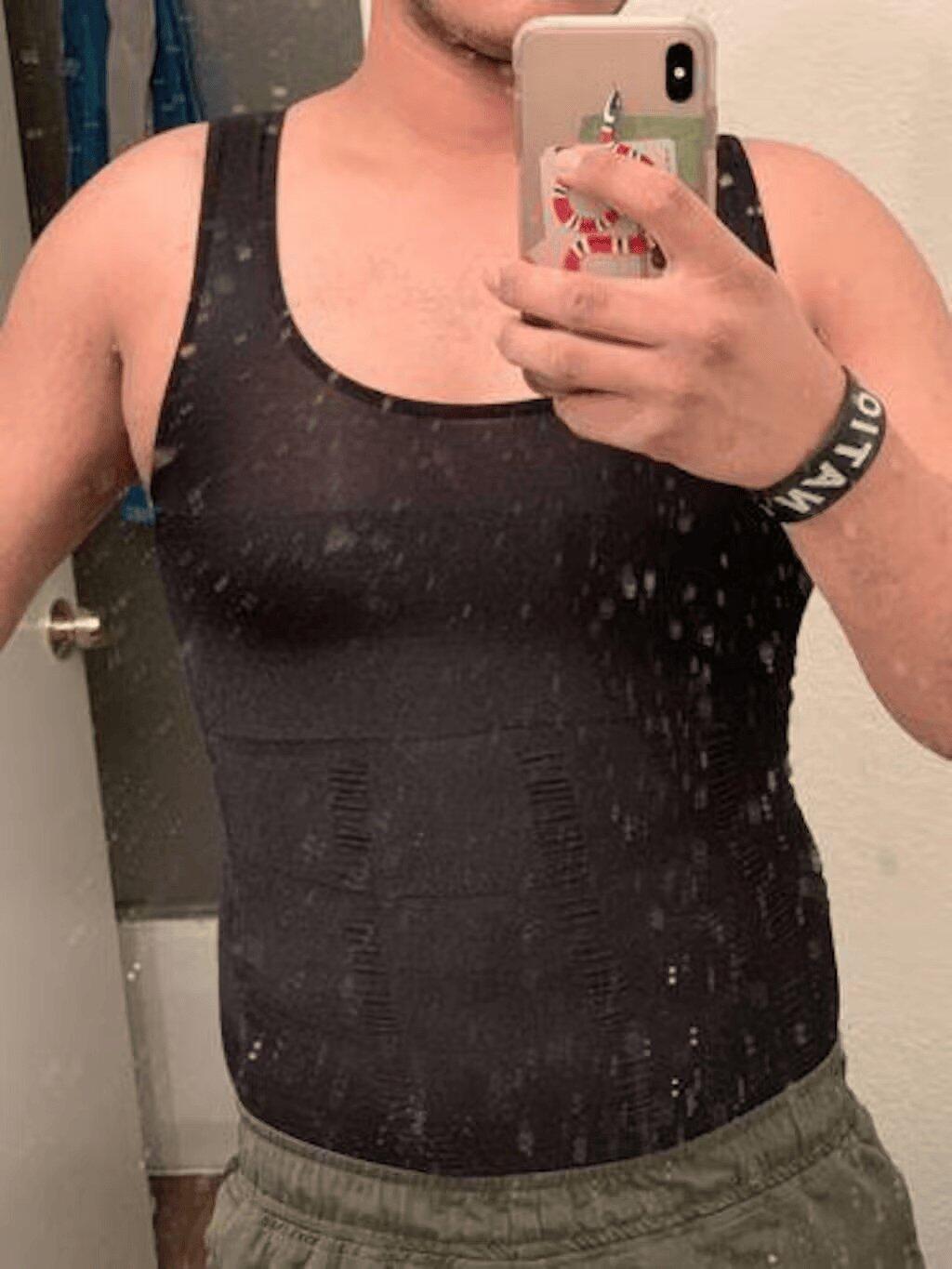
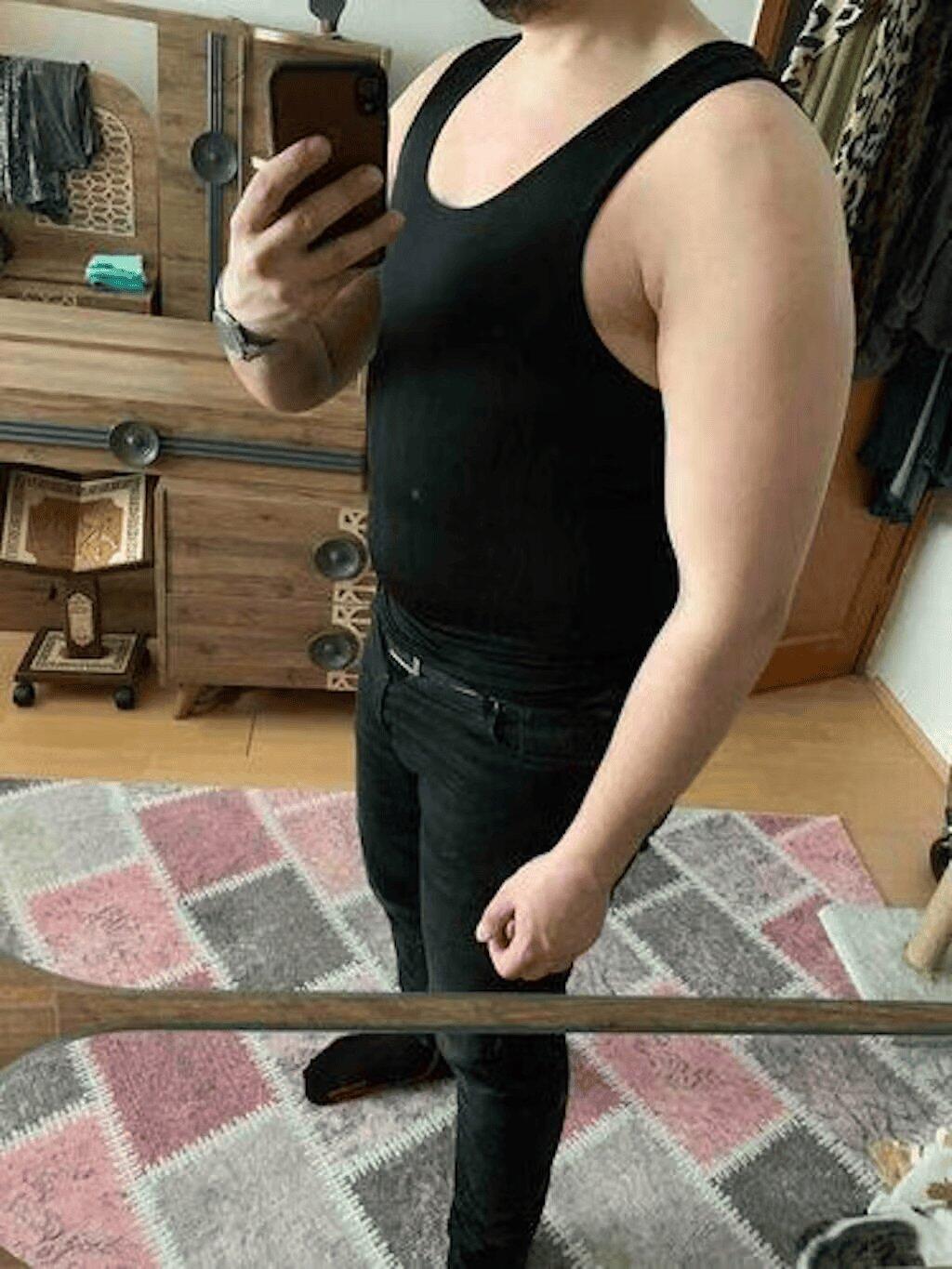
Once the shoulder width, seated room and button line are correct, a low-profile tank can create a more consistent surface under the outer fabric. The useful question is whether the format stays hidden, remains tucked and suits the shirt you already chose.
Compare the Tank Format Under Dress Shirts
Review how neckline depth, torso length, sleeveless construction and fabric contact affect a tucked dress shirt before choosing a product.
Compare a Low-Profile Compression Tank for Dress ShirtsA dress shirt can form soft folds when you sit, but its buttons should not spread open or hold the placket under constant strain. If sitting creates visible gaps, the shirt needs more room through the chest, stomach or lower torso. Correct the pattern or alteration rather than relying on posture, a tie or a jacket to cover the opening.
Once the shirt itself fits correctly, whether the collar should stay open becomes a separate decision. If you are wearing a matching suit and deciding whether to skip neckwear, see how to wear a suit without a tie, including when the setting permits it and when the suit-and-shirt combination still works better with a tie.
| Visible sign | Likely cause | Best first move |
|---|---|---|
| Soft folds with no opening | Normal movement | Keep the fit if it stays comfortable |
| Lines pulling from one stomach button | Midsection too narrow | Try a straighter cut or add waist ease |
| Placket bowing over the chest | Chest too tight | Increase chest room without moving the shoulders |
| Lower buttons pulling above the belt | Front length or bottom width too small | Check the hem, hips and tucked position |
| Whole front looks clean only when standing rigidly | Fit built around a pose | Repeat the seated test before altering more shirts |

Oxford vs Poplin: Fabric Changes What the Fit Reveals
Fabric cannot rescue a shirt that is too small, but it can change how quickly tension, shadows and body contours become visible. The key differences are weave, yarn size, surface texture, opacity and weight—not a promise that one fabric will “hide” the body.
Poplin and broadcloth use a plain-weave structure. CottonWorks notes that plain weave has frequent interlacing points and tends to be stable with less drape. Oxford is a basket-weave variation that commonly uses paired warp yarns and a heavier filling yarn, creating more surface texture. CottonWorks explains the weave structures in its technical guide.
Oxford often looks more forgiving because its texture and heavier yarns break up small shadows, while fine poplin creates a smoother surface that reveals tension sooner. Neither fabric fixes poor sizing. Choose Oxford when structure matters more; choose poplin when a crisp, light formal shirt matters more, then allow enough room so the smooth cloth is not pulled tight.
A textured Oxford holds more of its own shape, while fine poplin looks cleaner and more formal but reveals button strain, seam ridges and color contrast sooner. Weight still matters: a heavy shirt may drape well but feel impractical in heat, while a very light shirt can cling once damp. Check the fabric in daylight and while seated.
For a deeper explanation of how outer fabrics behave across a fuller chest, see our guide to shirts and fabrics that drape more cleanly over the chest. That guide goes deeper into fabric and chest visibility; here, the focus stays on dress-shirt fit.

A Tucked Dress Shirt Needs Enough Length and Bottom Width
A dress shirt that keeps coming untucked may be too short, too narrow at the hips, or both. The stomach can lift the front hem while sitting, but the lower body of the shirt also needs enough room to slide over the waistband instead of catching above it.
Articles of Style notes that a shirt cut too tightly around the hips can ride up as the wearer moves. Its fit guide connects hip allowance with tucked stability. A tailor should not taper the waist so sharply that the bottom becomes a second tight point.
Where should the hem fall?
A shirt designed to stay tucked should extend well below the waistband and cover the seat more fully than a casual untucked shirt. The Modest Man’s current button-up fit guide recommends a dress-shirt tail that reaches around the upper thigh in front and the lower seat in back. Its length comparison shows why dress shirts need extra tail.
Can a Tall cut help if you are not especially tall?
Sometimes. If the shoulders and body width are close but the front keeps lifting, extra torso length can be useful. The tradeoff is that Tall sizes may also add sleeve length. In that case, shortening the sleeves can be cleaner than buying a wider shirt just to gain more fabric below the belt.
Test the shirt after you sit, raise your arms and reach forward. If it exits the waistband during those normal movements, more length or bottom width will help more than constantly retucking it.
The separate guide on how stomach visibility and button strain change when seated goes further into clothing choices beyond the technical fit of a dress shirt.

Know When to Size Up, Change the Cut or Visit a Tailor
The right correction depends on which part fails. Sizing up is useful when the entire shirt is too small. It is inefficient when the shoulders and neck already fit and only the stomach needs more room.

| Your current problem | Best first action | What to avoid |
|---|---|---|
| Chest, stomach and upper arms all feel tight | Try the next size | Stretch fabric used to force the current size |
| Shoulders fit; stomach pulls | Choose a classic, regular or straighter body cut | A larger slim fit with dropped shoulders |
| Stomach fits; sleeves are too long | Keep the body size and alter the sleeves | Downsizing until the body pulls |
| Chest and stomach need very different amounts of room | Use made-to-measure or a fuller midsection option | Repeatedly altering the same standard block |
| Shirt looks good standing but opens when seated | Add ease before copying the alteration | Taking several shirts to the same tight measurement |
| Tail lifts even though the body feels roomy | Add length or bottom width | Buying a wider shirt with the same short hem |
When comparing dress shirts for dad bods, ignore the fit label for a moment. One brand’s classic cut can be another brand’s regular cut. Use the actual garment measurements for shoulder width, chest, midsection, bottom width, sleeve and back length.
A tailor can shorten sleeves, refine cuffs and remove some waist fabric. Adding room depends on the seam allowance, while changing the shoulders or rebuilding a narrow front is far less practical. Buy for the hardest-to-alter area first, adjust one shirt, then wear it through a seated day before copying the alteration.
Once the fit problem is solved, the broader guide on ways to dress well with a fuller stomach covers trouser, layering and outfit proportions beyond the shirt itself.
When a Hidden Base Layer Becomes Useful—and What to Check First
A hidden base layer is relevant only after the dress shirt closes cleanly, has enough seated room and stays tucked. It can reduce bunching and give the outer fabric a more even surface to move across, but it cannot correct tight buttons, misplaced shoulder seams or a short hem.
Test the layer under the shirt, trousers and belt you will actually wear. White or fine poplin can reveal a high neckline, thick seams or strong color contrast, while heat, torso length and trouser rise affect comfort and rolling.
| Concern | What to verify before buying |
|---|---|
| Visibility | Low neckline, flat edges, low color contrast and enough shirt opacity |
| Heat | Sleeveless, breathable construction tested in the real climate |
| Rolling | Enough torso length for the hem to remain below the waistband |
| Sizing | The brand’s measurements—not a deliberate size-down for more pressure |
| Workday comfort | Normal breathing, sitting and reaching without pain, numbness or sharp pressure |

A Smoother Base for a Dress Shirt That Already Fits
Review the VEROSHAPE Compression Tank’s available sizes, neckline, color and pack options only after the shirt itself passes the seated fit test.
Review Sizes and FitUse This Final Dress-Shirt Fit Checklist
A proper dress shirt fit is easiest to judge zone by zone, then as a whole while sitting and moving.
| Zone | Correct fit | Signal to correct |
|---|---|---|
| Shoulders | Seam ends near the shoulder edge | Seam drops down the arm or pulls inward |
| Chest | Full breath and forward reach without gaps | Curved placket or radial pull lines |
| Stomach | Enough room to sit normally | Buttons spread or fabric cuts across the waist |
| Hips and bottom width | Shirt slides over the waistband | Lower body catches and rides upward |
| Length | Tail stays tucked when arms rise | Front or sides leave the waistband |
| Fabric | Drapes without constant tension | Thin cloth exposes every strained point |
| Base layer | Neckline, seams and hem stay hidden | Edges show or the tank rolls upward |
The cleanest dress shirt is not the tightest one—it is the one you stop adjusting.
Before removing the tags, repeat the seated test with the trousers, belt and undershirt you will actually wear. Waistband height and layer thickness can change front length and lower-button tension.
For guidance beyond the shirt itself, the dad-bod outfit proportions guide covers trousers, layers and complete looks.
By mid-afternoon, a correct fit should still feel calm. Repeatedly pulling the front down points to length or lower-body tension; covering the placket with a jacket points to a shirt that has not passed the seated test.
The best result is quiet: you can sit, reach and walk without checking the mirror again.
Frequently Asked Questions
Should a dress shirt pull when you sit?
No. Soft folds are normal, but visible gaps mean the chest, stomach or lower torso needs more room.
How much room should a dress shirt have around the stomach?
It needs enough room to sit and breathe without opening the button line or forcing you to hold a rigid posture.
What do gaps between dress-shirt buttons mean?
They usually mark the tight area: upper gaps need more chest room, while lower gaps need more midsection ease or a straighter cut.
Should you size up if the shoulders fit but the stomach is tight?
Not automatically. First try a regular, classic or fuller-midsection cut that preserves the correct shoulder width.
Is classic fit better than slim fit for a fuller stomach?
Often, but labels vary. Compare shoulder, chest, midsection and bottom-width measurements; the best cut leaves seated room without oversizing the upper body.
How long should a tucked dress shirt be?
It should remain below the waistband when you sit or raise your arms. If it lifts out, choose more length or bottom width.
Can a compression tank help a dress shirt sit more smoothly?
Yes, when the shirt already fits. It can reduce bunching, but it cannot fix tight buttons, incorrect shoulders or a short hem.