Dress Shirt With Jeans: Why the Combo Looks Wrong—and How to Fix It
The shirt fits. The jeans fit. Nothing is obviously wrong with either piece. But together, the outfit can still look like an office shirt landed on weekend denim by accident.
That is why changing the belt, rolling the sleeves, or trying a different tuck often feels strangely ineffective. Those moves can change the styling without fixing the disagreement between the two garments.
Quick answer: Yes, men can wear a dress shirt with jeans. The combination works best when the shirt and denim are close enough in visual formality, the shirt is being worn in a way its length and construction can support, and the jeans do not introduce a conflicting silhouette or level of distress. If the outfit looks wrong, change the strongest conflicting signal first instead of adding more styling on top of it.
Can You Wear a Dress Shirt With Jeans?
Yes. A dress shirt with jeans can sit anywhere from relaxed casual to a sharper smart-casual look. The useful question is not whether the combination is allowed. It is whether this particular shirt and this particular pair of jeans are asking the outfit to be two different things.
A clean pair of jeans does not automatically make every dress shirt casual enough. A crisp shirt does not automatically make every pair of jeans dressy enough. The result comes from the combination of shirt length, surface, collar and overall structure with the jeans’ wash, distressing, rise, shape and the setting you are dressing for.

Why a Dress Shirt and Jeans Can Look Wrong Even When Both Fit
When this outfit feels off, people often jump straight to color: darker jeans, a white shirt, brown shoes. Color can help, but it is usually not the first thing worth diagnosing. If both the shirt and jeans are black, the problem changes again: color is no longer doing much of the separating, so our guide to building an all-black outfit explains how to use garment role, shape and surface without making the look feel flat or uniform-like.
Start by asking what kind of mismatch you are actually seeing.
| What feels wrong | Likely source | First thing to test |
|---|---|---|
| The top looks like officewear and the bottom looks weekend-casual. | Shirt role or denim formality | Make either the shirt more casual or the jeans cleaner before changing accessories. |
| The shirt looks awkward untucked but bulky when tucked. | Shirt length or intended use | Test a shirt actually cut to work untucked instead of searching for a cleverer tuck. |
| The outfit looks fine untucked but strange as soon as the shirt is tucked. | Waist proportion or jean rise | Check where the waistband sits and how much torso the tuck visually exposes. |
| The outfit still looks too casual after adding a nicer shirt. | The jeans or the dress code itself | Decide whether the jeans are appropriate for the setting before dressing around them. |
The pattern is important: the same styling move can help one failure and do nothing for another. A tuck can sharpen a compatible outfit. It cannot turn a shirt that hangs awkwardly untucked into the right casual shirt, and it cannot make distressed jeans appropriate for a setting that does not allow denim.
Check the Shirt Before You Change the Jeans
A true dress shirt is often designed around being tucked. A casual button-up may be designed to look complete outside the waistband. That difference can show up before you even think about color.
Length is one clue. Proper Cloth’s custom-fit guidance, for example, recommends shortening an untucked casual version by roughly 1.5 to 2.5 inches compared with a dress-shirt fit intended to stay tucked. That is not a universal measurement for every man or every brand, but it illustrates the construction problem: a shirt built with extra length for secure tucking can simply look too long when worn loose over jeans.
Surface matters too. A very smooth, crisp, refined shirt can create more visual distance from worn, faded or distressed denim. A shirt with a more casual surface can reduce that distance. Oxford cloth, for example, is generally thicker and heartier than finer dress-shirt fabrics and is commonly used for more casual or sporty shirts.
Do not confuse “casual” with “sloppy.” A casual-compatible shirt can still have a clean collar, controlled fit and intentional length. The point is to make its role agree with the denim, not to make the shirt look less cared for.
If the real issue is pulling across the chest, excess fabric at the waist, collar fit or shirt length on your body, that is a shirt-fit problem rather than a jeans-pairing problem. For tall, skinny men who need more shirt length without extra width, the better next step is to separate body length, sleeve length and torso width before changing the whole size. If the controlling problem is instead a belly or fuller chest, see our guide to how a dress shirt should fit men with a belly or fuller chest.

Then Check What the Jeans Are Signaling
“Wear dark jeans” is useful shorthand, but darkness is not the mechanism. What usually helps is reducing the amount of casual visual noise competing with the shirt.
Compare the actual denim. Heavy fading, whiskering, rips, patching and very rugged washes make the jeans read more casual. Cleaner denim with a more uniform surface usually gives a sharper shirt less to fight against. That does not mean light jeans are forbidden. It means a highly polished shirt paired with visibly rugged denim creates a larger gap to bridge.
Shape matters as well. A very loose or aggressively stacked jean changes the silhouette under a tailored shirt. A very tight jean can create the opposite imbalance. You do not need one universal “correct” jeans fit; you need the shirt and denim to look as if they belong to the same intended outfit.

Tucked or Untucked? Treat It as a Result, Not the Starting Rule
Should you tuck a dress shirt into jeans? Sometimes. Tucking works when the shirt is meant to be tucked, the waistband position creates a proportion you like, and the setting calls for a sharper version of the outfit. Untucked works when the shirt has a length and hem that look intentional outside the jeans.
The mistake is turning that into “tucked is right” or “never tuck into jeans.” The same shirt can look balanced with one pair of jeans and awkward with another because the waistband sits at a different height.
Low-rise jeans expose more torso above the waistband once the shirt is tucked. A higher waistband changes that division. That can be enough to make the outfit feel different even though the shirt itself has not changed.
So if a combination looks good untucked but suddenly wrong when tucked, do not immediately blame the shirt or the concept of tucking. Check the waistband position first. If the shirt is simply much too long to wear loose, do not keep inventing half-tucks to hide that fact.
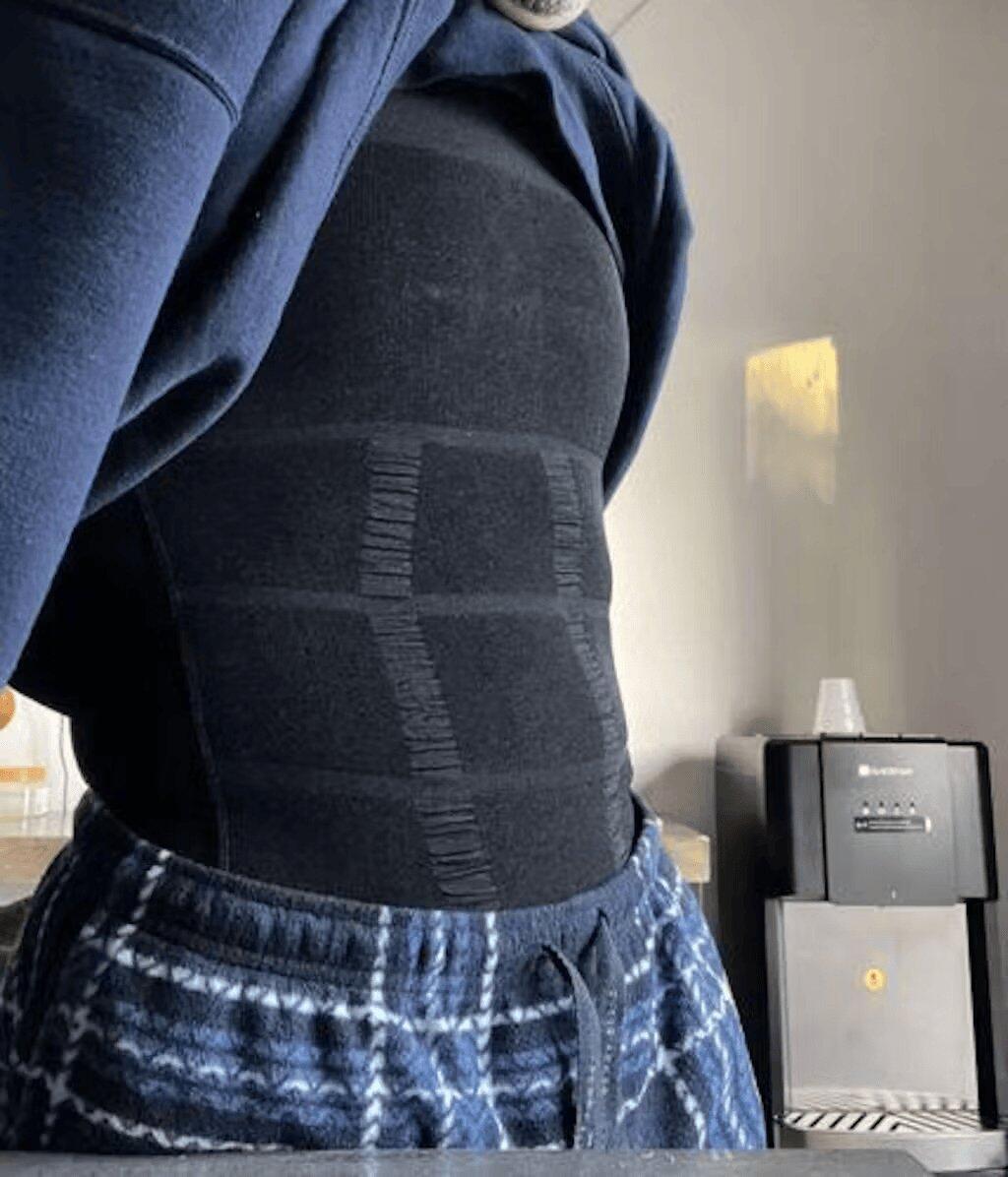
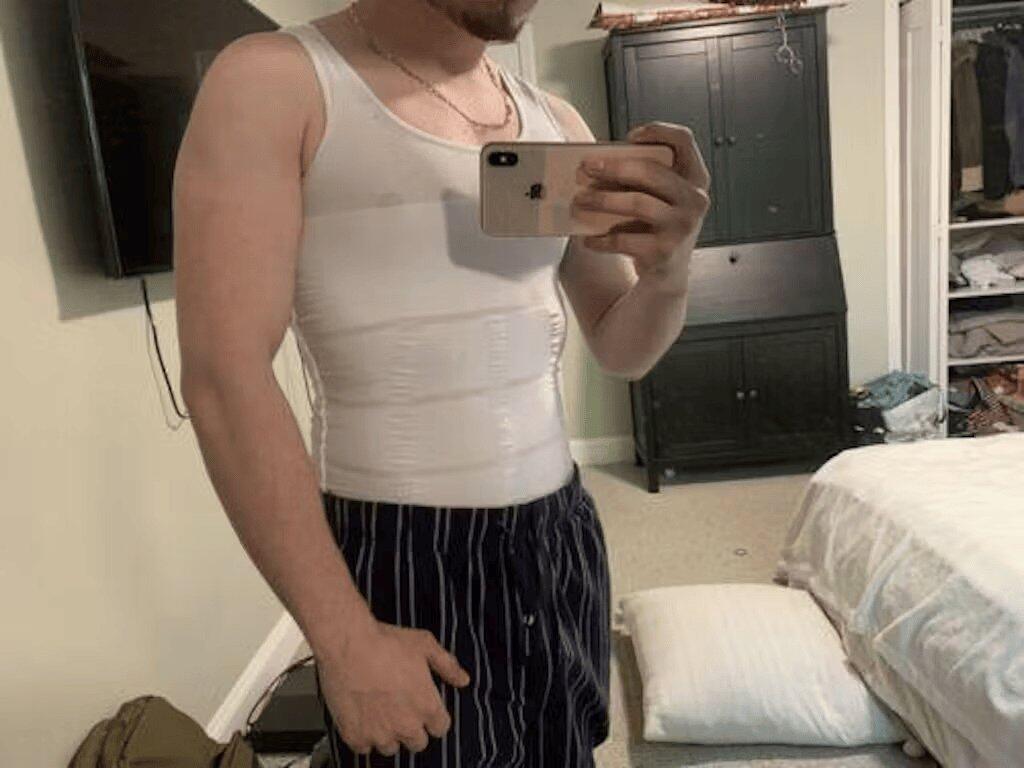
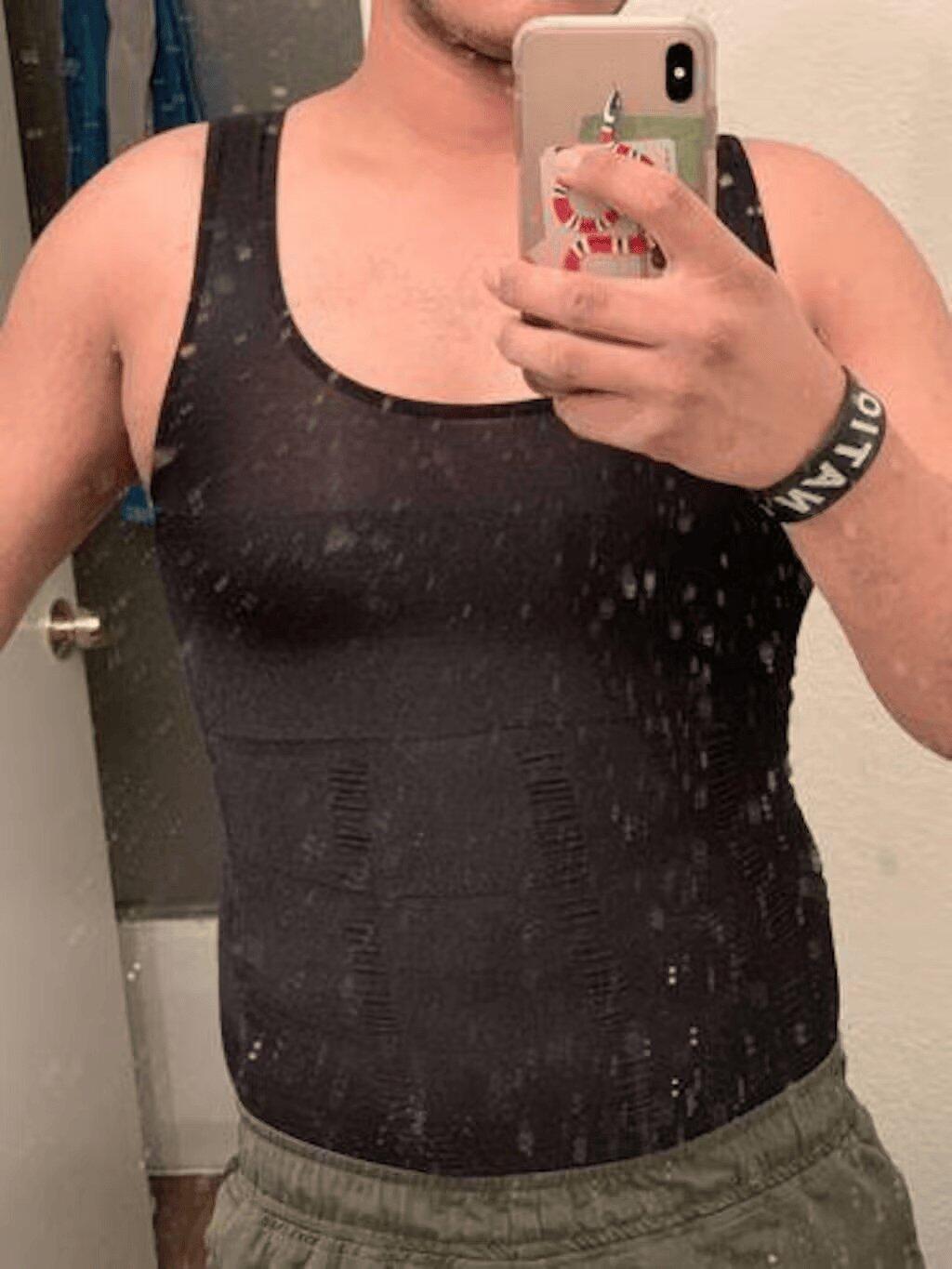
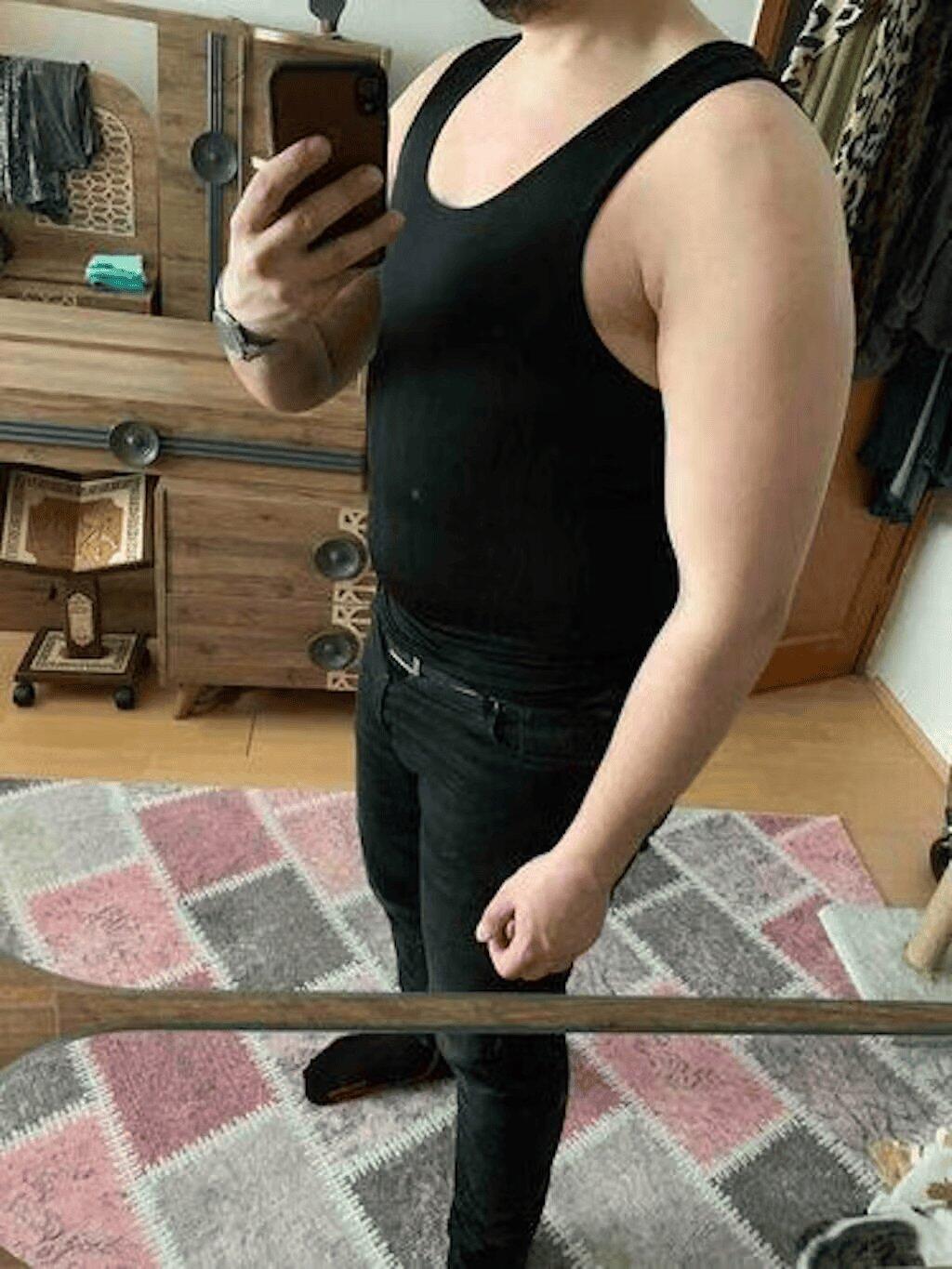
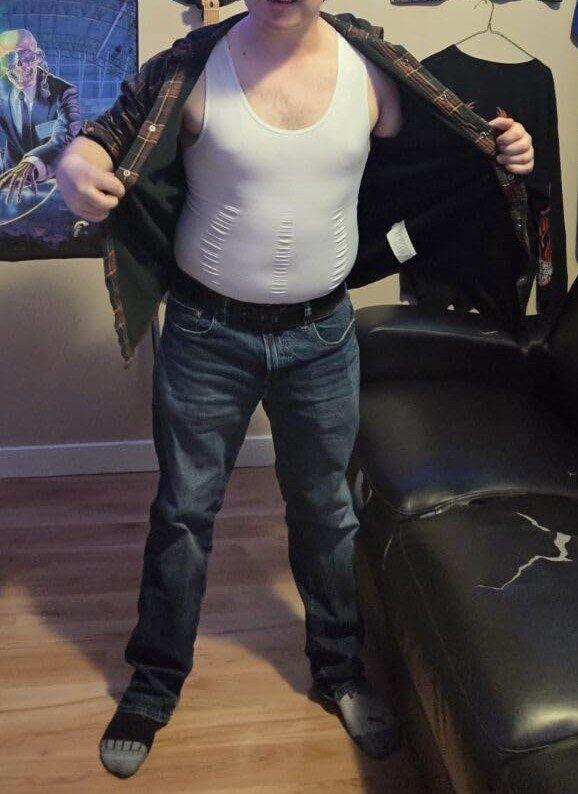
If the jeans already fit: do not size them differently just to change how your stomach or side waist shows under a tucked dress shirt. That is a separate underlayer problem. A compression layer can help the shirt sit cleaner over the stomach and sides while worn, but it will not fix jeans that are too small or a waistband that is already too tight. Our guide to men’s shapewear for the stomach explains that option separately.

If the Outfit Still Feels Off, Change One Signal at a Time
Once you know what is conflicting, resist the urge to rebuild the whole outfit. Change the biggest mismatch and look again. If turning 50 is what made you start second-guessing familiar clothes, our guide to what actually needs to change after 50 applies the same principle across fit, lifestyle, garment execution and appearance preference.
| If you notice this | Change this first | Do not start by |
|---|---|---|
| Crisp business-looking shirt + worn casual denim | Try a more casual shirt surface or cleaner jeans. | Adding a blazer over the mismatch. |
| Shirt hangs far below the waistband untucked | Try a shirt intended to work untucked. | Using a complicated tuck to hide the length. |
| Tucked outfit makes your torso look unusually long | Check jean rise and waistband position. | Buying a different belt. |
| Clean shirt and clean jeans still feel too formal on top | Relax the shirt details or footwear slightly. | Distressing the jeans just to make them “casual enough.” |
| Outfit feels too casual for the event | Check whether jeans belong at the event at all. | Assuming a tie or dress shoe overrides the dress code. |
Shoes, belts, jackets and sleeve rolls are useful after the shirt and jeans agree. At that point they tune the outfit. Before that point, they can become decoration around an unresolved mismatch.

When a Dress Shirt Cannot Make Jeans Formal Enough
A dress shirt can make jeans look sharper. It cannot guarantee that jeans meet a dress code.
If an office explicitly allows clean denim, a dress shirt and jeans may fit comfortably inside that workplace’s version of business casual. If an invitation or employer says no jeans, the shirt does not overrule the instruction. And if the wording is ambiguous, clarifying the rule is safer than trying to win the argument through a more formal shirt, tie or shoe.
For bigger men whose next question is specifically how to build office outfits rather than how to pair these two garments, our business casual guide for bigger men handles that broader decision separately.

A Few Dress-Shirt-and-Jeans Combinations That Work for Different Reasons
Examples are most useful when they show a reason, not a magic color formula.
A casual Oxford shirt with clean straight jeans
This works because the shirt is still collared and intentional, but its more casual surface sits comfortably beside denim. The jeans do not need to pretend to be trousers.
A crisp white shirt with dark, clean jeans
This can work as the sharper end of the combination when the jeans are visually quiet and the rest of the outfit supports that direction. If the same shirt feels too formal with distressed denim and running shoes, the problem is not that white shirts “do not go with jeans.” The signals are simply farther apart.
An untucked button-down that actually ends at an intentional casual length
This works because the shirt does not need a styling trick to explain why it is outside the waistband. The hem looks deliberate rather than like a tucked shirt that escaped.
A tucked shirt with jeans whose rise supports the proportion
This works because the tuck, waistband and shirt are cooperating. The result may read sharper, but the useful lesson is not “always tuck.” It is that the tucked version has to create a balanced transition at the waist.

If the outfit looks wrong, do not ask “What accessory am I missing?” first. Ask which garment is setting the conflicting role. Fix that signal, check the proportion, then use the finishing details to tune an outfit that already makes sense.