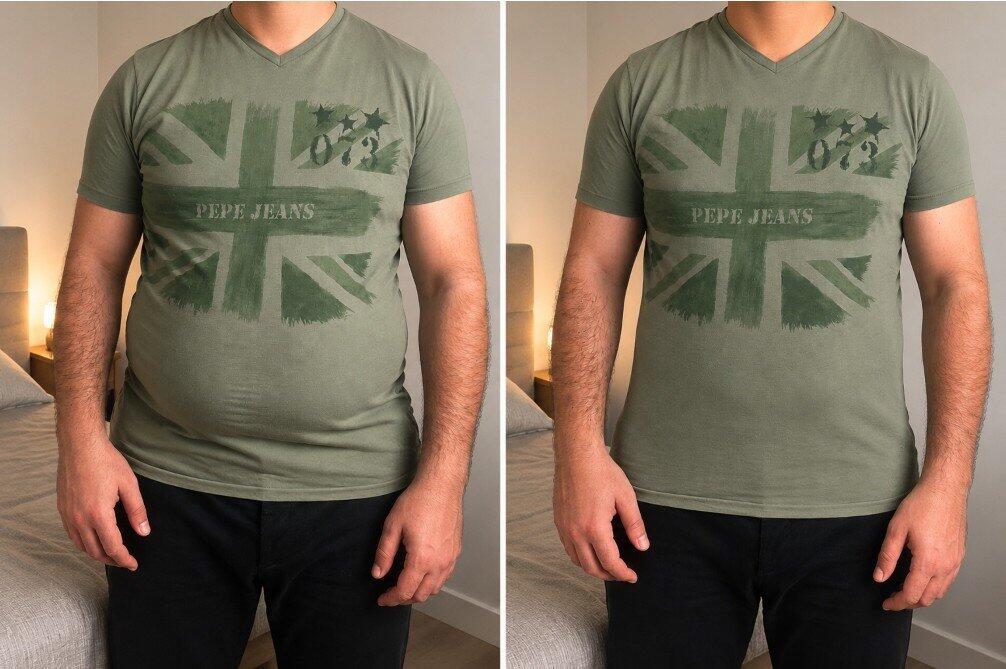
Business Casual for Bigger Men: 3 Outfit Formulas That Don’t Add Bulk
The shirt looked fine before you left. After the commute and an hour at the desk, the waistband has shifted, the sides have come untucked, the collar has opened farther than you intended, and the jacket feels too warm to keep on. That is the real business-casual problem for a bigger man: the outfit has to keep working after you stop standing still.
The safest business casual for big guys starts with a structured shirt, trousers with enough rise and seat room, a straight or gently tapered leg, shoes that match the office, and a jacket that improves the outfit without being required to hide it. Build the outfit as a system, then test it after the commute, while seated, with the jacket removed, and while standing for a meeting.
This guide gives you three complete outfit formulas, but the formulas are only half the answer. You will also learn how to diagnose the visible symptom, identify the garment causing it, and decide whether to keep, alter, or replace that piece. The goal is not to make a bigger body look like a different body. It is to stop clothing from adding avoidable tension, excess fabric, and constant adjustment.
For broader wardrobe foundations outside the office, use the dad-bod style foundations. This page owns one narrower job: complete business-casual outfits that remain practical through a real working day.
Why Business-Casual Outfits Add Bulk on a Bigger Frame
Most advice starts with a list of “flattering” garments. That skips the actual cause. An outfit usually adds bulk because one or more garments are behaving badly in relation to the others.
A thin shirt can cling even when the size is technically correct. A larger shirt can create a different problem by collecting above the waistband. A low-rise trouser can make a normal shirt feel too short. A narrow trouser leg can make the torso look heavier by comparison. A jacket can create useful structure while it is on, then reveal that the base outfit never worked by itself.
Structure is not the same as thickness
Fabric needs enough body to hold a clean surface, but “heavier” is not automatically better. A stiff, bulky fabric can add volume. A very thin fabric can collapse onto the torso. The useful middle ground is a fabric that bends and moves but does not immediately trace every contour underneath.
For a button-down, that may mean Oxford cloth, a substantial cotton weave, or another matte fabric with visible body. For a polo, it may mean piqué or a knit with a stable collar and placket. For trousers, it means fabric that hangs cleanly through the thigh instead of gripping and releasing at every movement.
Room is not the same as excess
A shirt needs room where your body needs it. Excess begins when that room spreads into areas that did not need it: shoulders falling past the arm, sleeves widening, the back inflating, or the waist forming folds above the belt.
That is why “just size up” works only sometimes. It works when the entire garment is consistently too small. It fails when the real issue is the cut—such as enough shoulder width but not enough chest room, or enough waist width but insufficient front length.
The lower half controls more of the shirt than most men expect
Trouser rise changes where the waistband can sit. Seat and thigh room change whether that waistband remains stable in a chair. Together, they affect how much shirt length is available and how easily a tuck survives movement.
If a shirt comes untucked every time you stand, the shirt may be too short—but the waistband may also be sitting too low or moving because the trouser does not have enough rise or seat depth.
When an outfit fails, change one element at a time. Keep the shirt and shoes, then test a different trouser rise. Keep the trousers, then test a different shirt cut. This is slower than changing everything at once, but it tells you which garment caused the problem—and prevents you from buying three new problems at the same time.
What Does Business Casual Mean in Your Office?
Business casual means professional clothing without the full matching suit-and-tie uniform, but the exact line depends on the workplace. The safest way to calibrate it is to look at ordinary employees on ordinary days, then separate relaxed desk days from presentation or client-facing days. This context-first approach also matches the range of modern business-casual combinations described in Hockerty’s current dress-code guide.
Relaxed office
Structured polos, casual button-downs, chinos, dark clean denim where allowed, loafers, and minimal leather sneakers.
Main risk: treating “casual” as permission for weak collars, clingy knits, or shapeless trousers.
Standard business casual
Oxford or button-down shirts, straight chinos or office trousers, loafers or derbies, and an optional unstructured jacket.
Main risk: a shirt-and-trouser base that works only while standing.
Client-facing day
Open-collar dress shirt, tailored trousers, leather shoes, and an unstructured blazer or sport coat.
Main risk: using the jacket to conceal a base outfit that looks unfinished when it comes off.
When the office is unclear, Formula 1 below is the safest starting point. It can move slightly more relaxed with casual shoes or slightly more formal with a jacket, without requiring an entirely separate wardrobe.

Formula 1: The Standard-Office System
Best for
Normal office days, the first week at a new job, internal meetings, and workplaces where a polo may feel too casual.
Oxford or button-down shirt + mid-rise straight trousers + loafers or derbies + optional unstructured jacket
Start with a shirt that can survive sitting
The shirt should fit the shoulders before you evaluate the stomach. If the shoulder seam falls down the upper arm, the shirt will usually look large everywhere. If the seam is correct but the placket pulls across the chest or lower torso, you need a different body cut—not automatically more shoulder width.
If the problem starts with choosing the right shirt or polo block rather than the whole outfit, use the guide to better-fitting tops for bigger builds. This page stays focused on complete office formulas.
Test the shirt with your arms forward as though you are typing. Then sit fully back in a chair. Watch the lower buttons, the side seams, and the front hem. A shirt can look controlled with your arms at your sides and start pulling as soon as the shoulder blades and stomach change position.
Some readers also compare men’s shapewear for a cleaner business-casual base after the office level is clear. The category is optional and should never replace correct shirt, trouser, or jacket fit.
Tucked or untucked?
Tuck the shirt when it is designed with enough body length and the office expects a cleaner finish. Wear it untucked only when the hem is deliberately shorter and remains balanced from the front and side. A long dress-shirt tail left outside the trousers usually looks accidental, while a short casual shirt forced into a tuck usually escapes. Proper Cloth’s construction comparison shows why tucked and untucked shirts need different body lengths.
A useful test is to raise both arms, sit, then stand. If an untucked shirt exposes the waistband or the curved side seam rises too far, it needs more front or side length. If a tucked shirt pulls free at the sides, check both shirt length and trouser rise.
Choose trousers by rise, seat, and thigh—not waist number alone
Business-casual pants usually include chinos, wool-blend trousers, cotton trousers, and other clean non-denim options with a professional finish. For a bigger build, the useful pair is the one that remains stable in a chair.
Start with a mid-rise or slightly higher mid-rise. Sit without tightening the belt more than you normally would. The waistband should not cut sharply into the abdomen, the crotch should not bind, and the side pockets should not flare dramatically. For a clear explanation of how low, medium and high rises differ, see Permanent Style’s rise guide.
If the trousers feel comfortable standing but painful seated, the problem can be insufficient front rise, back rise, seat room, or thigh room. Buying a larger waist may add excess everywhere without correcting the geometry that caused the pressure.
Over or under the belly?
There is no universal answer. A higher waistband can improve shirt coverage and stability for some men. For others, a particular body shape or trouser construction makes that position uncomfortable. The correct answer is the position where the trousers were designed to sit, remain stable without extreme belt tension, and allow normal breathing when seated.
Do not pull a low-rise trouser higher and treat the resulting discomfort as proof that higher-rise trousers do not work. Test an actual higher-rise construction.
Use enough leg width to balance the torso
Straight and gently tapered trousers usually create the most reliable balance. A narrow lower leg can make the torso appear visually heavier and can exaggerate the difference between thigh and ankle. A very wide leg can look untidy if it collapses around the shoe. The relationship between rise, thigh width and overall trouser proportion is explained in more detail by Permanent Style.
Look for a clean line through the thigh, a modest narrowing below the knee if desired, and a hem that meets the shoe without forming multiple folds. One slight break or a clean no-break finish can both work; the important point is avoiding excess fabric puddling at the ankle.
Let the shoes match the visual weight of the outfit
Loafers and derbies are reliable because they look polished without creating the formality of a full suit. Brogues can work when the office leans traditional. Minimal leather sneakers can work in a more relaxed environment, but a very light, narrow sneaker can look undersized beneath a fuller trouser and torso.
Footwear scale is not about buying the chunkiest shoe available. It is about making sure the shoe does not disappear under the rest of the outfit.
Build color balance instead of wearing black from neck to ankle
A light-blue or white Oxford with charcoal, navy, or olive trousers creates a useful vertical contrast: the shirt reads clearly, the trousers ground the outfit, and the shoes finish the lower half. An entirely dark outfit can be effective, but when every surface is equally dark and equally smooth, the silhouette may lose definition.
Texture can replace strong color contrast. A navy textured jacket over a blue Oxford and charcoal trousers can remain quiet without looking flat. The goal is to create a clear hierarchy, not to use color as camouflage.
Apply the jacket-on / jacket-off stability score
Put the jacket on and rate the outfit from 1 to 5. Then remove it and rate the base outfit again.
- 5/5 with jacket, 4/5 without: the jacket improves an already-working outfit.
- 5/5 with jacket, 2/5 without: the jacket is hiding a shirt, tuck, or color-balance problem.
- 3/5 with and without: adding layers will not solve the base fit.
The jacket should be an upgrade, not a structural dependency.
What a hidden base layer can—and cannot—change
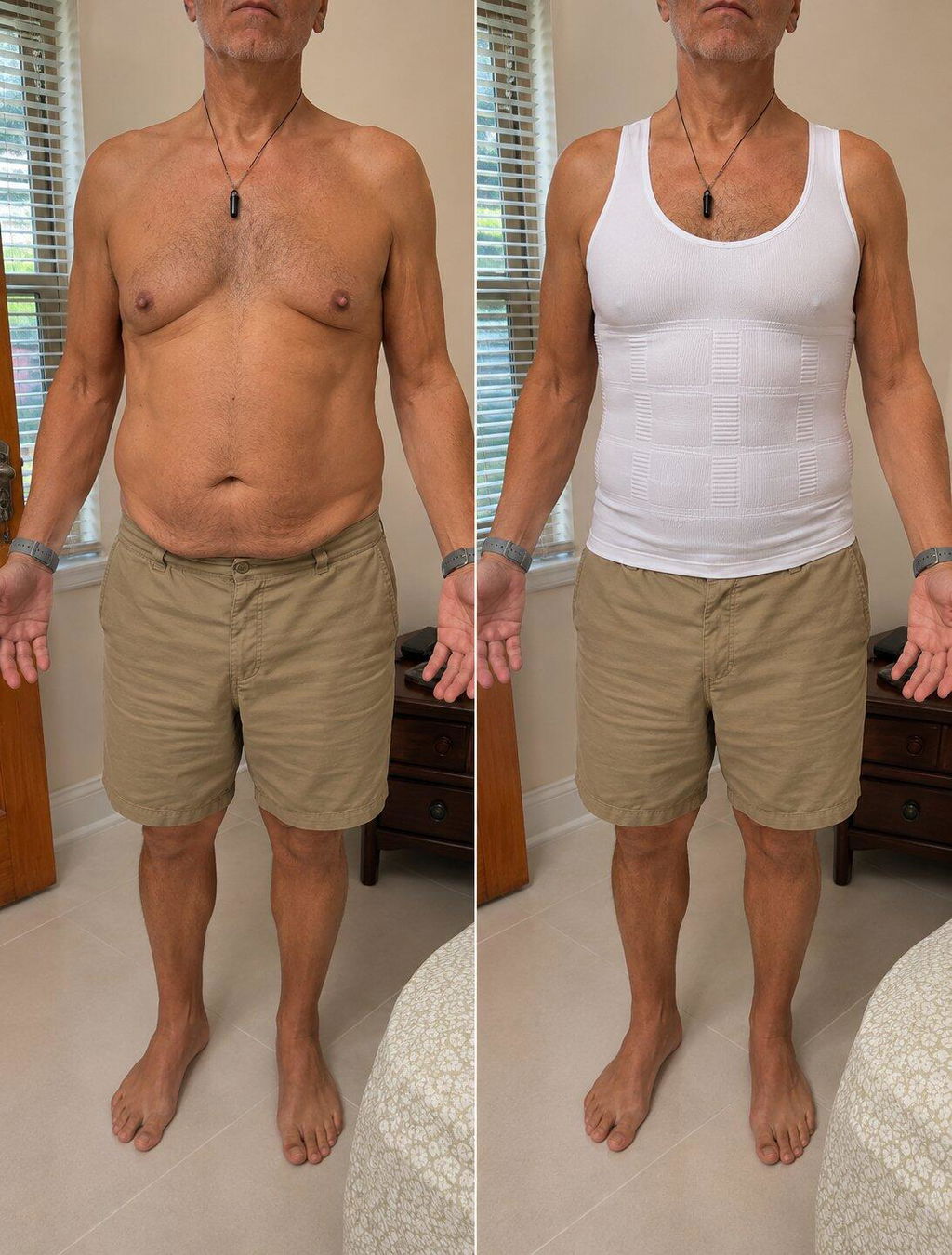
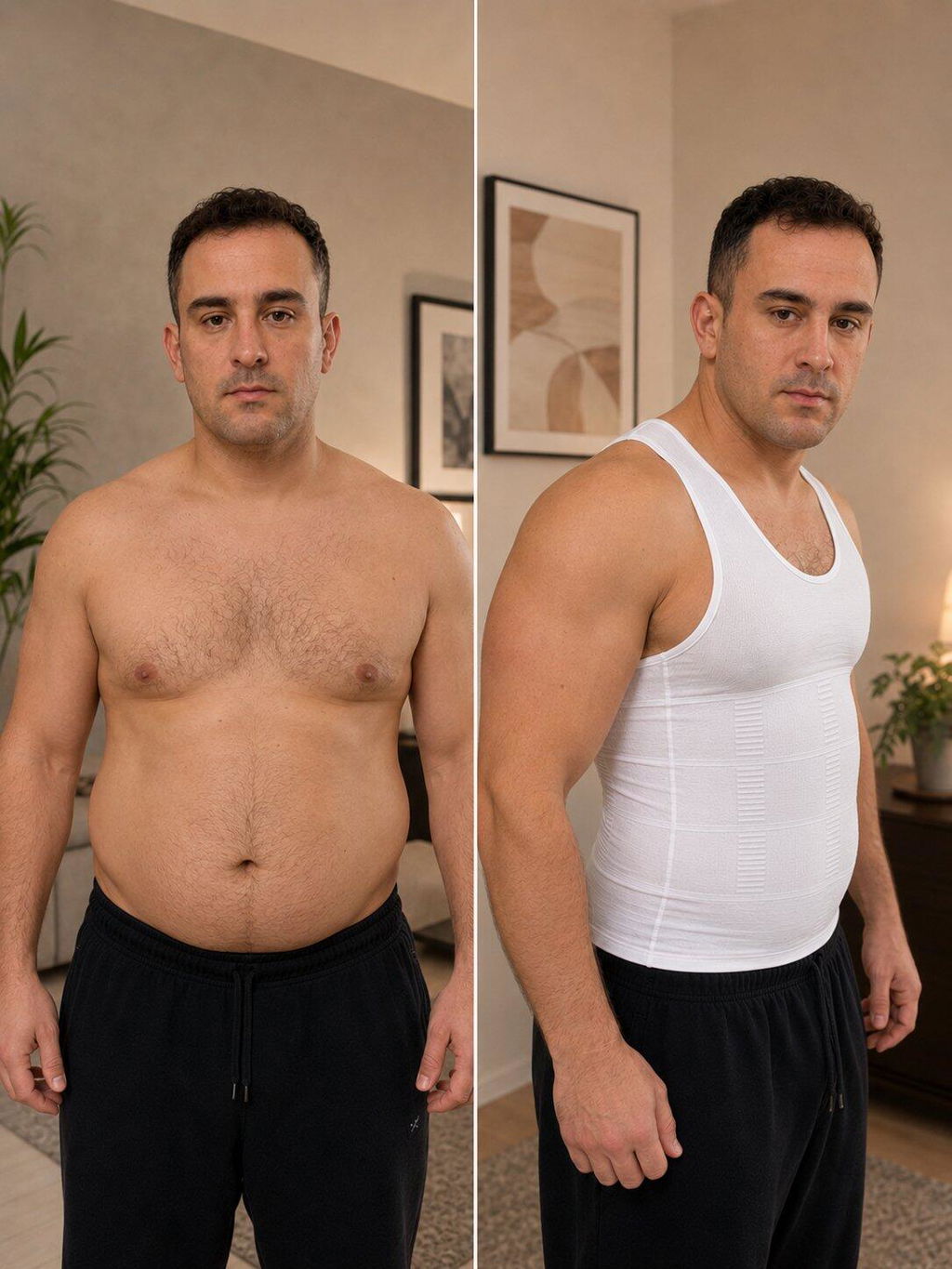
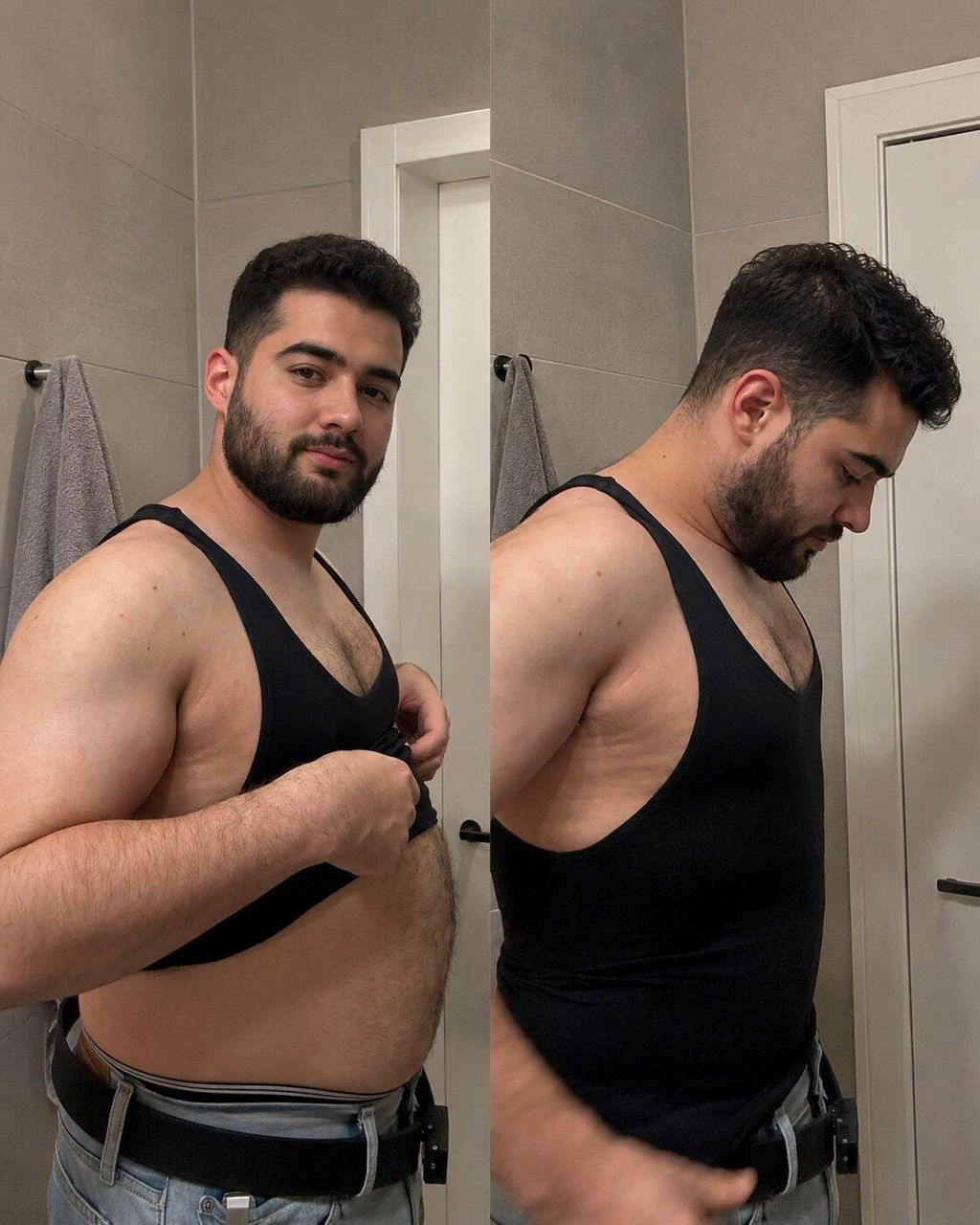
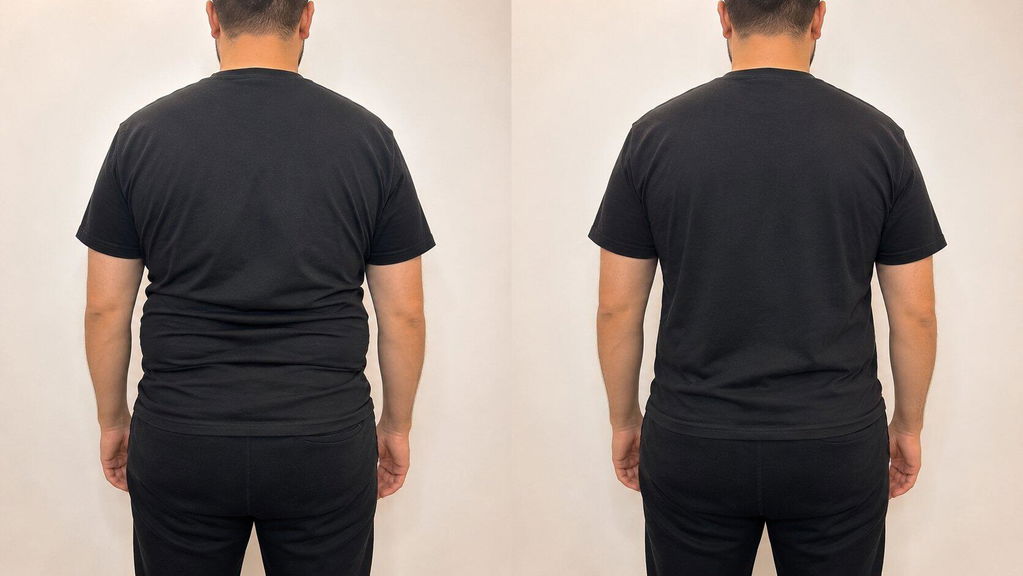
A fitted base layer may change how an outer shirt sits while it is worn. That can be useful when the shirt is already the correct size and the reader wants to evaluate a smoother base beneath it.
It cannot make a tight shirt roomy. It cannot lengthen a hem. It cannot move the waistband. It cannot replace alterations. It also has to be tested under the collar, in office lighting, and while seated because visibility and movement depend on the complete outfit.
Before testing one, confirm:
- the shirt fits the shoulders and torso without sharp button tension;
- the trouser waistband remains stable while seated;
- the neckline sits below the open collar in your normal posture;
- the layer permits normal breathing and movement;
- the full combination is practical for the commute and office temperature.


See the product format only after Formula 1 already works
Review the current color options, size guidance and return terms on the product page. Compare the neckline against the shirts you actually wear and treat the garment as an optional clothing layer—not a correction for a poorly fitting shirt or trouser.
Review the VEROSHAPE Compression TankFormula 2: The Relaxed-Office System
Best for
Internal-only days, creative or technology offices, and workplaces where a dress shirt feels unnecessarily formal.
Structured polo + straight chinos + loafers or minimal leather sneakers
“Polo and chinos” is not a complete formula until you understand how a polo should fit through the chest, sleeves and belly, what keeps the trousers professional, and whether the shoes fit the office rather than the weekend.
Choose structure without creating stiffness
Piqué often works because the texture breaks up light and the knit may hold its shape better than very thin jersey. A stable collar and placket also create a clearer center line. But piqué can still be too tight, too short, or too heavy for the climate, so the fabric name alone is not enough.
Thin jersey can feel comfortable and still cling once you sit or become warm. Shiny performance knits can be practical in some offices, but they may reflect light across the chest and stomach. Judge the polo under the same lighting and posture you will have at work.
Use the seated placket test
Button the polo as you plan to wear it, then sit fully back. The placket should remain flat rather than opening or twisting. The collar should not collapse completely. The front hem should continue covering the waistband.
Next, reach forward. If the polo pulls sharply across the chest or lifts high over the stomach, identify whether the problem is chest room, front length, or both. Sizing up can help when the whole torso is too tight. It fails when the shoulders become too wide and the lower hem begins to flare.
Let chinos carry the office signal
When the top is more relaxed, the trousers and shoes have to keep the combination intentional. Straight chinos in navy, charcoal, olive, or stone usually work well. The fabric should remain clean through the thigh without gripping, and the hem should meet the shoe without stacking.
A belt can finish the outfit, but it should not be doing the job of an incorrect waistband. If you need extreme belt tension to stop the trousers moving, reassess the rise, seat, and waistband construction.
Can clean sneakers be business casual?
Yes, clean minimal sneakers can be business casual in a relaxed office, but they are not the safest choice in every workplace. Leather or leather-like uppers, limited contrast, and a low-profile sole generally look more deliberate than running shoes. When client contact or formal meetings are involved, loafers or derbies are the safer default.
Adjust Formula 2 for body distribution
For a fuller chest, prioritize a stable placket, adequate upper-torso room, and a sleeve opening that does not grip the arm. For a belly-dominant build, prioritize front length and confirm that the hem remains below the waistband while seated. For extra length, look for a longer body without automatically increasing width everywhere.
Heat variation
This formula can be useful on warmer days because it removes the jacket and reduces layers. The tradeoff is that the polo has to work without visual support from an outer layer. If the office is cold, keep a light cardigan, quarter-zip, or unstructured jacket at work—but check that it does not turn the outfit into three competing textures.
Decide whether the polo should be tucked
Most polos are designed to be worn untucked, but the office and the garment still decide. An untucked polo should end around the lower belt area without covering most of the trouser seat. The front should remain below the waistband after you sit, and the side vents should not rise so high that the belt becomes visible.
A tucked polo can work when the body is long enough, the hem remains secure, and the workplace expects a cleaner finish. It fails when the fabric is too thick to sit smoothly beneath the waistband or when the short sides escape as soon as you reach. Test both versions with the same chinos rather than deciding from a standing mirror view.
Check rise, crotch depth, seat room and pocket flare
The relaxed-office formula still needs proper trouser mechanics. A polo does not excuse a waistband that moves every time you sit. Use the same seated test as Formula 1: sit fully back, place your phone, wallet and keys in their normal pockets, and watch the waistband and pocket openings for several minutes.
If the front pockets open sharply, the chino may be tight through the front rise, seat or thigh. If the crotch drops when you loosen the waist, the block may be too long in one area and too narrow in another. A larger waist is not always the correction. A different rise or an athletic/relaxed-thigh cut may preserve room without creating a loose waistband.
Finish the leg, break and belt deliberately
Keep enough room below the knee to balance the torso, then choose either a clean no-break finish or one slight break over the shoe. Multiple folds at the ankle make the relaxed formula look less intentional. The belt should coordinate with the shoe without needing to match perfectly, and it should secure an already-correct waistband rather than compress the trousers into place.
Use color and texture to stop the polo from looking like a uniform shirt
Pair a textured navy, muted blue, forest-green or burgundy polo with a quieter trouser. When the polo has a strong texture, keep the chinos relatively smooth. When the polo is visually simple, a lightly textured trouser can add depth. Avoid combining a shiny polo, glossy belt and highly polished sneaker; too many reflective surfaces make a basic outfit feel more artificial.
Jacket-on and jacket-off behavior
A soft overshirt, cardigan or unstructured jacket can raise the formality, but Formula 2 must remain complete when that layer comes off. If removing the layer reveals a collapsed collar, a short hem or trousers that look too casual, improve the base before adding another piece.
What to alter—and what to replace—in Formula 2
Shortening chinos and refining a modest trouser taper are normal alterations. Polo sleeves may sometimes be shortened, but changing a weak collar, insufficient front length or badly placed placket is rarely worth the work. Replace a polo when the fabric clings, the collar collapses or the body becomes too short when seated. Alter the trousers when the rise and seat already work and only the hem or lower-leg width needs refinement.
| Formula 2 component | Success looks like | Failure sign | Change first |
|---|---|---|---|
| Polo | Stable collar, flat placket, hem covers waistband while seated | Cling, flare, collapse or ride-up | Fabric structure or body cut |
| Chinos | Waist remains stable; pockets stay mostly closed | Pressure, slipping or pocket flare | Rise, seat and thigh block |
| Shoes | Clean and intentional for the office | Running-shoe appearance or visually weak scale | Move to loafers or restrained leather sneakers |
| Optional layer | Improves polish without hiding the polo | Outfit feels unfinished after removal | Repair the base formula |

Compare the category before choosing a product
Use the guide to a compression tank for office layering to compare neckline, sizing, garment length, and the limits of compression beneath normal clothes. Visibility still depends on the complete shirt, collar, color, posture, and lighting.
The Four-State Office Reality Test
Most fitting-room decisions happen while standing. Most office problems happen later. Run the complete outfit through four states before removing the tags.
| State | Symptom | Likely cause | Garment to inspect first | First correction | Second check |
|---|---|---|---|---|---|
| After the commute | Shirt clings, collar shifts, jacket becomes too warm, hidden layer appears | Layer count, thin outer fabric, high neckline, heat without a removal plan | Shirt and outer layers | Remove or lighten one layer before changing size | Check the collar in daylight and office lighting |
| Seated at the desk | Shirt escapes, pockets flare, waistband presses, crotch binds, polo rides up, jacket or base layer moves | Insufficient rise, seat or thigh room; shirt front too short | Trousers, then shirt | Test a different rise before buying a larger shirt | Add phone, wallet and keys, then repeat the seated test |
| Jacket removed | Excess shirt fabric appears, neckline shows, colors feel unfinished | Jacket was providing all the structure | Shirt and trouser pairing | Correct the base outfit before adding the jacket again | Check front, side, and seated views |
| Standing for a meeting | Full retuck required, waistband needs resetting, jacket strains | Unstable shirt-rise system or insufficient upper-body room | One variable at a time | Change either shirt cut or trouser rise—not both | Walk, sit, stand, and reach again |
State 1: After the commute
Walk for five to ten minutes or simulate your normal route. The goal is not to produce an athletic stress test. It is to discover what happens when your temperature rises and the garments start moving.
If the shirt becomes transparent, shiny, or clingy once warm, the outer fabric may be too light for the way you plan to wear it. If the jacket becomes unbearable, the base outfit needs to look complete without it. If a hidden neckline appears after the collar moves, the complete collar-and-layer combination has failed even if it looked hidden at home.
State 2: Seated at the desk
Sit fully back, place both feet on the floor, and remain there for several minutes. The waistband, pockets, thigh, and shirt need time to settle.
Pocket flare can indicate insufficient room across the front, seat, or thigh. Sharp waistband pressure can indicate a rise or construction mismatch. A polo that climbs may need more front length. A button-down that escapes may need more body length, a more stable waistband, or both.
State 3: With the jacket removed
Set the jacket over a chair and reassess the outfit. Look at the shirt’s shoulder line, excess fabric above the belt, collar opening, and color balance.
If the jacket was hiding a large fold of shirt fabric, do not respond by keeping the jacket on all day. Fix the base. If the outfit feels visually empty without the jacket, a stronger shirt texture, cleaner tuck, or more grounded trouser-and-shoe combination may solve the problem without adding another layer.
State 4: Standing for a meeting
Stand without immediately pulling the waistband or rebuilding the tuck. Pick up a notebook, turn, take several steps, then sit again.
A good outfit does not need to remain frozen. It needs to recover. Minor adjustment is normal. A complete reset every time you stand is evidence that one of the garments is not stable enough for the day.

Formula 3: The Client-Facing System
Best for
Presentations, interviews, external meetings, leadership days, and offices where a polo feels too casual.
Open-collar dress shirt + tailored trousers + unstructured jacket + leather shoes
This is not a suit with the tie removed. The jacket and trousers should coordinate without matching exactly, and the open-collar shirt should look intentional both with and without the jacket. If the outfit becomes a full suit, use the guide on how to wear a suit with a belly without looking boxy for jacket fit, trouser rise and seated comfort.
Start with the open collar
Open one button first. A second open button can work only when the collar remains controlled and no hidden layer appears. A button-down collar often feels more relaxed. A spread or semi-spread collar can sit cleanly beneath a jacket, provided it does not collapse when the jacket comes off.
Turn your head, lean forward, and look down. That movement reveals more than the straight mirror position. If the collar opens too far, reduce the opening or choose a lower neckline underneath.
Choose tailored trousers that still allow a full seated posture
“Tailored” describes a controlled line, not a tight garment. The side pockets should remain mostly closed when seated, the thigh should not show sharp diagonal pulling, and the waistband should remain near its intended position.
A slight taper can look polished, but keep enough lower-leg width to support the jacket and torso. The hem should meet the shoe cleanly. If the trouser break changes dramatically every time you sit and stand, review the length, knee shape, and shoe combination.
Use jacket length and button stance to support the torso
A jacket that stops too high can make the torso appear visually compressed. One that extends too far can overwhelm a shorter frame. The useful length depends on height, torso length, and the jacket’s overall proportion—not on a universal rule.
Button stance matters because it controls where the front closes and where the lapels begin to separate. If the button sits at an awkward point across the widest part of the torso, the jacket can pull even when the shoulders are correct. In that case, a different cut is usually more useful than a larger size that also widens the shoulders and lengthens the sleeves.
Check the jacket open, closed, seated, and removed
Standing, the jacket should hang cleanly while open. If it is designed to button, it should close without deep horizontal strain. Seated, unbutton it. Then remove it and confirm that the shirt-and-trouser system still passes.
If the jacket is the only reason the outfit looks professional, Formula 3 has failed its base test.
Choose shirt fabric for the room and the temperature
Fine poplin can look crisp and formal, but its smooth surface reveals tension quickly and may show the outline of an underlayer beneath pale colors. Oxford cloth is more textured and often feels more relaxed. A twill can sit between them, with a smoother diagonal surface and more body than very light poplin. The correct choice depends on the room, climate and how much structure you need—not on a promise that one fabric always looks better on a bigger frame.
For warm commutes, avoid solving the problem with the thinnest possible shirt if that fabric becomes transparent or clingy once warm. Carry the jacket, let your temperature settle and choose a shirt that still behaves properly on its own.
Check front and back rise before judging the jacket
Client-facing trousers may look sharper than chinos, but they still need enough front and back rise to support a seated day. Front rise affects pressure and waistband position. Back rise affects seat coverage and whether the waistband drops when you bend or sit. If either is insufficient, the shirt and jacket will appear to move even when the real problem begins below them.
Load the pockets, sit, cross one ankle over the other and stand again. The waistband should recover without a major reset. If the trousers pass standing but fail as soon as the pockets are loaded, inspect the seat and thigh before increasing the waist.
Balance lapel width, shirt collar and torso scale
Very narrow lapels can look visually small against a fuller torso, while very wide lapels can push the outfit toward formal or dramatic. A moderate lapel usually keeps the jacket proportional. The shirt collar should sit cleanly beneath it without disappearing, spreading too far or leaving an exposed hidden layer.
Coordinate color and texture without creating a broken suit
The jacket and trousers should be clearly related but not almost-matching in a way that resembles a mismatched suit. A navy textured jacket with charcoal trousers is reliable. A medium-gray jacket with navy trousers can also work. Keep one surface more textured and the other quieter so the outfit has depth without looking busy.
Adjust Formula 3 for chest, belly, width and length
For a fuller chest, protect shoulder fit and lapel behavior; deep bowing or a collar pulled away from the neck suggests the front lacks room. For a belly-dominant build, check button stance, front length and whether the jacket fronts remain clean while open. If you need more width but not more length, look for a different cut rather than automatically moving into Tall sizing. If the shoulders and chest work but the jacket ends too high, test a longer proportion before a larger size.
What to alter—and what to replace—in Formula 3
Jacket sleeves and trouser hems are common alterations. Moderate waist suppression may be possible when the shoulders and chest already fit. Replace the jacket when the shoulders are wrong, the button stance fights the torso, the lapels bow badly or the overall length is fundamentally incorrect. Replace trousers when the rise and crotch depth fail; hemming cannot correct those areas.
| Formula 3 component | Success looks like | Failure sign | Change first |
|---|---|---|---|
| Open-collar shirt | Collar remains controlled; no sharp placket tension | Collar collapse, visible layer or pulling | Collar shape, fabric or torso cut |
| Tailored trousers | Stable waistband, clean pockets and enough thigh room | Binding, flare or waistband drop | Front/back rise and seat block |
| Jacket | Clean shoulder, flat lapels, usable open and closed | Shoulder collapse, bowing or strained closure | Jacket cut—not a larger version of the same cut |
| Leather shoes | Appropriate polish and visual scale | Too casual, too formal or disconnected from trousers | Match shoe formality to the meeting |
Choose footwear for the meeting, not an abstract style rule
Loafers and derbies bridge tailored trousers and an open collar well. A polished minimal sneaker may work in a modern office, but when meeting clients for the first time, the more formal shoe is the lower-risk decision unless the company culture clearly says otherwise.
Symptom-to-Garment Diagnostic: What Should You Change First?
Start with what you can see or feel. Then identify the likely cause before buying anything.
| Visible symptom | Probable cause | Inspect first | First correction | Do not do this first |
|---|---|---|---|---|
| Lower buttons pull when seated | Insufficient shirt room or front length; waistband too low | Shirt cut, then trouser rise | Test a roomier torso cut or a more stable rise | Buy a much wider shirt without checking shoulders |
| Fabric piles above the belt | Excess waist fabric, deep tuck folds, unstable waistband | Shirt waist and trouser position | Reduce excess through alteration or a better cut | Hide it permanently with a jacket |
| Pockets open while seated | Insufficient front, seat, or thigh room | Trousers | Try a different rise and cut | Assume the waist number is the only issue |
| Polo rises above the waistband | Insufficient front length or torso room | Polo body length | Test a longer body or different cut | Size up until shoulders drop |
| Torso looks much heavier than legs | Leg too narrow; shoe too visually light | Trouser leg and footwear | Move toward a straighter leg and grounded shoe | Add a larger top |
| Outfit fails when jacket comes off | Base lacks structure, fit, or color balance | Shirt and trousers | Repair the base outfit | Keep the jacket on in every temperature |
| Hidden layer shows at the collar | Neckline too high, collar too open, posture changes | Complete shirt-layer combination | Use a lower neckline or reduce the collar opening | Assume it stays hidden because it did while standing |
Use the one-variable test after the diagnosis
Once you identify the likely cause, change one garment. Wear the same shirt with a different trouser rise. Wear the same trousers with a different shirt cut. Keep the clothes and change only the shoe if the lower half looks visually weak.
If the change fixes the symptom, you have found the responsible variable. If not, return to the table and test the next likely cause.

What Changes for a Fuller Chest or a Belly-Dominant Build?
Two men can wear the same labeled size and need different solutions. The first correction depends on where the garment fails.
Fuller-chest path
Common symptoms: upper placket tension, collar pulled open, polo clinging high on the torso, armholes cutting into the front shoulder.
Check first: chest room, armhole shape, shoulder movement, and fabric cling.
Common failed attempt: sizing up until the waist, sleeves, and shoulders become oversized.
Better next test: a cut with more upper-torso room, followed by alteration elsewhere if practical.
Belly-dominant path
Common symptoms: lower-button tension, short front hem, polo rising, shirt escaping when seated, waistband moving.
Check first: shirt front length, torso room, trouser rise, seat, and waistband stability.
Common failed attempt: buying a longer and wider shirt while keeping the same low, unstable trouser.
Better next test: evaluate the shirt and rise together.
When both are present, use this order: shoulder and upper-torso movement, shirt front length, trouser rise and seat, then the leg shape. This prevents one correction from creating three new problems.
For the wider proportion question, including shirt length and waistband position, see how to dress with a belly. For the specific mechanics of a dress shirt across the chest and stomach, use the dress-shirt fit guide for a fuller chest and belly.
Big vs. Tall: Do You Need More Width, More Length, or Both?
Big sizing addresses width; Tall sizing addresses length. The labels can overlap, but they do not solve the same fit problem. Westport Big & Tall’s business-casual guidance likewise treats proportion and garment length as separate fit decisions.
You probably need more width when the shoulders, chest, stomach, seat, or thighs are tight while sleeves and body length are already correct. You probably need more length when sleeves stop too high, a correct-width shirt will not stay tucked, or a jacket ends too high on the torso.
You may need both. But a shirt feeling short across a fuller stomach does not automatically prove you need Tall sizing. The front may be lifting because the torso cut is too tight or the trouser waistband sits too low. Tall sizing may add unwanted sleeve and back length without correcting the real cause.
- Tight but long enough: test more width or a different cut.
- Fits around but sleeves/body are short: test Tall.
- Front short, back long enough: inspect torso room and trouser rise before choosing Tall.
- Jacket shoulders fit but body ends too high: test a longer jacket proportion, not a larger shoulder.

How to Read a Product Page Before You Order
A product page cannot prove that a garment will fit you, but it can reveal whether the brand gives you enough information to make a sensible first choice. The goal is to find construction clues before you spend time ordering and returning several versions of the same problem.
Do not trust the fit label by itself
Regular, Classic, Relaxed, Athletic and Slim are not standardized across brands. A Regular cut from one company may have less stomach room than another company’s Slim cut. Use the label only as a starting point, then look for garment measurements.
| Label | What it often suggests | What it does not guarantee | Measurement to check |
|---|---|---|---|
| Slim | Reduced body width and stronger taper | Correct shoulders or enough seated room | Chest, waist and bottom width |
| Regular / Classic | Straighter body with more general ease | Enough front length for a belly-dominant build | Body length and midsection |
| Relaxed | Additional room through body or leg | Controlled shoulders, collar or waistband | Shoulder, seat and thigh measurements |
| Athletic | More room in chest/thigh with taper elsewhere | A good fit for a belly-dominant torso | Waist taper, seat and thigh |
| Big / Tall | Extra width, length or both | That the additional dimension is the one you need | Sleeve, body, jacket and inseam length |
Read the measurement chart as a garment chart
Confirm whether the numbers describe the body or the finished garment. A body chart tells you which size the brand recommends. A garment chart tells you the actual shirt, trouser or jacket dimensions. They are not interchangeable.
Compare the chart with a garment you already own and trust. Measure that piece on a flat surface using the brand’s method. Focus on shoulder, chest, midsection, bottom width and body length for shirts; waist, front rise, back rise, seat, thigh, knee and hem for trousers; and shoulder, chest, jacket length and sleeve for jackets.
Use side and rear product photos
A front photo can hide excess fabric, a short jacket or a waistband sitting too low. Side views reveal front length, stomach tension and jacket balance. Rear views reveal shirt blousing, jacket length and whether trousers pull across the seat.
If a retailer shows only a front-facing model with hands in pockets, assume you still need information. Look for a video, customer photos, a detailed measurement chart or a return policy that lets you test the garment at home.
Check fabric information without over-reading it
Fiber content alone does not tell you weight, weave, stiffness or drape. A cotton shirt can be thin poplin, textured Oxford or substantial twill. A small amount of stretch may help movement, but it can also allow a too-small garment to remain buttoned while still showing tension.
Useful product-page details include fabric weight, weave, lining, rise, leg opening, shirt body length, collar type and whether measurements change across Big and Tall sizes.
Check the return path before the style details
Business-casual fit requires sitting, reaching and moving. Make sure the return terms allow a careful indoor try-on. Keep tags attached, use clean shoes and repeat the complete outfit test before deciding.
The 10-Minute Fitting-Room Test
This test is designed to stop “looks fine standing” purchases. Use it in a fitting room or at home before removing the tags.
Check the shoulders and collar
Stand naturally. Confirm that the shoulder seams are near the shoulder edge and the collar sits where you intend to wear it.
Reach forward
Simulate typing, driving, and reaching for a notebook. Watch the upper placket, back, and armholes.
Sit fully back
Let the waistband, pockets, shirt, and thigh settle. Do not judge the fit while perched at the chair edge.
Add your phone, wallet and keys
Pocket contents can change trouser flare, waistband balance and seated pressure. Place each item where you normally carry it, then sit and stand again.
Stand without retucking
See whether the waistband and shirt recover or require a complete reset.
Remove the jacket
Confirm that the base still has structure, correct collar coverage, and balanced color.
Check side and rear views
Look for excess shirt fabric, trouser pulling, short jacket length, or an untucked hem that rises at the sides.
Change one variable only
If the outfit fails, switch either the shirt, trouser, shoe, jacket, or layer. Repeat the test and compare.
| Test | Success | Failure | Next decision |
|---|---|---|---|
| Standing and reaching | Shoulders remain controlled; placket stays mostly straight | Sharp pulling, dropped shoulder or restricted reach | Change shirt cut before altering sleeves |
| Seated with loaded pockets | Waistband remains usable; pockets stay mostly closed | Pressure, pocket flare or crotch binding | Test another rise, seat or thigh block |
| Stand without retucking | Shirt and waistband recover with minor adjustment | Full tuck and waistband reset required | Inspect shirt length and trouser stability together |
| Jacket removed | Base outfit remains complete | Excess fabric, visible layer or lost structure | Repair the base before keeping the jacket |
| Daylight and office light | Colors, opacity and neckline remain acceptable | Unexpected shine, transparency or visible underlayer | Change fabric, color or layer combination |
Keep, Alter, or Replace?
Keep
Keep the garment when the core fit works and the problem comes from pairing, color, shoes, or a temporary tuck issue.
Example: correct shirt fit, but the narrow trouser makes the torso feel visually heavy.
Alter
Alter when the difficult structural areas fit and a practical adjustment can refine the rest.
Examples: shortening sleeves, hemming trousers, reducing modest waist excess, or refining trouser length.
Replace
Replace when the shoulder line, rise, armhole, body length, or basic garment cut is wrong.
Example: a low-rise trouser forced higher or a short shirt that cannot survive sitting.
Alterations can refine a good foundation. They are less effective when the garment’s core geometry does not match the body or intended use.
Build a Five-Day Work Rotation from Seven Pieces
You do not need a different wardrobe for every office day. Seven reliable pieces can create five distinct combinations:
| Core piece | Role | Example use |
|---|---|---|
| Light-blue Oxford | Standard base | Monday with charcoal trousers |
| White or restrained-pattern shirt | More formal base | Presentation day with jacket |
| Structured navy or olive polo | Relaxed-office base | Friday with chinos |
| Charcoal or navy straight trousers | Polished lower half | Works with both button-downs |
| Olive, stone, or gray chinos | Relaxed-to-standard bridge | Works with Oxford or polo |
| Loafers or derbies | Main office shoe | Supports all three formulas |
| Unstructured navy or textured jacket | Meeting and temperature layer | Add to either button-down formula |
From those seven pieces, you can rotate shirt, trouser, and jacket combinations while keeping the same fit system. That matters because repeatability is more useful than owning fifteen outfits that each fail in a different way.
Heat, Open Collars, and Layer Visibility
The commute and the office can feel like different climates. Build the shirt or polo to work alone, then add the outer layer only for temperature or formality.
If you carry the jacket during the commute, put it on after your body temperature settles. If you use a hidden base layer, test it beneath the exact collar opening you wear. A neckline can remain hidden when standing straight and appear when you lean, turn, or open another button.
Black and White should be tested under the actual shirt fabric. Neither color is universally invisible. Shirt opacity, lighting, skin tone, collar depth, and fabric tension all affect visibility.
If any layer rolls, presses, or requires repeated adjustment, revisit size, garment length, waistband position, and the friction between fabrics. Avoid absolute assumptions such as “it will never show” or “it will never move.” The complete outfit is the test.
Five Purchases That Commonly Create More Work
1. A larger shirt bought to solve only the stomach
It may create dropped shoulders, wide sleeves, and excess back fabric. Look for a better torso cut before increasing every dimension.
2. A low-rise trouser tightened with a belt
The belt may hold the waistband temporarily, but it does not add rise, seat depth, or thigh room.
3. A very narrow trouser used to look “tailored”
A narrow leg can grip the thigh, flare the pockets, and make the torso appear heavier by contrast.
4. A long dress shirt worn untucked
The extra length and curved tail can make the torso look longer and less deliberate. Use a shirt designed for untucked wear when that is the plan.
5. A jacket purchased before the base outfit works
The jacket can temporarily hide shirt excess and waistband problems. Remove it before approving the purchase.
Frequently Asked Questions
What is the safest business-casual outfit for a bigger man?
The safest default is an Oxford or button-down shirt, mid-rise straight trousers, loafers or derbies, and an optional unstructured jacket. It covers the widest range of offices and can be adjusted more formal or relaxed without changing the whole wardrobe.
Does business casual require a jacket?
No. A jacket is optional in many workplaces. It is more useful for presentations, client meetings, or offices that lean formal. The shirt and trousers should still look complete when the jacket is removed.
Is a blazer business casual?
Yes. An unstructured blazer or sport coat can be business casual when paired with non-matching trousers, an open-collar shirt, and appropriate shoes. A rigid suit jacket may look too formal or mismatched when separated from its suit trousers.
What trousers count as business-casual pants?
Chinos, clean cotton trousers, wool or wool-blend trousers, and other polished non-denim trousers commonly qualify. For a bigger build, the deciding factors are rise, seat and thigh room, leg shape, and how the trousers behave while seated.
Can a polo be business casual?
Yes, especially in a relaxed office. Choose a polo with a stable collar and placket, enough front length, and fabric that does not cling or become overly shiny under office lighting. Pair it with clean chinos and office-appropriate shoes.
Should a bigger man tuck in his shirt?
Tuck when the office expects it and the shirt has enough length to remain secure with the trouser rise. Wear untucked only when the shirt has a deliberate casual hem and appropriate front and side length. The correct answer depends on the shirt construction and waistband—not on body size alone.
Should trousers sit over or under the belly?
Use the position the trousers are designed to occupy and that remains stable and comfortable while seated. Some men do better with a higher rise; others need a different construction or position. Test a real higher-rise trouser before deciding that higher placement cannot work.
Can bigger men wear clean sneakers to work?
Yes in many relaxed offices. Choose minimal, clean sneakers with limited contrast and a low-profile shape. For client-facing or more traditional settings, loafers or derbies are safer.
What changes for Big and Tall business casual?
Big sizing changes width. Tall sizing changes sleeve, body, jacket, or trouser length. Identify which dimension is failing in each garment rather than choosing Tall automatically because a shirt feels short across the front.
Final Business-Casual Checklist
- The outfit matches the office’s real level of formality.
- The shirt or polo fits the shoulders before you judge the stomach.
- The shirt has the correct construction for tucked or untucked wear.
- The trouser rise remains stable and comfortable while seated.
- The seat and thighs permit a full seated posture.
- The leg shape balances the torso without excess fabric at the shoe.
- The shoes match the office and the visual weight of the outfit.
- The jacket improves the outfit but is not required to hide it.
- The collar and any hidden layer have been tested in motion and office light.
- The full outfit passes the commute, desk, jacket-off, and meeting states.
Business casual for bigger men becomes much easier when you stop treating each garment as a separate purchase. Build one complete system, identify the symptom when it fails, and change one variable at a time. That process gives you fewer almost-right clothes, more repeatable outfits, and a wardrobe that still works after the mirror check is over.
- Proper Cloth: tucked dress shirts vs. untucked casual shirts
- Proper Cloth: shirt length and tuck security
- Permanent Style: trouser measurements and proportions
- Permanent Style: low, medium, and high trouser rise
- Hockerty: current business-casual definition and outfit examples
- Westport Big & Tall: Big-and-Tall business-casual fit and wardrobe guidance