Fat Guy Suits: How to Wear a Suit With a Belly Without Looking Boxy
The suit looks fine while you stand still. Then you sit down, the trousers slide under your belly, the shirt pulls above the belt, and the clean formal look suddenly turns boxy.
That is the real problem with fat guy suits: the jacket is only one part of the outfit.
A suit has to work as a system: jacket, button point, lapel width, trouser rise, waistband, dress shirt, chest, love handles, sitting comfort, heat, and the hidden layer under the shirt.
Quick answer: The best suit for a man with a belly is usually a properly tailored single-breasted suit with enough room through the stomach, a button point that does not pull, balanced lapels, and trousers that do not sit too low under the belly. The dress shirt matters just as much because it becomes visible when the jacket opens or comes off.
What Suit Looks Best on a Fat Guy With a Belly?
The best fat guy suits are not just bigger suits. They are suits that give the stomach enough room while keeping the shoulders, chest, and trouser line controlled.
Most men get into trouble when they solve one problem by creating another. Sizing up may reduce belly tension, but it can also drop the shoulders, widen the body, make the sleeves sloppy, and turn the whole suit into a box.
The cleaner target is a suit that follows your frame without squeezing the stomach. The jacket should close without strain, the lapels should look proportional to your torso, and the trousers should continue the vertical line instead of disappearing under the belly.
If you want broader outfit foundations beyond suits, start with our guide to general dressing principles for a belly. This article stays focused on formalwear and suit mechanics.
The suit should follow your frame, not squeeze your stomach
A good suit does not need to make your stomach disappear. It needs to stop the stomach from controlling every line in the outfit.
That means the jacket should have shape through the chest and shoulder, enough room around the midsection, and a clean front that does not look like the top button is fighting the body.
Why “just size up” makes many suits look boxier
Sizing up can feel safer, but a bigger jacket is not automatically a better jacket.
If the suit grows everywhere, the belly may get room while the shoulders, sleeves, jacket length, and trouser width lose control.
The first rule: fix the suit fit first, then check the shirt underneath. Tailoring can clean up the jacket, but the dress shirt still decides what people see when the jacket opens.

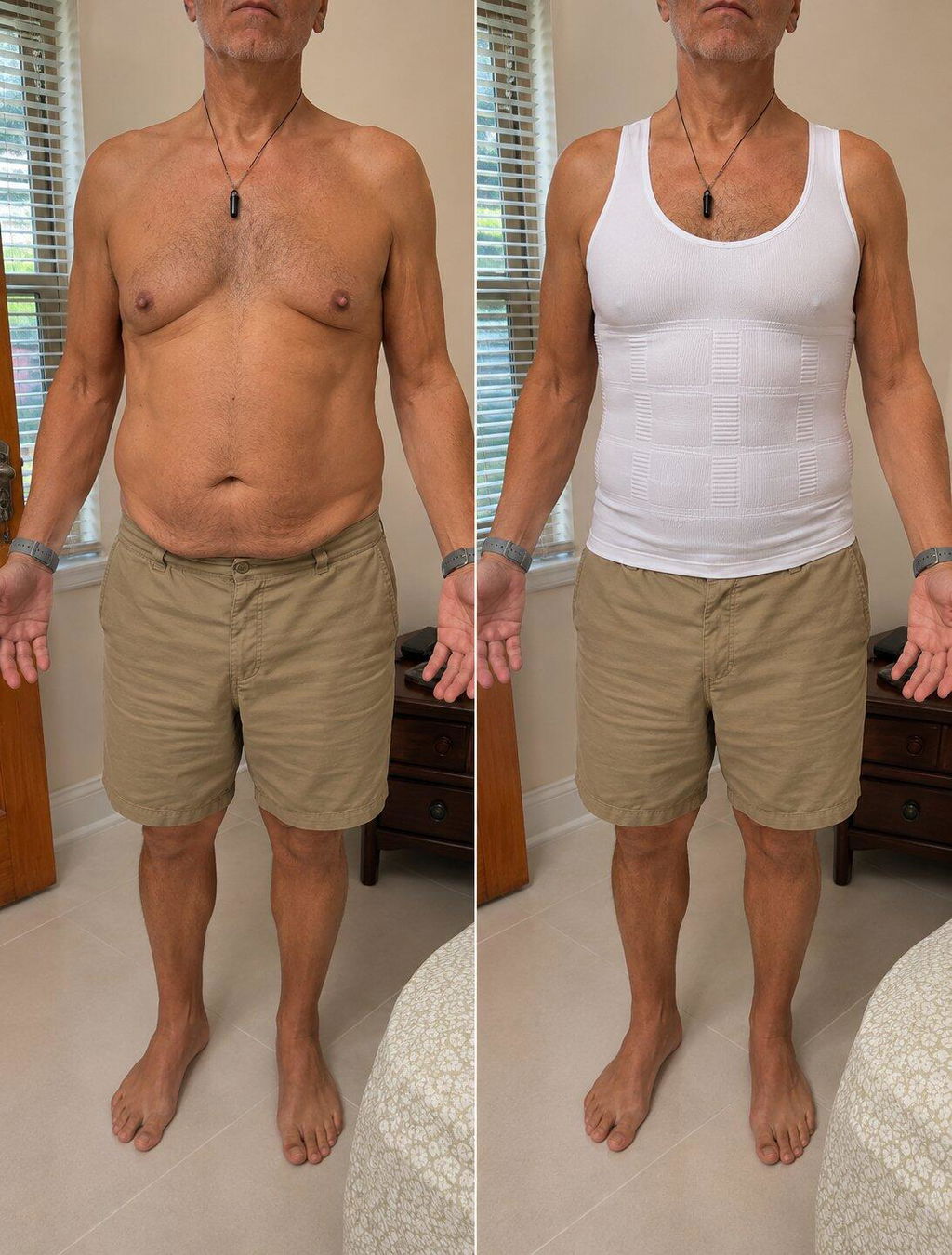
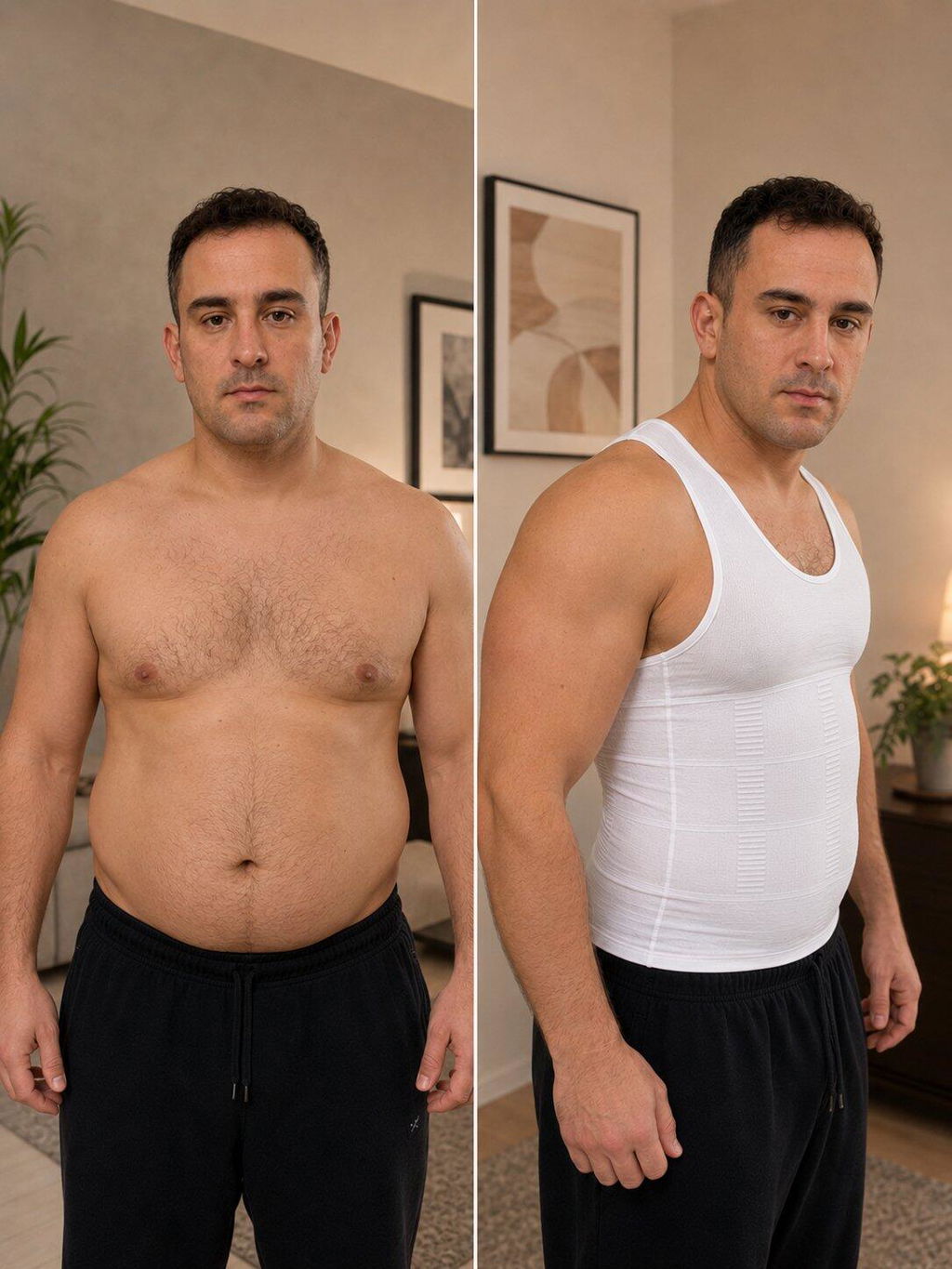
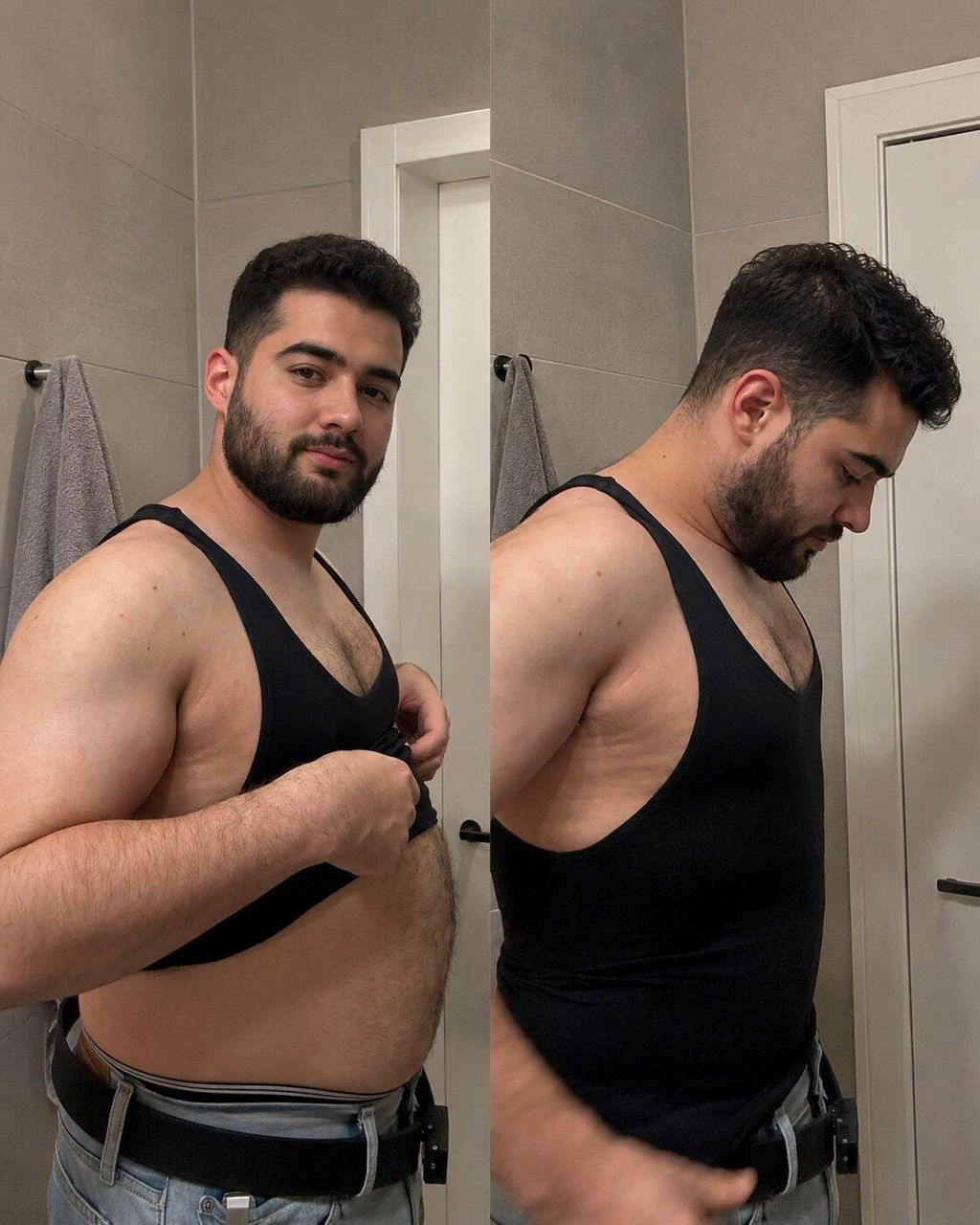
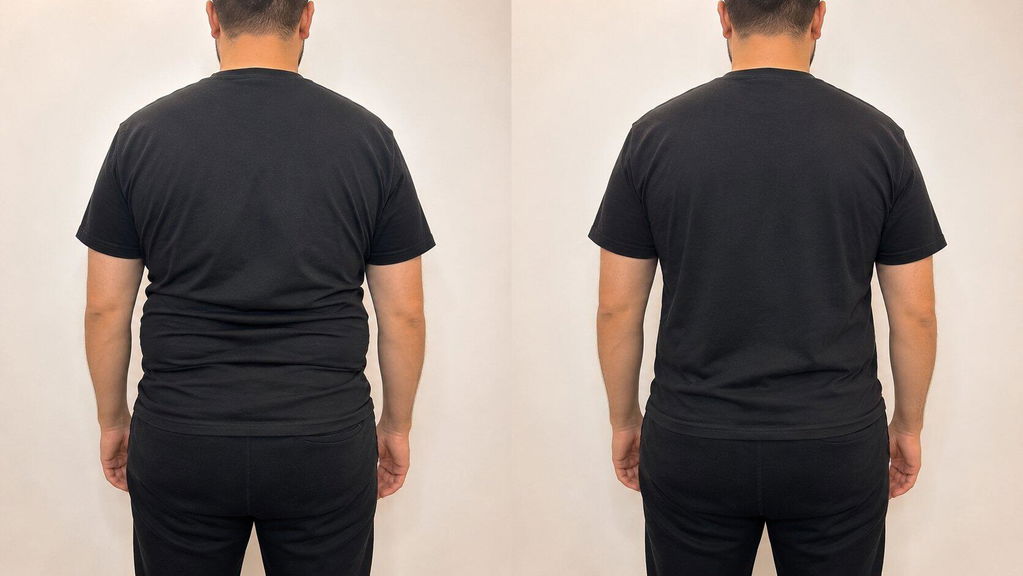
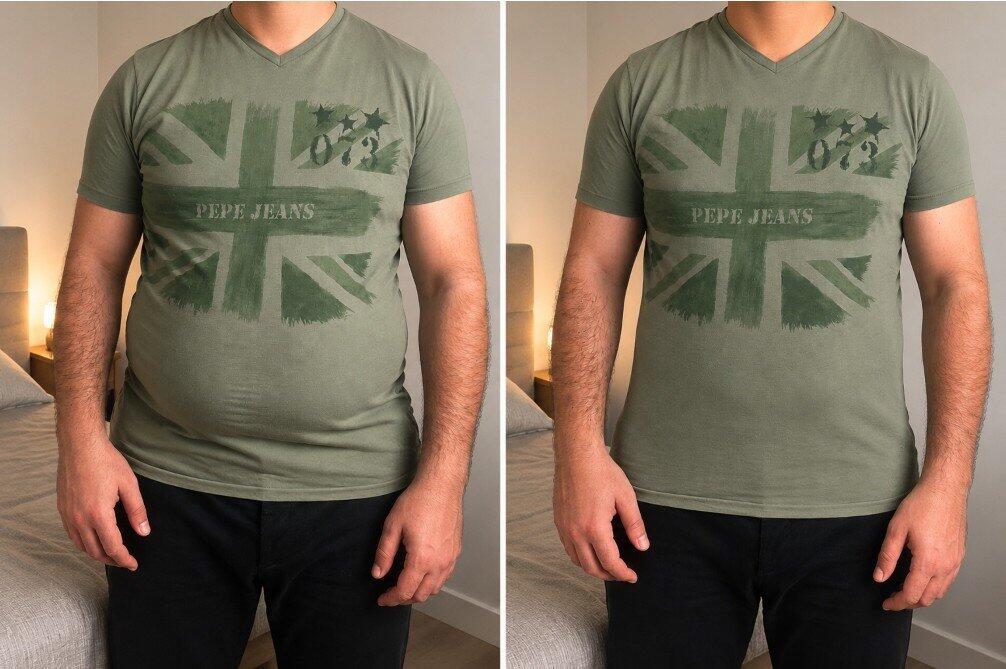
What this comparison means: the left side is the jacket-off problem: shirt pull, waistband bunching, belly bubble, chest outline, and side tension. The right side does not replace tailoring; it shows how a hidden base layer can help the dress shirt sit cleaner once the suit fit and trouser rise are already close.
Next step: if your suit is close but the dress shirt still pulls when the jacket opens, compare the outfit with the VEROSHAPE Compression Tank under a suit shirt before sizing up the jacket again.
How Should a Suit Jacket Fit With a Belly?
A suit jacket for a man with a belly should close without strain, sit cleanly at the shoulders, and create shape without forcing the front button to carry the whole midsection.
The jacket is the frame. If the shoulders collapse, the lapels are too narrow, or the button point sits directly on the widest part of the stomach, the suit can look tighter and wider than it really is.
Button stance matters more than most men think
The button point is the visual center of the jacket. If it sits too high or too low for your belly shape, the jacket can pull across the stomach or flare open below the button.
When you button the jacket, check the fabric around the button. A small amount of shape is normal; hard X-shaped pulling means the jacket is under stress.
Lapel width can balance or widen the torso
Very narrow lapels can look out of scale on a bigger chest or stomach because they make the torso look broader by contrast.
Moderate lapels usually create a more balanced formalwear line for bigger men than extremely skinny lapels.
If your broader concern is dad-bod proportions across several outfits, the related guide on dad-bod suit proportions gives wider outfit context.
Jacket length should cover the belly without swallowing the legs
A jacket that is too short can expose the stomach and waistband. A jacket that is too long can shorten the legs and make the whole outfit heavier.
The goal is enough coverage to keep the front clean while preserving a longer leg line.
| Jacket area | Cleaner sign | Problem sign | What to adjust |
|---|---|---|---|
| Shoulders | Shoulder line sits close to your natural shoulder | Shoulder collapses or extends too far | Try a different cut before relying on alterations |
| Button point | Front closes without hard pulling | X-shaped tension around the button | Adjust size, cut, or button stance |
| Lapels | Lapel width looks proportional to torso | Very skinny lapels make the torso look wider | Choose moderate lapels |
| Length | Covers the front without shortening legs | Too short exposes belly; too long swallows frame | Check front and side view |
| Chest | Jacket drapes without gaping | Chest looks compressed or overly padded | Check chest room and shoulder structure |

Why Pants Under the Belly Make a Suit Look Boxier
For many men, the suit problem starts below the jacket. When trousers sit under the belly, the stomach can push forward over the waistband and create a larger-looking bubble under the dress shirt.
This matters because the suit is supposed to create a continuous vertical line. Low trousers can break that line at the exact point where the shirt, belt, stomach, and jacket all meet.
A mid-rise or higher-rise trouser can work better for some men because it supports the waistline closer to the natural waist instead of letting the belly sit entirely above the pants.
The waistband is where many fat guy suits fail
The waistband controls more than the pants. It controls where the shirt bunches, where the belly line starts, and whether the jacket front looks smooth or interrupted.
If the belt cuts into the stomach, the dress shirt can collect above the belt and make the belly look more pronounced.
High-rise trousers vs low-rise trousers for big belly men
Low-rise trousers are common in casual pants, but formal trousers often work better when they sit higher and continue the suit line.
Higher-rise trousers are not automatically comfortable for every body, so the fit has to be tested while standing and sitting.
Belt vs suspenders under a suit jacket
A belt can work when the trousers stay stable without digging into the belly.
Suspenders can help some bigger men because they hold formal trousers from the shoulders instead of tightening the waistline around the stomach.
| Trouser setup | What it can solve | What can fail | Best use |
|---|---|---|---|
| Low-rise under belly | Can feel familiar if you wear jeans this way | Creates belly overhang, shortens the suit line, and bunches the shirt | Only if it stays stable and does not create a visible bubble |
| Mid-rise | Balances comfort and cleaner waistband placement | Can still slide if the cut is wrong | Good first test for many men with a belly |
| Higher-rise | Can continue the vertical line and reduce waistband interruption | Needs correct tailoring and comfort when seated | Formal trousers, business events, and suit separates |
| Suspenders / braces | Can keep trousers up without tightening the belt | Needs trousers designed to sit correctly | Formal outfits where the jacket hides the suspenders |

Dress Shirts for Big Belly Guys: What Happens When the Jacket Opens
The jacket can hide a lot while it stays closed. The dress shirt reveals everything when the jacket opens or comes off.
That is why dress shirts for big belly guys need their own check inside a suit article. The shirt can pull across the stomach, separate between lower buttons, bunch above the waistband, show love handles from the side, or make the chest look heavier under formal lighting.
The mistake is judging the suit only while the jacket is buttoned. In a real workday, wedding, dinner, or photo session, you will sit, open the jacket, raise your arms, and probably remove the jacket at least once.
The lower buttons reveal belly tension first
If the two buttons above the belt spread apart, the shirt is telling you where the pressure is.
A larger shirt can reduce that pressure, but too much fabric can billow under the jacket and make the suit look boxier.
Love handles and chest shape affect the whole shirt surface
A dress shirt is one continuous surface. Chest outline, stomach tension, and side love handles all affect how clean the shirt looks under a jacket.
This is why the hidden base layer matters most when the jacket opens. It is not a replacement for tailoring; it is insurance for the shirt people actually see.
The jacket-off moment is the real conversion moment
If you feel fine only while the jacket stays closed, the outfit is not ready for real life.
The suit has to work at a desk, in a chair, at a reception, during photos, and after the room gets warm.

Single-Breasted vs Double-Breasted Suits for Big Men
A single-breasted suit is usually the safer starting point for big men because it is simpler to fit, easier to open, and less likely to add extra width across the stomach.
A double-breasted suit can work, but it needs better tailoring because the overlapping front panels and button placement can either look structured or make the torso look wider.
| Suit style | Why it can work | What to watch |
|---|---|---|
| Single-breasted | Cleaner default, easier to fit, easier to wear open | Button point must not pull across the belly |
| Double-breasted | Can create strong structure when tailored well | Can add visual width if the front is too tight or too low |
| Three-piece suit | Waistcoat can cover shirt movement | Can add heat and bulk if the vest is tight |
| Suit separates | Can solve different jacket and trouser sizes | Fabric and color must still look intentional |
The safest rule is simple: choose the style that works when you sit, open the jacket, and check the side view, not the style that only looks good on a standing mannequin.
Sitting Down Is the Real Suit Fit Test
A suit that only works while standing still is not finished.
When you sit, the belly moves forward, the waistband shifts, the dress shirt tightens, and the jacket front changes shape.
This is why you should test the suit in a chair before wearing it to work, a dinner, a wedding, or a formal photo.
The 30-second seated fit check
| Check | Pass | Problem |
|---|---|---|
| Jacket buttoned | You can sit without the button feeling under stress | Button pulls hard or jacket flares open |
| Jacket open | Dress shirt still looks controlled | Shirt pulls across belly or chest |
| Trousers | Waistband stays stable | Pants slide under belly or cut into stomach |
| Shirt above belt | Fabric stays reasonably flat | Fabric bunches or balloons above waistband |
| Side view | Belly, chest, and sides look like one controlled line | Love handles or shirt tension dominate the silhouette |
For a deeper shirt-specific breakdown, read the guide on how the dress shirt behaves when seated. This suit guide keeps the focus on formalwear as a full system.

What to Wear Under a Suit Shirt to Smooth Belly, Chest, and Sides
Once the suit and shirt are close, the next question is what sits underneath the dress shirt.
A normal undershirt can help with sweat or opacity, but it can also create a visible collar, sleeve lines, extra heat, or a thick layer under a formal shirt.
A compression base layer for men can make more sense under formalwear when it stays hidden, avoids sleeve lines, tucks under the trousers, and helps the outer dress shirt sit cleaner across the belly, chest, and sides while worn.
VEROSHAPE Compression Tank is a men’s compression tank top designed to be worn under shirts. It is sleeveless, available in black and white, and designed with a wide hidden collar for open-collar dress shirts.
The next layer to understand is not another jacket. It is the hidden layer between your body and the dress shirt people see when the jacket opens.
Understand Hidden Layers for Formal Outfits
If your main issue is the shirt pulling across the stomach, sides, or chest under a suit, compare the category before choosing the product.

Heat, Office Days, and Jacket-Off Moments
Heat matters because suits already add structure, lining, and layers.
If the base layer feels bulky, the shirt can cling again as the day gets warm, which defeats the point of cleaning up the dress shirt line.
The practical test is not whether the layer feels fine for ten seconds. It is whether it stays low-profile while you commute, sit at work, walk into an event, and remove the jacket.
| Objection | What to check | Why it matters under a suit |
|---|---|---|
| Heat | Choose a low-profile hidden layer, not a bulky second shirt | Bulk can make the dress shirt cling and feel hotter |
| White dress shirt | Test black and white under the actual shirt and lighting | Thin white shirts can reveal contrast |
| Collar visibility | Open the collar and look down, front, and side | The fix should not peek out before the outfit does |
| Sleeve lines | Use a sleeveless layer if sleeve outlines show | Formal shirts can reveal undershirt sleeves |
| Bathroom practicality | Use a tank, not a bodysuit-style garment | A tank avoids bodysuit bathroom issues |
| Movement | Sit, stand, raise arms, and walk | The layer must stay useful after normal movement |
VEROSHAPE is a tank top, not a bodysuit, so it does not create bodysuit-style bathroom issues.
It can be tucked under the trousers, and the longer lower section is designed to help it stay in place during normal sitting and movement.
The Full Outfit Test Before You Leave
Before wearing the suit outside, test the full outfit in the same order real life will test it.
| Step | What to do | What you are checking |
|---|---|---|
| 1 | Stand with the jacket buttoned | Button tension, lapels, jacket length |
| 2 | Stand with the jacket open | Dress shirt pull, chest outline, belly line |
| 3 | Sit down | Waistband, belly pressure, shirt bunching |
| 4 | Raise your arms slightly | Shirt lift and tucked-layer movement |
| 5 | Check the side view | Love handles, chest, stomach, jacket shape |
| 6 | Open the collar | Hidden layer visibility |
| 7 | Walk for one minute | Whether the trousers slide under the belly |
If the suit passes while standing but fails when the jacket opens, the problem is probably not only the jacket. It is the shirt, waistband, trouser rise, and first layer working together.
Review the Hidden Layer for the Jacket-Off Moment
Use this after the free fixes: jacket fit, trouser rise, seated test, shirt fit, and heat check. If the dress shirt still pulls across the belly, chest, or sides, review the VEROSHAPE Compression Tank for suit shirts.

Related Reading
For broader style context: Read the guide to better-fitting tops for bigger builds. This suit article handles formalwear mechanics; that guide handles everyday top fit.
About the Author
Mike Sterling is the founder of VEROSHAPE. VEROSHAPE focuses on men’s compression clothing and the clothing-mechanics problems that happen under normal shirts: belly drape, chest outline, side visibility, base-layer fit, and whether the outer garment sits cleanly.
Read more about Mike Sterling and the VEROSHAPE approach to men’s compression clothing.
FAQ — Fat Guy Suits and Belly Fit
What suit looks best on a fat guy?
A structured, properly tailored single-breasted suit is usually the safest starting point. The jacket should close without pulling, the lapels should look proportional, and the trousers should not sit so low that the belly pushes over the waistband.
How should pants sit on a man with a belly?
For many men, mid-rise or higher-rise trousers create a cleaner suit line than low-rise trousers under the belly. The right height depends on comfort, belly shape, and whether the waistband stays stable when seated.
Should big men wear single-breasted or double-breasted suits?
Single-breasted suits are usually easier to fit and easier to wear open. Double-breasted suits can work when tailored well, but they can add width if the front panels or button placement fight the stomach.
How do you hide belly in a dress shirt under a suit?
Start with the right shirt size, trouser rise, and seated fit. If the shirt still pulls across the belly, chest, or sides, a hidden sleeveless compression layer can help the outer dress shirt sit cleaner while worn.
Can men wear shapewear under a suit?
Yes, men can wear shapewear under a suit when the layer stays hidden, avoids sleeve lines, tucks cleanly, and does not replace proper suit tailoring.
What should I check before wearing a suit to work or an event?
Check the suit buttoned, open, seated, and from the side. Then check whether the trousers slide under the belly, whether the shirt bunches above the waistband, and whether any hidden layer shows at the collar.