Pleated vs Flat-Front Pants for Men: Which Should You Choose?
You try on two pairs of trousers in the same waist size. The flat-front pair looks cleaner on the hanger, but the pockets start to flare when you button it. The pleated pair gives you more ease through the top, but the folds look fuller than you expected. Neither result proves that one construction is better. The useful question is whether the front stays controlled while the rest of the trouser actually fits.
Quick answer: Choose flat-front pants when the front lies smooth without pulling, pocket flare or strain through the seat and thighs. Choose pleated trousers when you want controlled extra fullness through the upper trouser and the pleats sit neatly at rest. If either option only works after you size up enough to create new problems elsewhere, the issue is probably the underlying trouser cut, not the presence or absence of pleats.
Pleated vs Flat-Front Pants: What’s the Actual Difference?
A flat-front trouser has no pleats at the front of the waistband. You may also see the same broad construction described as pleatless or non-pleated. The fabric runs from the waistband into the front of the trouser without a folded section designed to open and close.
A pleated trouser has one or more folds built into the front. Those folds create additional fullness in the upper part of the garment. Tailoring references from Proper Cloth and Permanent Style describe that extra fullness as the functional reason pleats exist: the fabric can provide room when needed, then collapse back into the line of the trouser when it is not.
| Front construction | What changes | Useful when | Watch for |
|---|---|---|---|
| Flat front | No folded fullness at the front | You want an uninterrupted front and the upper trouser already has enough room | Pocket flare, pulling or strain that makes the “clean” front tight rather than clean |
| Single pleat | One fold on each side adds controlled fullness | You want some extra room without making the pleat a dominant visual detail | Pleats that are already being pulled open while standing relaxed |
| Double pleat | Two folds create more visible fullness and a stronger tailored effect | The trouser is intentionally cut with a fuller top and that volume suits the silhouette you want | Too much front volume when the rest of the cut is already generous |
The key distinction is simple: pleated versus flat front describes one construction feature, not the entire fit of the trousers.

A Pleat Is Only One Part of the Trouser Fit
Two pleated trousers can fit completely differently. So can two flat fronts. Rise, hip width, seat shape, thigh width, leg shape and waistband position still decide whether the garment works on your body.
That matters because it is easy to blame the visible feature. A man with large thighs tries a flat front, feels restriction and concludes that he “needs pleats.” Another tries a very full pleated trouser, sees more fabric around the front and decides that pleats “make him look bigger.” Both reactions may be real, but neither proves that the front construction was the only variable.
Proper Cloth’s measurement guidance makes the pattern difference unusually clear: its pleated and non-pleated trouser systems do not use the same hip-width setup, because the folds change how the upper trouser is constructed. That is a useful reminder when shopping ready-to-wear too. Do not treat a pleated pair as the same trouser with decorative folds added.

Useful rule: if changing from flat front to pleated solves one problem but creates a new one, compare the whole cut before deciding that pleats are the cause. The same applies in reverse.
The Fitting-Room Test: Check the Front at Rest, Then Move
A trouser that looks fine for three seconds in a mirror can behave very differently once you sit down, reach into a pocket or take a few steps. Use the fitting room as a short movement test rather than a still-photo test.

1. Stand naturally before adjusting anything
Button the trousers, let them settle where they are designed to sit and stop pulling at the waistband. Look at the front before you pose. On a flat front, the fabric should not be dragged into obvious tension lines. On pleated trousers, the folds should look controlled rather than permanently forced apart.
2. Check the side pockets
Do the pocket openings lie close to the side seam, or do they bend outward? Proper Cloth identifies noticeable pocket flare while standing as a sign that the hip area can be too tight. That is especially useful because a front can look “clean” from straight ahead while the side pockets are already telling you the top block is under strain.
3. Sit down normally
Do not suck in your stomach or perch on the edge of the chair. Sit the way you would at work, dinner or in a car. Pleats are meant to accommodate movement and can open as the upper trouser changes shape. A fold that opens during sitting is not the same thing as a fold that is pulled open before you move.
4. Walk and use the pockets
Take several steps. Put one hand in a pocket. Bend lightly. You are checking whether the extra fullness is usable, whether a flat front starts pulling, and whether the trouser returns to a clean resting shape afterward.
5. Recheck the waist, seat and thighs
If movement feels better only because you sized up enough to leave a loose waistband, excess length or a baggy seat, the front construction has not solved the full fit.
Diagnose What Is Actually Failing Before You Choose
This is where a lot of trouser advice becomes too simple. “Pleats give more room” can be useful. “Flat fronts look cleaner” can also be useful. Neither tells you what to do when the garment fails in a specific place.
The flat front looks clean, but the pockets flare
Do not keep the flat front just because the center looks smooth. If the hip area is too tight, the side pockets can bow outward and the fabric may pull across the front or seat. Try a roomier top block first. That may be another flat-front cut or a pleated trouser; the right answer depends on which garment gives you room without creating excess elsewhere.

The pleats stay open while you are standing
Pleats are supposed to be able to open when your body needs more space. But a pleat that is already splayed while you stand relaxed deserves a second look. Tailoring references note that persistent opening can come from excessive tightness, pleat design, cloth or the way the trouser is cut. Do not assume that “open pleat = bad style” or that “pleated = automatically comfortable.” Check the fit around the hips, seat and thighs first.
If width through the hips and seat is the recurring fit problem across different trouser styles, our guide for men with wide hips explains how to check the full top block, leg taper and overall proportion before blaming the pleats.

Your thighs and seat fit, but the waist is too loose
This is the classic size-up trap. You buy enough circumference for the lower body, then discover that the waistband no longer feels secure. If the difference is modest and the rest of the trouser is right, an alteration may be reasonable. If the larger size also creates too much rise, seat volume, leg width or length, stop changing size and look for another block.
If the recurring pattern is that the waist fits but the rear stays tight—or sizing up fixes the seat and leaves a gap at the back waist—our guide for men with a big butt and a seat-to-waist fit mismatch explains how to diagnose rear projection, rise and rear-seat clearance before you keep changing size.
There is enough room, but the front looks too full
More fabric is not automatically better. If nothing is pulling and you still dislike the amount of fullness around the lap, you may prefer a flat front, a single pleat, a shallower pleat or simply a trimmer trouser block. The goal is not to maximize room. It is to have enough room for normal movement without carrying volume you do not want.
When Pleated Pants Make Sense—and When Flat Front Is Better
Choose the problem first, then choose the construction. Body-type rules are too blunt for this decision.
| If this is what you see or feel | Start by trying | Why |
|---|---|---|
| Flat front lies smooth, pockets stay flat, movement feels easy | Flat front | You already have the clean line without forcing the upper trouser |
| Flat front pulls through the top block, but sizing up ruins the waist | Roomier block or pleated option | You need room in a specific area, not a larger trouser everywhere |
| Pleats lie controlled at rest and give useful ease when sitting or moving | Keep the pleated option | The fullness is doing a practical job without dominating the silhouette |
| Pleats are pulled open while standing and pockets flare | Reassess fit before choosing the style | The trouser may be under strain around the hips or upper seat |
| Nothing pulls, but you dislike the visual fullness | Flat front or subtler pleat | The fit works; the remaining decision is aesthetic |
A larger man does not automatically “need” pleats. A lean man does not automatically need flat fronts. A man with muscular thighs may prefer pleats in one brand and a roomier flat front in another. The useful question is what the entire upper trouser is doing on you.
Do pleated pants make men look bigger? Not automatically. Pleats add intentional fullness at the front, so a very generous cut can look more voluminous; but a flat front under tension can also lose the clean line you chose it for. Judge the entire upper trouser, not the pleat alone.
Rise and formality are separate variables too. Pleats often work especially naturally on higher-rise trousers because the garment has more shape to accommodate from the waist through the hips and thighs, but flat-front trousers can also be cut high. Pleats often read a little smarter, especially on tailored trousers, yet a single pleat can work on casual cottons as well. Cloth, overall cut and styling decide the final level of formality. That same separation matters when comparing the difference between chinos and khakis: pleats or a flat front do not define either category by themselves. Once you have chosen the front construction, the hem is a separate decision: our guide to cuffed vs uncuffed pants explains how pleats, leg width, break and shoes affect whether a cuff or plain hem works better.
Single vs Double, Forward vs Reverse Pleats
If you decide that pleats make sense, the next choice is how much pleat you want and which direction it faces.
Single pleat
One pleat on each side adds fullness with a quieter visual effect. It is a good place to start if you like the function of pleats but do not want the front to become a strong design statement.
Double pleat
Two pleats create more visible fullness and a more overtly tailored look. That can work beautifully in a trouser intentionally cut with a fuller rise and leg, but it can feel like too much if you are trying to keep the front visually restrained.
Forward vs reverse
Forward pleats open toward the center of the trousers. Reverse pleats open toward the pockets. Permanent Style notes that reverse pleats are especially common in ready-to-wear, while forward-facing pleats have a long association with English tailoring. For most shoppers, direction is a secondary choice after fit: a well-cut reverse pleat beats a badly fitted forward pleat, and vice versa.
Are Pleated Pants Outdated?
No. A pleat by itself does not make trousers outdated. The dated feeling usually comes from the whole silhouette: rise, leg width, fabric, crease, shoes, jacket or shirt, and how much fullness sits around the waist.
Pleats move in and out of fashion, but they also remain a functional tailoring tool. A high-rise, fuller trouser can read classic or contemporary; a low, oversized pair with excess fabric can remind someone of an older office uniform. The same front construction can look very different once the rest of the trouser changes.
If you like pleats but fear the “grandpa pants” effect, do not solve that fear by automatically buying the narrowest flat front you can find. Start with proportion: controlled waist, enough room through the seat and thigh, and a leg shape that looks intentional with the rest of your outfit.
Size Up, Alter, or Choose Another Trouser Cut?
When trousers fail in one place, there are three common fixes. The mistake is treating them as interchangeable.

Change size when the whole garment is simply too small or too large
If waist, seat, thighs and leg all move in the right direction together, changing size is the simple answer.
Try another block when one size creates opposite problems
If the smaller size fits your waist but traps your thighs, while the next size frees your thighs but leaves the waist and seat loose, you are asking one size number to solve two different pattern needs. Compare another cut before paying for multiple corrections.
Alter when the trouser is already close
A tailor can often refine a garment that is fundamentally right. But converting a poorly fitting block into the right one can require extensive work. Even removing pleats from an existing trouser is a major reconstruction rather than a small cosmetic alteration.
Think in this order: correct size → correct block → small alteration. Do not keep moving the size up or down when each step fixes one area and breaks another.
Once the trouser waist itself fits correctly, measure your belt size separately from your trouser size instead of assuming the same waist number carries over to both.
When the Trousers Fit but the Waistline Still Shows Under Your Shirt
There is a point where changing the trousers stops helping. You may have the right waistband, enough seat and thigh room, controlled pockets and a front that behaves properly, yet still dislike how the side waist or love handles show above the waistband under a T-shirt, polo or dress shirt.
That is a different clothing job. Pleats cannot fix it, and oversizing the trousers to hide it usually creates a worse trouser fit.
First check the free fixes. Make sure the waistband is not unnecessarily tight. Make sure the outer shirt has enough length and room to fall over the waist instead of catching on it. If the real question is where trousers should sit around a fuller stomach, use our guide to how men with a big belly should wear pants rather than using pleats as a workaround.

A base layer can address the outline under the shirt without changing the trouser size. See how a compression layer for love handles is meant to work, including the limits of what it can and cannot change.
A compression layer should not be used to “fix” a tight waistband, a wrong rise, pocket flare or a trouser that needs more seat or thigh room. Those are trouser-fit problems. The separate use case is appearance under the outer shirt once the trousers themselves are already working.
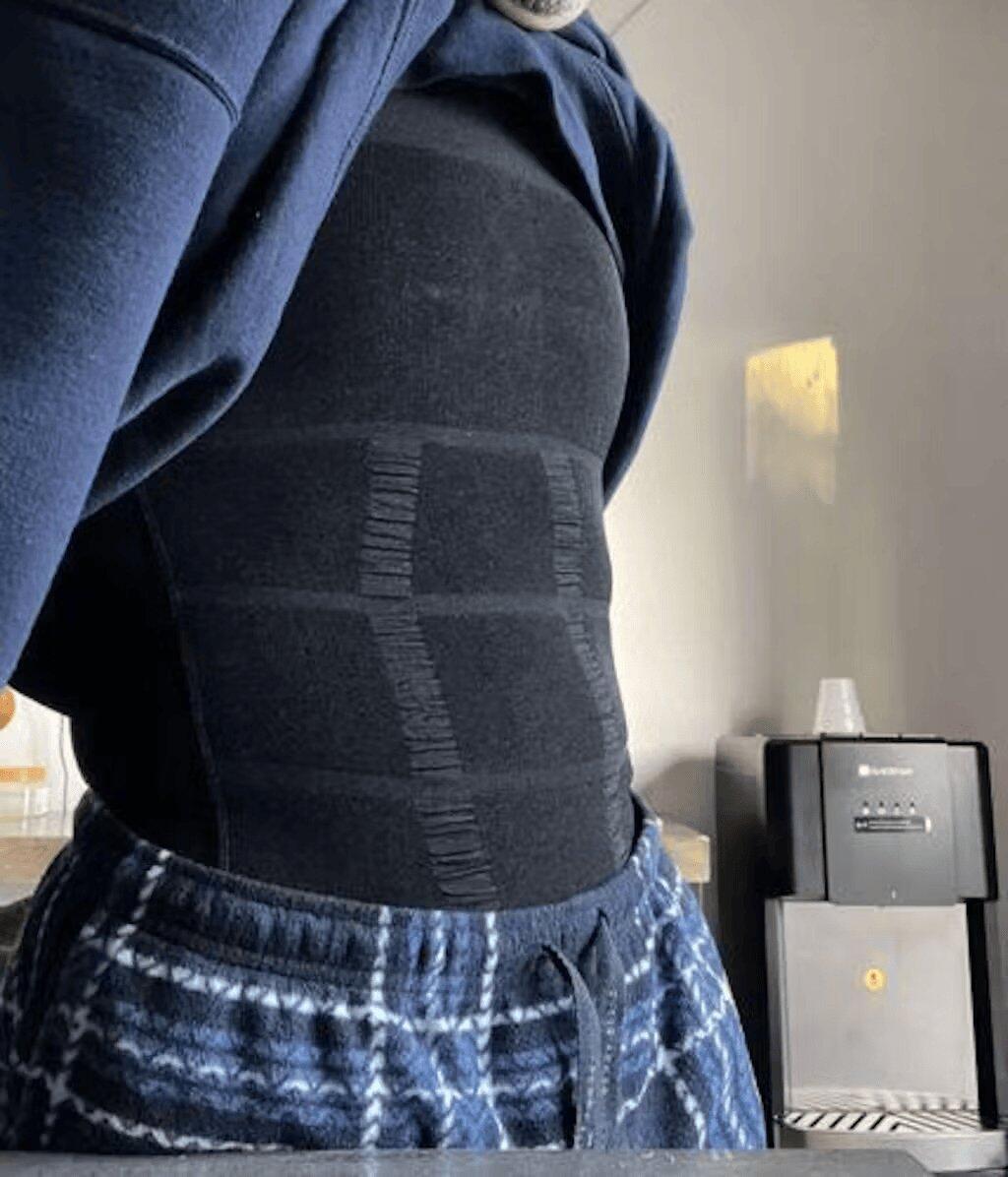
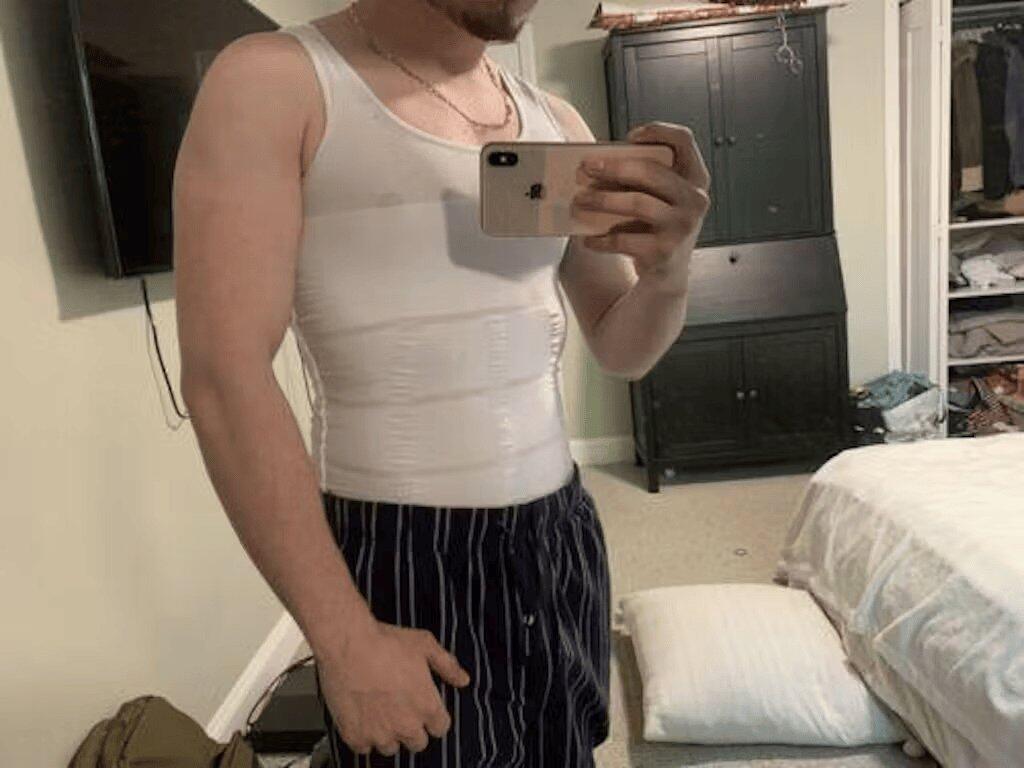
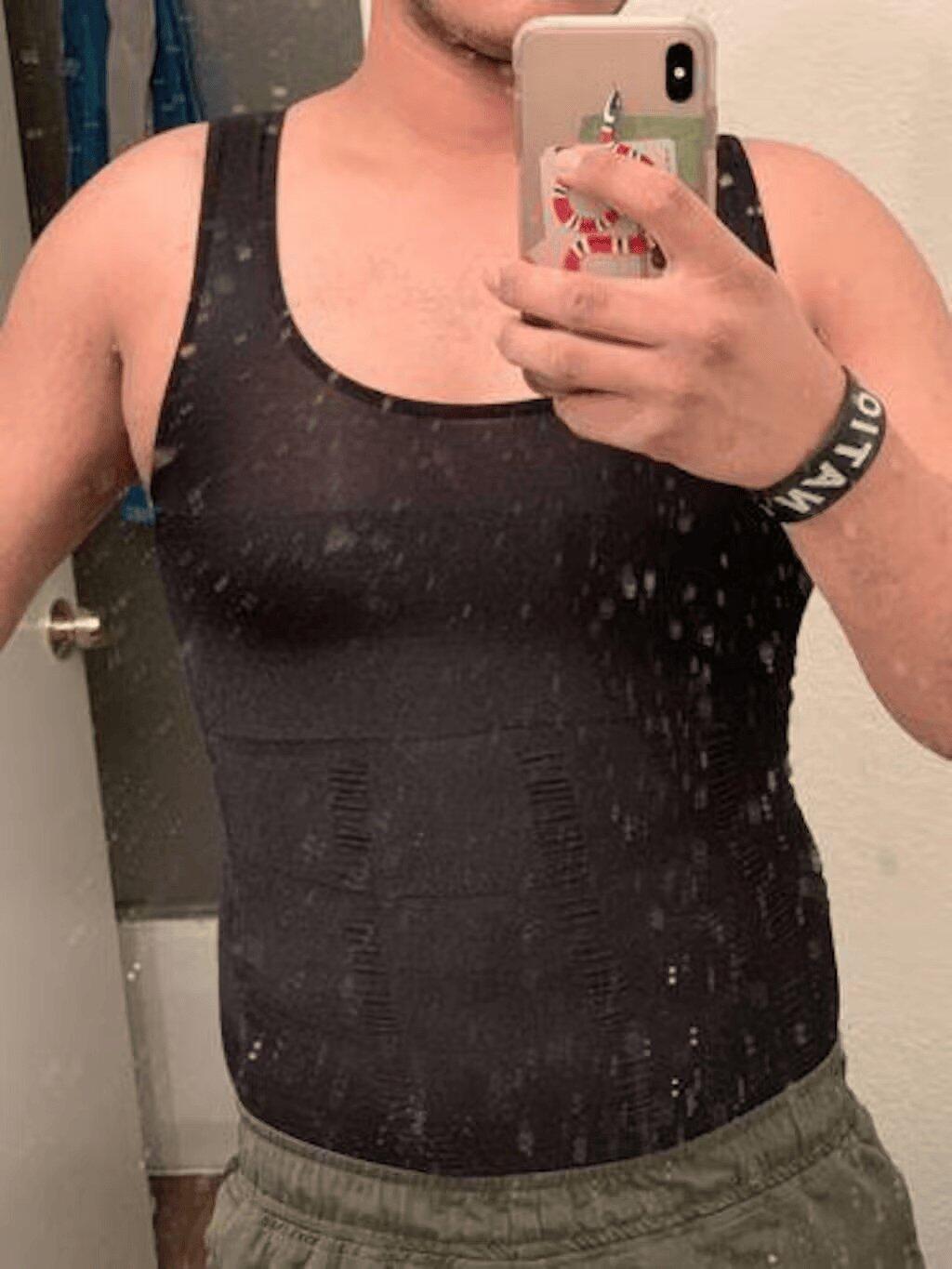
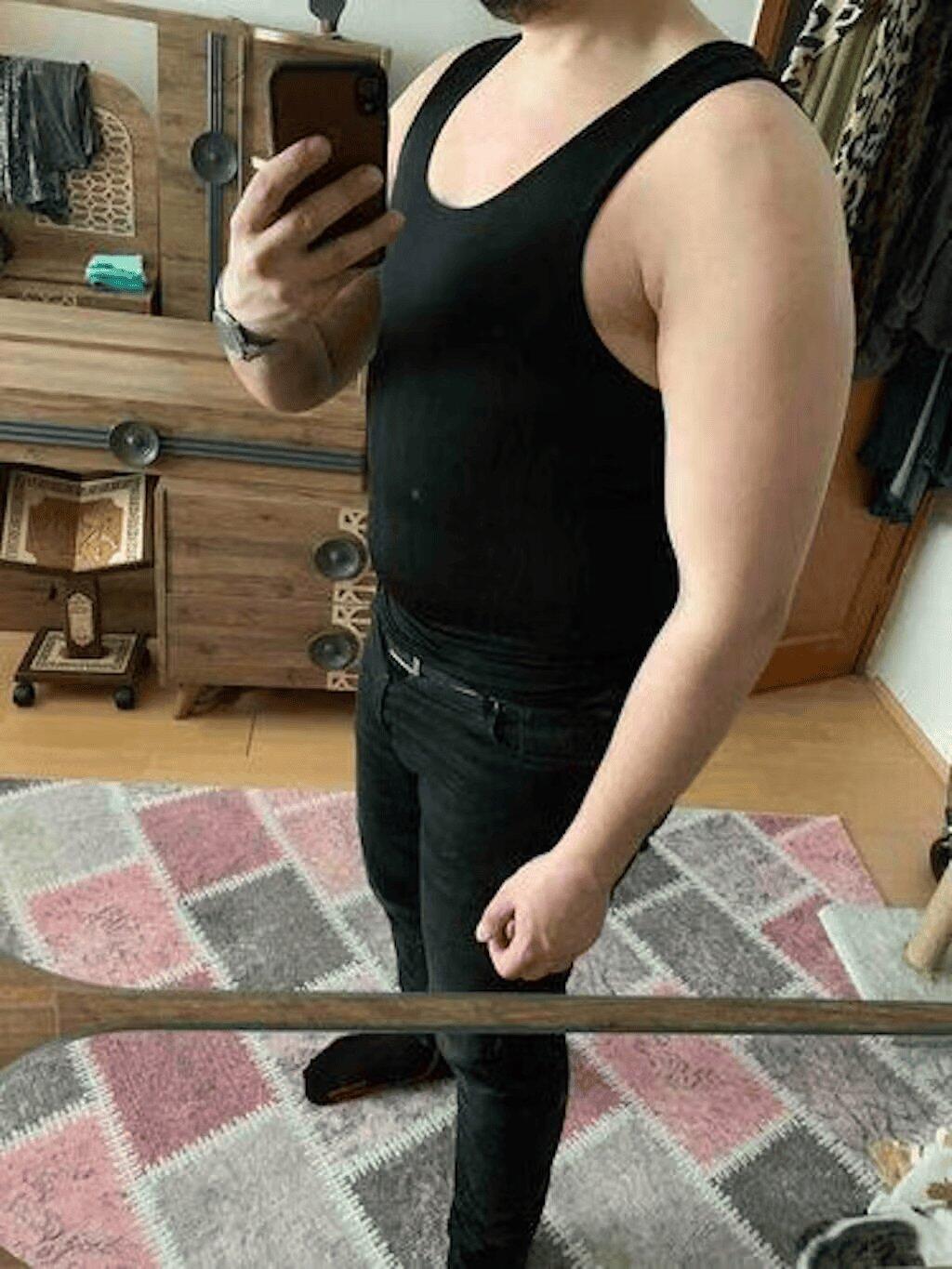
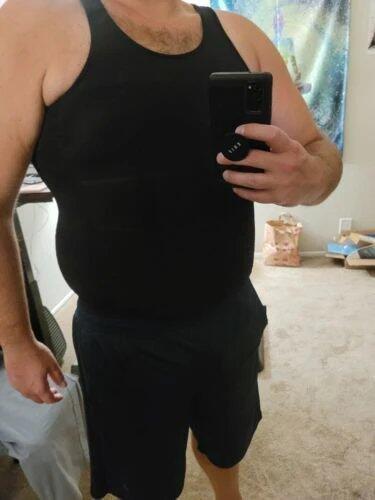
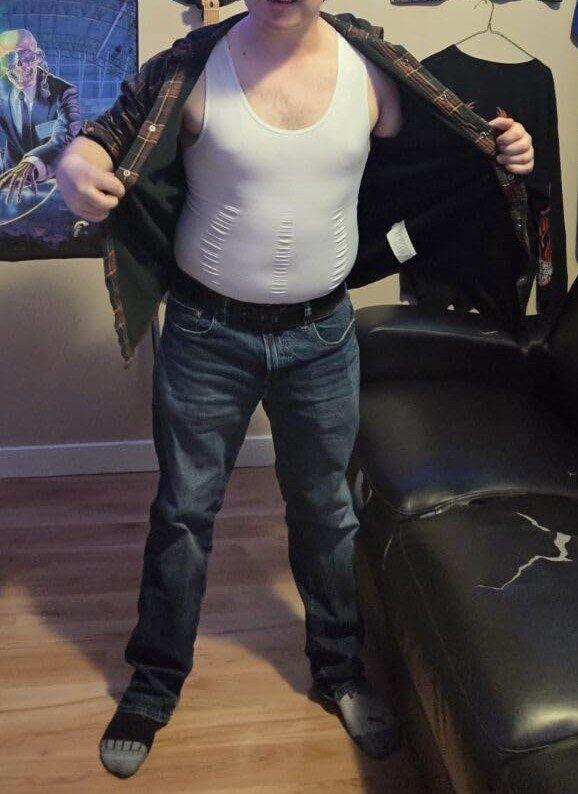
VEROSHAPE’s current compression tank uses firm lower panels across the stomach and side waist. Those panels compress and smooth the belly and side waist, helping reduce visible roundness and side-waist projection under clothing while the tank is worn. Its 30% longer hem gives more fabric below the belly to tuck into the pants, which is designed to help keep the tank anchored during sitting, walking and normal movement. This is a temporary clothing effect while worn; it does not reduce body fat or correct the fit of the trousers.
Already solved the trouser fit?
If the remaining concern is how the belly or love handles show under the shirt at the waistband, VEROSHAPE is a separate underlayer option—not a substitute for correctly fitting pants.
See the VEROSHAPE Compression TankFrequently Asked Questions
Are pleated pants better for men with big thighs?
They can be, but the pleats alone are not the reason. A pleated trouser can provide useful fullness through the upper front, while the overall cut still needs enough room through the hips, seat and thighs. If your thighs fit only after the waist becomes too loose, compare a different trouser cut rather than assuming pleats will fix the whole fit.
Should trouser pleats stay closed when standing?
They should normally look controlled when you are standing naturally. Pleats are designed to open as the garment needs more room during sitting and movement, but folds that are already being pulled wide open at rest can be a sign that the upper trouser is under too much tension.
Are pleated pants more comfortable than flat-front pants?
Not automatically. Pleats can add useful fullness, but comfort also depends on the rise, hip and seat room, thigh width, fabric and overall cut. A well-cut flat-front trouser can be more comfortable than a pleated trouser that is too tight through the top block.
Can a tailor remove pleats from trousers?
Removing pleats is not a simple adjustment because the front construction, waistband and excess fabric are connected. It can require substantial reconstruction. If you already know you prefer a flat front, starting with a trouser designed that way is usually the cleaner option.
Bottom Line
Flat-front pants are the better choice when the front stays smooth because the trousers genuinely fit, not because the fabric is being pulled flat. Pleated pants are useful when their added fullness gives you room you actually need and the folds sit controlled when you are standing.
If one construction keeps failing, diagnose the second problem before switching labels: pockets, hip width, seat, thighs, waist, rise or excess fullness. Sometimes the answer is pleats. Sometimes it is flat front. Sometimes it is a different trouser block altogether.