Men With a Big Butt: How to Fix Pants, Shirts & Jackets That Fit Wrong
The clue is often at the back waistband. A smaller size sits neatly at the waist but pulls across the rear; the next size gives the seat room, then leaves a gap at the waist and extra fabric for the belt to bunch. That is not just a “bigger size” problem. It is a mismatch between rear projection and the shape of the garment.
For men with a big butt, solve depth before decoration. Make sure pants have enough seat room and rise to travel around the rear without strain, then refine the waist and leg. For shirts and jackets, check whether the lower part of the garment has enough width and length to clear the seat instead of riding up or kicking outward.
First Decide: Is the Problem Depth, Width or Thigh Volume?
“Big butt” is useful everyday language, but it does not tell you which clothing dimension is failing. A man can project farther backward while staying relatively narrow from the front. Another can be wider through the hips. A third may mainly need more thigh room. Those shapes can overlap, but they put strain in different places.
Use the side and rear views before you change size. If the main issue is backward projection, pay special attention to the back waistband, seat curve and back rise. If the dominant problem is width from side to side, the guide to dressing with wide hips owns that decision. If the seat is comfortable but the upper legs bind, thigh room has become the more important variable.

This distinction also changes your goal. You may want to make the rear less visually prominent, you may simply want clothes to stop fighting it, or you may be perfectly happy showing your shape as long as the garment fits cleanly. Good fit does not require pretending every man wants to hide the same feature.
Pants: Read the Back Waistband, Seat and Rise Together
When rear projection is the main problem, three areas have to agree with each other: the waistband position, the amount of room through the seat, and the rise that connects the waistband to the crotch. Looking at only one of them can send you toward the wrong fix.
Start with the back waistband
Fasten the pants where you actually intend to wear them and relax your posture. If the seat feels squeezed while the waistband is fine, the pair may simply lack room behind. If sizing up makes the seat comfortable but creates a large gap at the back waist, you have found a different problem: the waist and seat need different amounts of room.
Do not immediately tighten the belt until the gap disappears. A belt can hold a loose waistband in place, but it can also gather the excess fabric into folds and hide the fact that the trouser shape is wrong for your proportions.
Then check the seat itself
The fabric should follow the rear without looking stretched tight across it or collapsing into heavy folds underneath it. If the center-back area feels pulled, the rear seam is being asked to cover more depth than the garment comfortably allows. Adding room only at the lower leg will not fix that.

Use rise to explain what the rear is doing
Rise is not just a style label. The front and back of the trousers have to travel different distances around the body, and a more projected rear can need a different front-to-back balance. If the waistband gets dragged down behind, the crotch feels wedged, or the back cannot settle without tension, investigate rise and seat geometry before assuming the answer is simply a larger waist.
That does not mean “high rise is always best.” If waistband height itself is the decision you need to make, use the full guide to choosing high-waisted pants by rise and fit. Here, the useful question is narrower: does this pair give your rear enough vertical and horizontal room at the position where you want to wear it?
Make the pair pass a sit-and-rise test
Sit fully in a normal chair, stand back up, then walk a few steps. Watch the back waistband and the fabric directly below the seat. If the waistband is dragged lower behind, the center-back area feels pulled upward, or the fabric stays caught under the seat instead of settling again, the pair has not passed the movement test even if it looked acceptable while you were standing still.

If the back of the trousers behaves well but the front waistband is being displaced mainly by the stomach, that is a different owner. The guide to wearing pants with a big belly covers that front-of-waist problem in detail.
When the Seat Fits and the Waist Doesn't, Fix the Easier Part
A common failure pattern is the reverse of normal sizing logic: the waist size you expect is too tight at the rear, while the size that finally clears the seat is too loose at the waist. The useful question is not which number feels more flattering. It is which version gets the hard-to-rebuild structure closest to correct.

Prioritize enough room through the seat and crotch, a workable rise, and thigh clearance for normal movement. Once those are right, inspect how much excess remains at the waistband and lower leg. Reducing modest excess is often more realistic than trying to create missing rise or large amounts of missing seat room after the fact. Proper Cloth’s tailoring guide, for example, treats front and back rise as structural dimensions that are not adjusted by a tailor and notes that increasing seat room is much more limited than taking excess out.
The exact alteration depends on seam allowance and construction, so this is not a promise that every loose waist can be tailored perfectly. If a pair needs major changes at the waist, rear, crotch and leg all at once, the smarter move is usually a different pattern rather than a heroic alteration.
Buying order: give the rear enough space first, confirm the rise and crotch feel normal, make sure you can sit and walk, then decide whether the remaining waist or leg excess is a reasonable cleanup job.

Don't Trust the Fit Label Until the Seat and Rise Work
Once the seat, rise and thigh room work, labels such as athletic, straight, relaxed and tapered can help narrow the rack. They are not measurements. An athletic cut may finally give one man enough room through the rear and thighs, while another still gets the wrong rise or a taper that becomes too tight below the knee. A straight cut can solve that lower-leg problem without automatically solving the seat.
Before you buy: compare the actual waist, seat or hip, thigh and rise information the brand publishes when those measurements are available. Then compare them with a pair you already know fits. Treat “athletic,” “straight” and “relaxed” as starting filters, not specifications.
If the seat and rise are already comfortable and your main concern becomes the visual line from the hips to the ankle, that is no longer this page’s core problem. Use the dedicated guide to dressing with wide hips for the deeper leg-line and lateral-proportion decision.
When Your Shirt Rides Up Over the Seat
A shirt that gathers at the lower back can look like a simple length problem. Sometimes it is. But with more rear projection, the bottom opening can also be too narrow to slide over the hips and seat as you move.
Separate those two causes. If the torso feels fine but the shirt grips at the bottom and creeps upward when you walk or sit, test a cut with more bottom clearance. Proper Cloth’s shirt-bottom fit guidance notes that a bottom width that is too tight at the hips can make a shirt ride upward during movement. If the bottom already falls freely over the seat but a tucked shirt still works its way out when you raise your arms or sit, more back length may be the missing piece. Some shirts need both.
For an untucked shirt, enough lower-body clearance matters more than simply making the hem longer. A very long shirt can cover more of the rear while also shortening the visual length of your legs. The cleaner goal is a hem that clears the seat without gripping it or hanging far below it for camouflage.

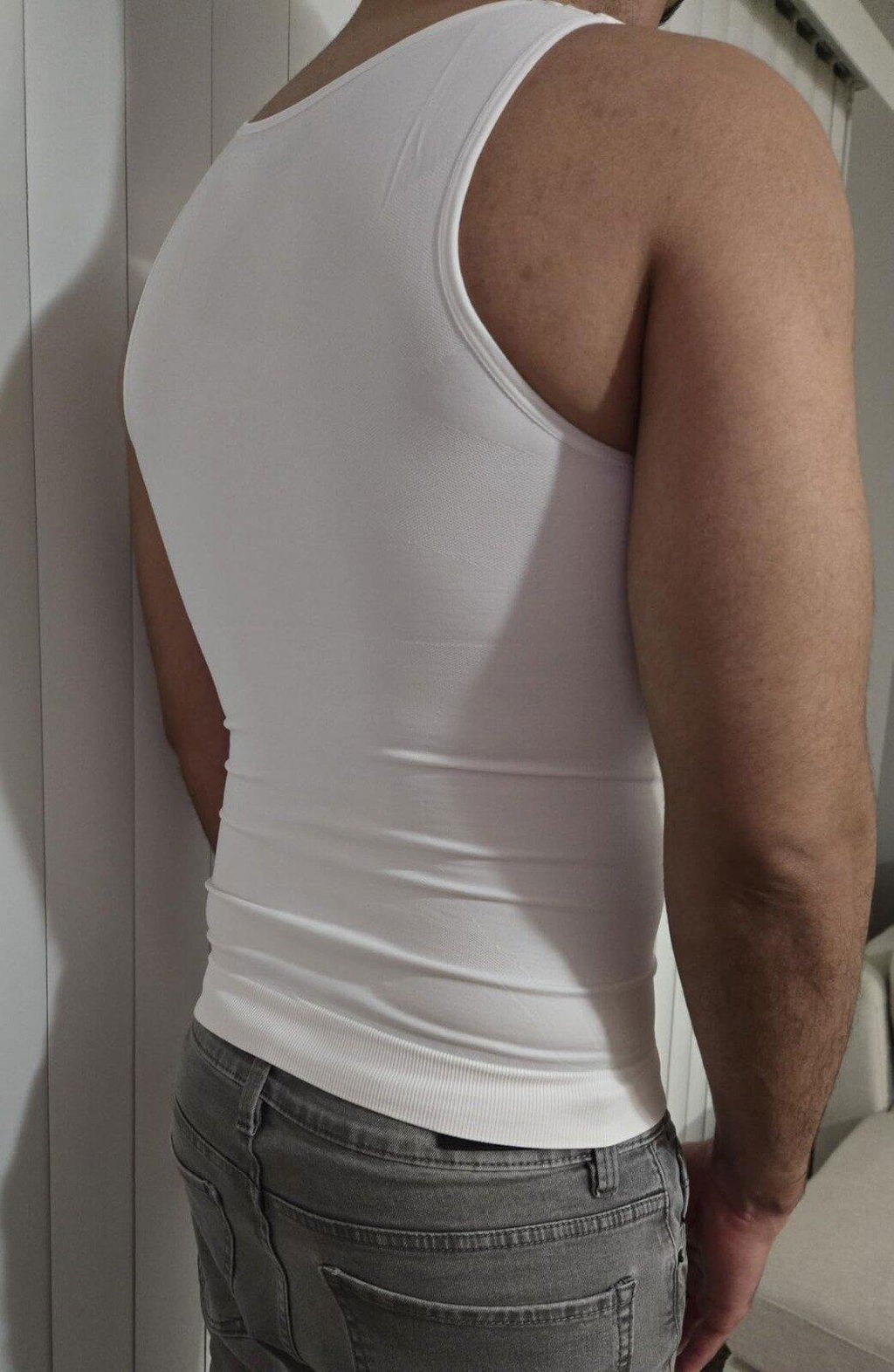
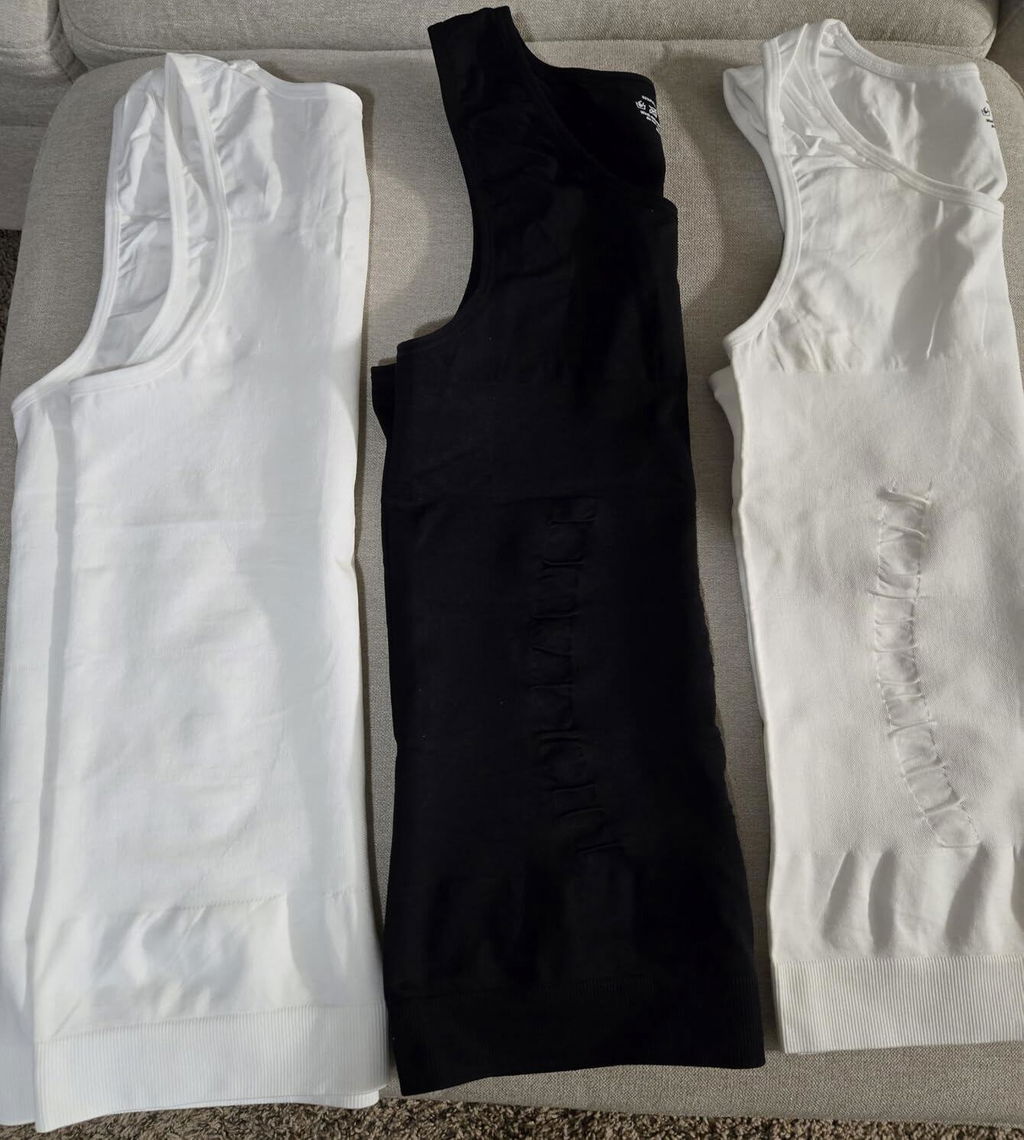
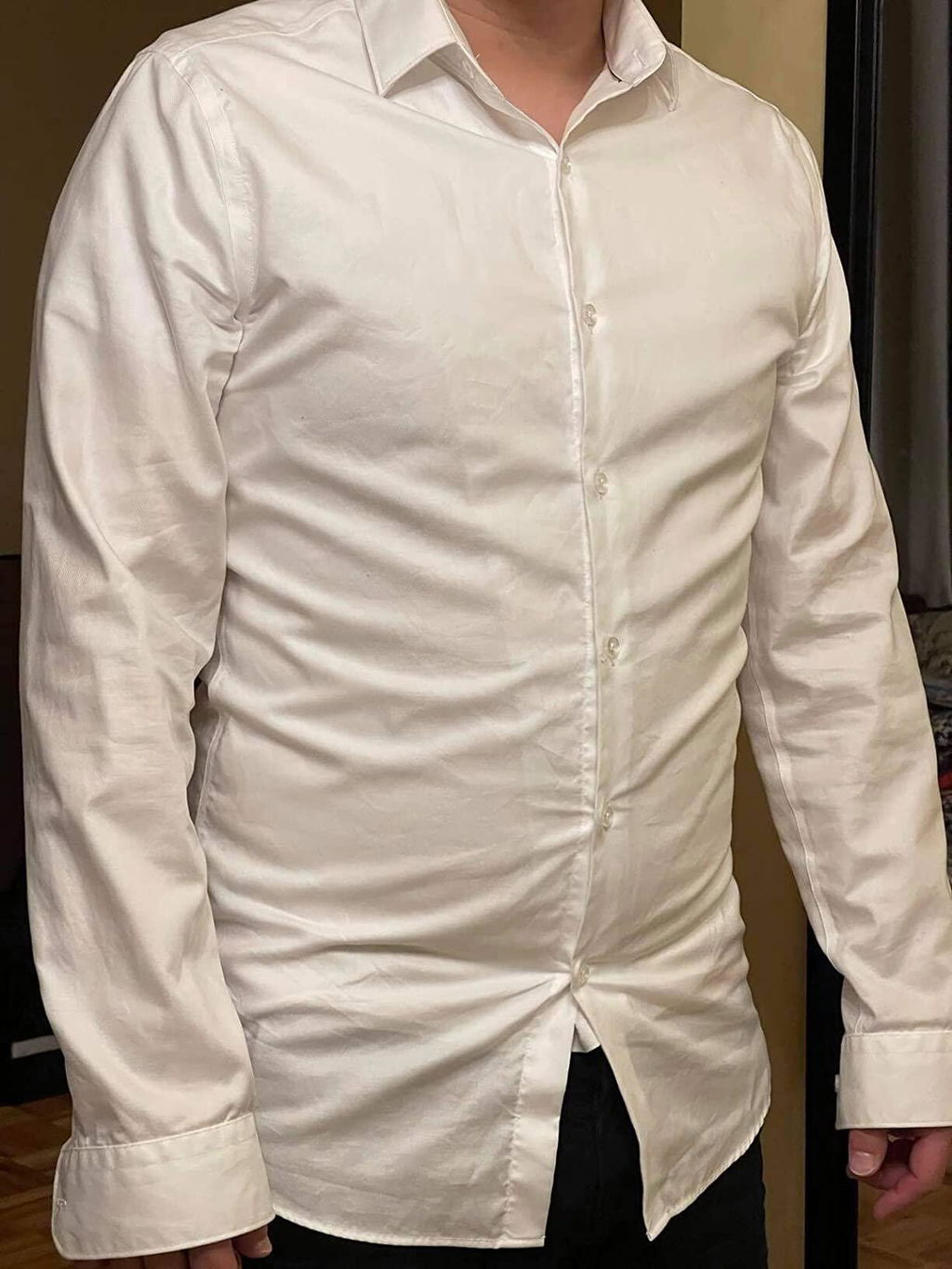
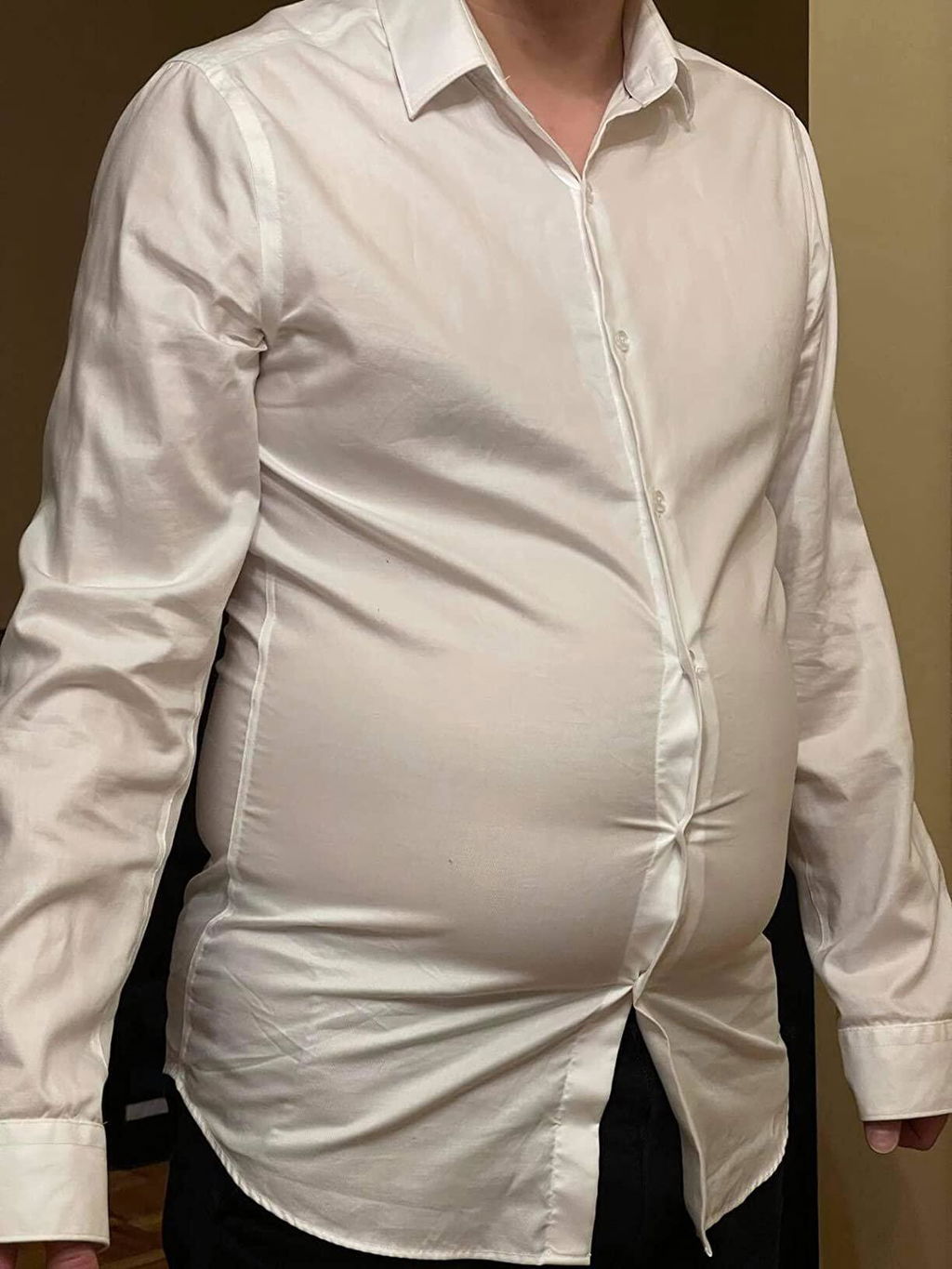
Fix the outer shirt first. If it now clears the seat correctly but you also want a smoother appearance through the chest, stomach or side waist under that shirt, an underlayer is a separate tool for a separate problem. It will not change rear projection, trouser rise or the shirt's bottom width.
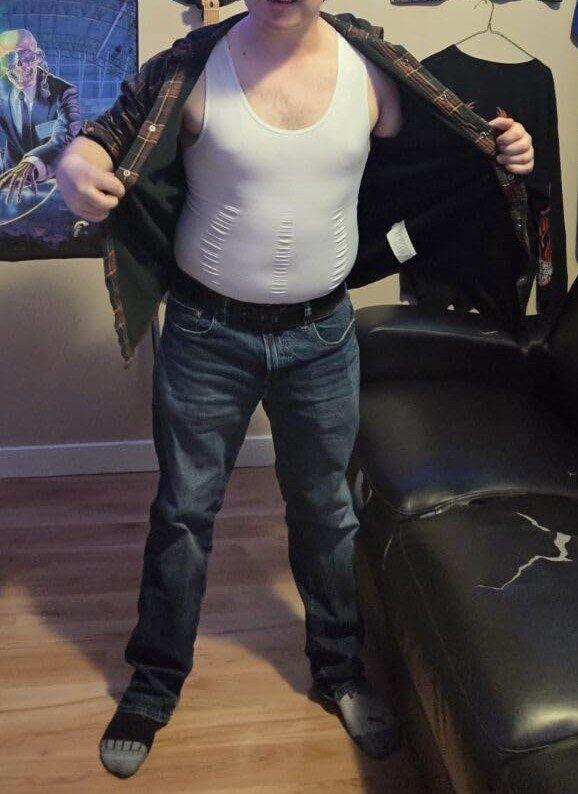
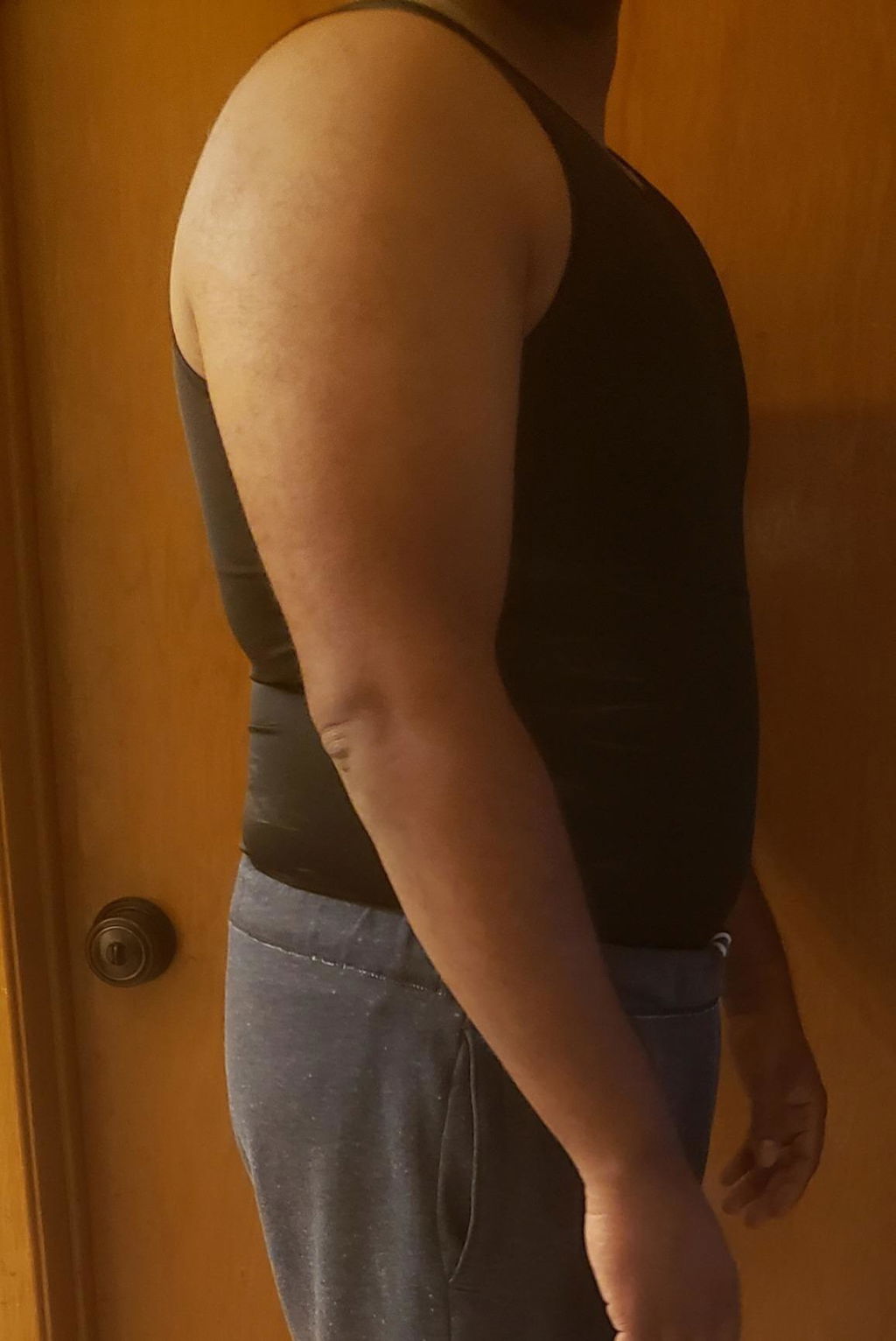
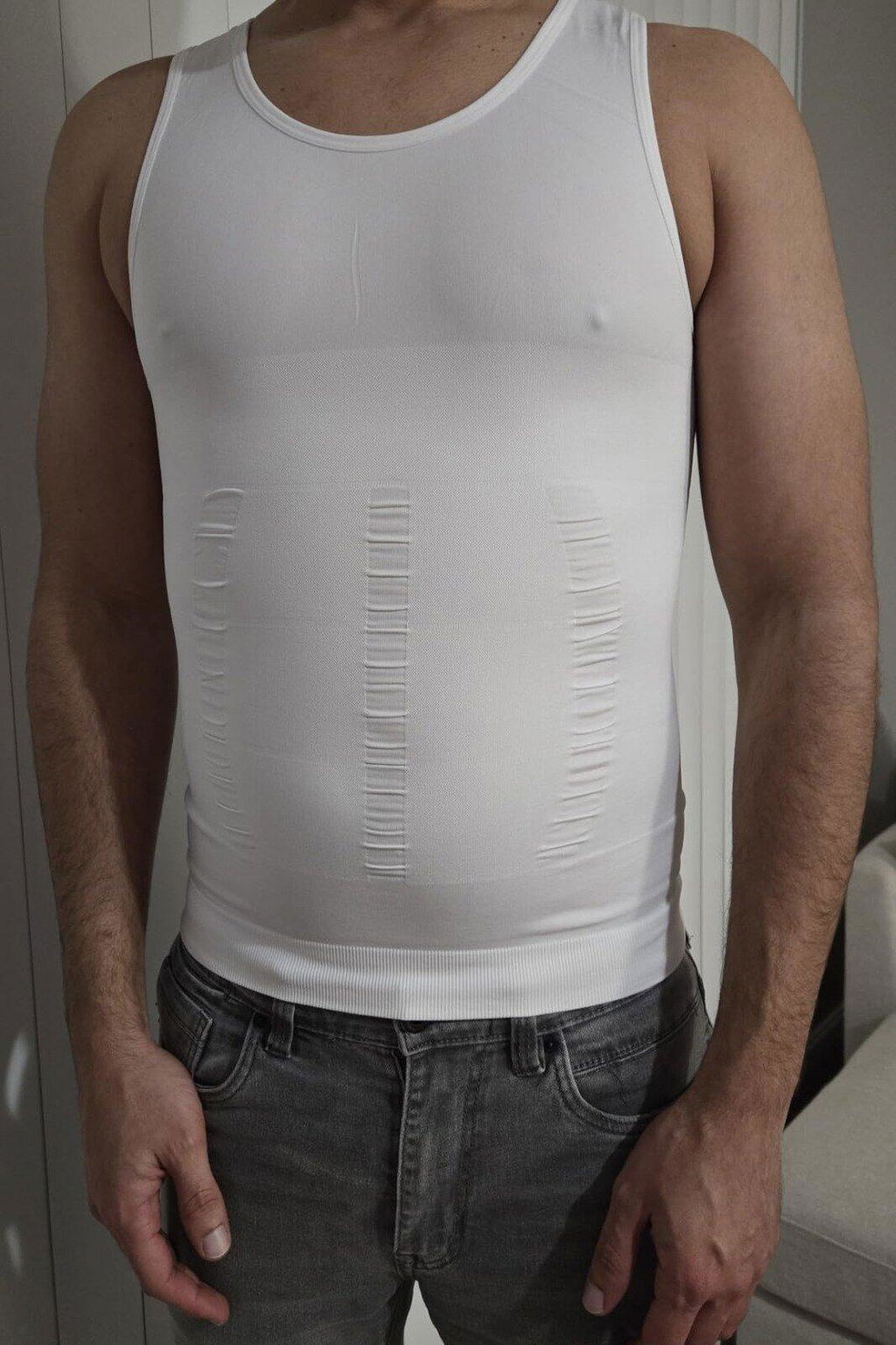
See the men's compression tank guide for that separate use case and its limits. If it matches what you want to address, you can also view the VEROSHAPE Compression Tank. Start with clothing fit; use compression only for the torso issue it is meant to address.
Make Jackets and Coats Clear the Seat Cleanly
Rear projection does not stop at the waistband. A jacket can fit the chest and shoulders yet become tight across the lower back or flare at the hem because the lower part of the jacket does not have enough room to pass over the seat.
Button a tailored jacket as intended, let your arms hang naturally and look at the back. The fabric should travel over the rear without strong horizontal tension, and the hem should not kick outward just to make room. For classic tailored proportions, a center-back length that reaches roughly to the base of the seat is a useful reference; Proper Cloth’s jacket-length guidance uses the same base-of-seat reference while allowing shorter or longer choices for different styles.
Do not treat vent style as a magic answer. Single, double and ventless backs can all behave differently depending on cut and fabric. The more useful test is whether the actual jacket closes, clears the seat and hangs cleanly on you without the vents being forced open by tension.

You do not need one universal “big butt” wardrobe. You need to solve the specific rear-clearance problem each garment presents. Get the seat and rise right in pants, let shirts travel over the rear without climbing, and make jackets clear the seat without strain. Once those structural points work, color, texture and styling become choices again instead of emergency fixes.
FAQ: Dressing With a Big Butt
What pants fit best if you have a big butt?
The best starting point is a pair that gives your seat, rise and thighs enough room without forcing the rear seam or dragging the back waistband down. Do not choose by an “athletic,” “straight” or “relaxed” label alone; compare the actual fit through the seat and rise first, then judge the leg shape.
Why do pants fit my butt but gap at the waist?
That usually means your waist and seat need different amounts of room. If the smaller size compresses the seat but the larger size clears the rear and leaves only moderate excess at the waist, fit the harder structural areas first and then assess whether the waist can be altered. If several areas need major correction, a different trouser pattern may be the better answer.
Should men with a big butt simply size up?
Not automatically. Sizing up can help when the smaller size lacks seat, crotch or thigh room, but it can also create a loose waistband and too much fabric elsewhere. The useful test is whether the larger size fixes the rear structure cleanly enough that the remaining excess is minor and realistically adjustable.
Is athletic fit always better for men with a big butt?
No. Athletic fit is a useful shopping filter, not a guarantee. One brand may add useful seat and thigh room, while another may still have the wrong rise or may taper too aggressively below the knee. Judge the actual seat, thigh and rise dimensions rather than the label.
How can I tell a projected seat from wide hips?
A projected seat is mainly a depth problem: the body extends farther backward and can affect the back waistband, seat curve and back rise. Wide hips are mainly a lateral-width problem. The two can overlap, but if side-to-side width is the dominant issue, use the wide-hips dressing guide for that owner-specific decision.
Why does my shirt ride up over my butt?
Two common causes are not the same: the shirt can be too narrow at the bottom to clear the hips and seat during movement, or it can be too short in back. Check lower-opening clearance first, then check whether you need more back length.