High-Waisted Pants for Men: How to Choose the Right Rise and Fit
Maybe the label says high rise. Maybe you are trying to wear a pair higher than usual. Either way, the useful question is not whether the waistband can reach a higher point for a few seconds. It is whether the trousers are actually cut to stay comfortable and reasonably stable there when you sit, walk, and move.
Choose high-waisted pants as a garment-and-body system, not by the label alone. Decide where you want the waistband to sit, compare the actual rise and top-block measurements, then test the trousers in motion. If they slide, bind, or bunch, change the variable that failed instead of automatically pulling them higher, tightening the belt, or sizing up.
What High Rise Actually Means on Men’s Pants
The rise is the part of the trouser that connects the waistband to the crotch. A higher rise gives more length between the waistband and crotch, allowing the waistband to sit higher when the rest of the top block is cut to support that position.
There is no single inch measurement that works as a universal definition of high rise for every brand and every man. The useful question is where a specific pair lands on your body and whether the rest of the trouser fits at that height.
For a consistent measuring method, Proper Cloth’s trouser-measuring guide treats front rise and back rise separately. Front rise runs from the top of the front waistband down the fly to the inseam intersection. Back rise runs from the top of the back waistband down the center-back seam to the same crotch point.

Choose the Waistband Position Before You Choose the Number
Before comparing measurements, decide where you actually want the waistband to sit. A higher position can change leg-to-torso proportions, the way a tucked shirt meets the trousers, and where the waistband crosses your midsection. But the position only works if the trousers can settle there without excessive tension.
Place the waistband at the height you intend to wear it and pay attention to what the rest of the trousers do. If you immediately want to pull them higher again, the crotch becomes restrictive, or the waistband only stays there with a heavily tightened belt, do not treat the position as a successful fit yet.
Fit first, styling second. A waistband can look visually right while the crotch, seat, or back rise is already telling you that the pair does not support that position.

How to Compare Rise Before You Buy
When you are shopping online, use a pair you already own as a reference instead of starting with a retailer’s high, mid, or low label. Pick trousers whose behavior you understand: where the waistband sits, whether the crotch has enough room, and what happens when you sit.
- Measure the reference pair using one consistent method. Record front rise and, when available, back rise. Waist, hip, and thigh measurements are useful too because a higher waistband still has to work with the rest of the top block.
- Compare the candidate’s actual garment measurements. A similar waist size does not guarantee a similar rise, and a high rise label does not tell you exactly where the waistband will land on your body.
- If the seller does not publish rise measurements, reduce the uncertainty. Ask for the measurement when practical or choose a return policy that gives you enough room to test the trousers sitting and moving before you commit.
Sizing up is not the same adjustment as choosing a higher rise. A larger size may change several dimensions of a pattern, but it can also leave the waistband, seat, or hips too loose. If your goal is a higher waistband position, compare rise and top-block measurements directly instead of assuming one size up equals one rise category up. If the waist and top block already fit but the trouser leg is simply too short, preserve those working dimensions and solve the inseam instead; our guide for tall, skinny men whose waist fits but inseam is too short covers that length-versus-width problem separately.

Pulling Lower-Rise Pants Higher Is Not a High-Rise Fit Test
One of the easiest ways to misjudge high-waisted pants is to take a pair that normally sits lower and drag the waistband upward. That can copy the height of a high-rise look without copying the garment geometry underneath it.
Moving the waistband upward does not add fabric between the waistband and crotch. If the pair was cut for a lower position, hiking it higher can pull the crotch into the body, create tension through the front, disturb the seat, or make the waistband work its way back down. That does not prove high rise is wrong for you. It may prove that this particular pair was designed to sit lower.
Proper Cloth’s casual-pant fit guidance makes the same underlying point: if you want trousers to sit higher, changes to waist width and rise may need to happen together. Waistband position and garment geometry are connected.

Check the Whole Top Block, Not Just Front Rise
Front rise is useful, but it cannot explain every fit problem above the knee. The top block also has to accommodate the back rise, seat, hips, crotch, and upper thighs while keeping the waistband at the intended height.
That is why the front of a pair can look clean while the back pulls, or why a rise number can look promising while the wearer still feels restricted. Proper Cloth recommends evaluating front rise, back rise, and total rise together, with the distribution affected by posture, lower-abdomen shape, and seat size. Hip and thigh width remain separate fit variables.
The practical lesson is not to call every wrinkle or pressure point a rise problem. If the waistband height is right but the seat is tight, the hips pull, or the upper thighs restrict movement, the next adjustment may live somewhere else in the top block. If the recurring pattern is that the waist fits but the rear stays tight—or sizing up fixes the seat and creates a back-waist gap—use our guide for men with a big butt whose seat needs more room than their waist.

Test High-Rise Pants Sitting and Moving, Not Just Standing
A standing fit is only the first check. Once the trousers feel settled at the intended height, sit in a normal chair, stand again, and walk for a few minutes. If you can, bend or climb a few steps. You are looking for a repeated change, not ordinary fabric movement.
- Stand: Is the waistband at the intended height without aggressive belt tension?
- Sit: Does the waistband dig in, does the crotch become restrictive, or does the back pull down?
- Walk: Does the waistband stay reasonably settled, or do you immediately want to readjust it?
Proper Cloth likewise advises evaluating trouser comfort across standing, sitting, and walking. A pair that looks right while still but repeatedly fails when your posture changes has not passed the fit test that matters for daily wear.

What Sliding, Binding, or Bunching Is Telling You
Do not answer every high-rise problem with the same fix. Start with the symptom, then recheck the variables most likely to be involved. This prevents a common compensation loop: pull higher, tighten the belt, size up, then create a new problem somewhere else.
| What you notice | What to check next | What not to assume |
|---|---|---|
| Waistband keeps sliding lower | Waist fit, intended position, rise, and whether the top block supports that height | That a tighter belt is automatically the right fix |
| Crotch becomes tight when you pull the pants higher | Total rise and the height the pair was designed to be worn | That high rise itself is uncomfortable for you |
| Front looks clean but the back pulls or bunches | Back-rise distribution, seat, and hip fit | That the front-rise number proves the fit is correct |
| Fit is fine standing but uncomfortable sitting | Waist pressure, crotch room, hips, and thighs in the seated position | That a standing check is enough |
| You size up and the waistband becomes loose | Whether rise/top-block shape, rather than overall size, is the real issue | That a larger size automatically creates the right rise |
If the same failure persists across several sizes or brands, describe the exact behavior to a competent tailor: where the waistband sits, what changes when you sit, and where the fabric pulls or gathers. That is more useful than saying only that the trousers “feel wrong.”

When High Rise Helps Your Proportions—and When Mid Rise May Work Better
High-waisted pants move the visible start of the leg line upward, so they can make the legs look longer and the torso look shorter. Whether that helps depends on the proportions you already have and the silhouette you want.
If you have a longer torso and comparatively shorter legs, a higher rise may move the visual break in a useful direction. If your torso is already short relative to your legs, going very high can push the balance too far and a mid rise may feel more natural. Height alone is not enough to decide.
If body proportion is the main reason you are changing your trousers, our guide to dressing a long torso and short legs goes further into the rest of the outfit without turning this rise guide into a full proportion article.
What Changes If You Have a Belly
A higher waistband can change where the trousers meet the stomach, but three questions still need separate answers: Does the position look the way you want? Does it stay reasonably stable? Is it comfortable when you sit? A yes to one does not guarantee the other two.
If belly shape is the main reason the waistband slides, folds, feels restrictive, or only stays put with a very tight belt, the decision is no longer just high rise versus mid rise. See our dedicated guide on how to wear pants with a big belly for the fuller over-versus-under-belly and support discussion.
Keep the jobs separate. Trouser rise should solve trouser fit and waistband position. It should not be asked to solve every outline issue created by the shirt or torso above the waistband.
How to Style High-Waisted Pants Once the Fit Is Right
Once the waistband position is stable and comfortable, styling is simpler. A tucked shirt makes the higher waistline visible and emphasizes the change in proportion. An untucked shirt can work too, but a long hem may hide most of the visual effect you chose the higher rise for.
A higher rise does not automatically require a wide leg or pleats. Those are separate silhouette and room decisions. If you are choosing between extra front fullness and a cleaner front, see our pleated vs flat-front pants guide.
If the Pants Fit but the Shirt Still Clings Around the Belly
If the trousers now sit correctly and pass the movement test, but your T-shirt, polo, or dress shirt still clings around the belly or side waist, changing the rise again is unlikely to solve that separate layer problem. Check the outer shirt first: enough ease through the midsection and a fabric that does not grab every contour can make a meaningful difference.
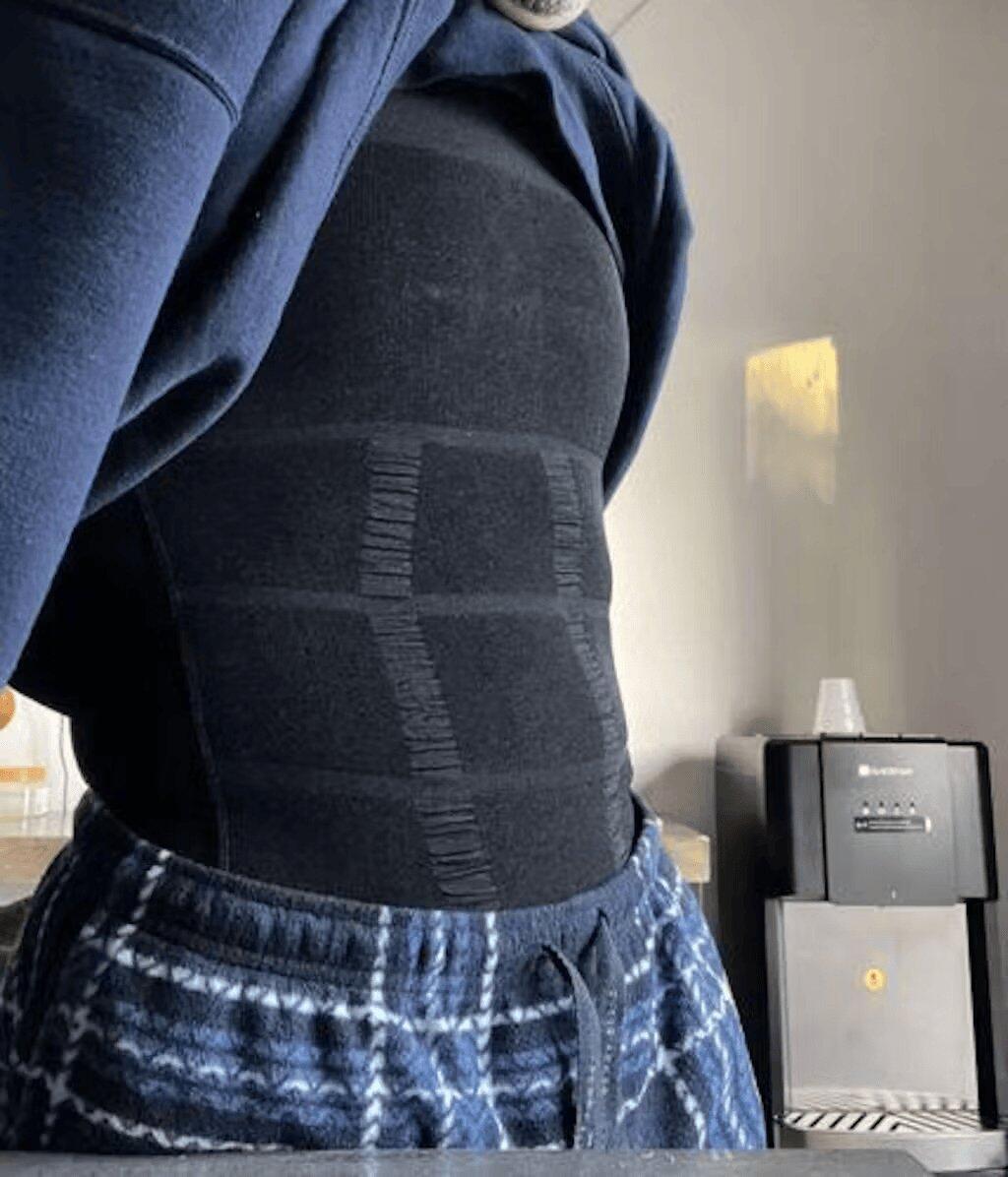
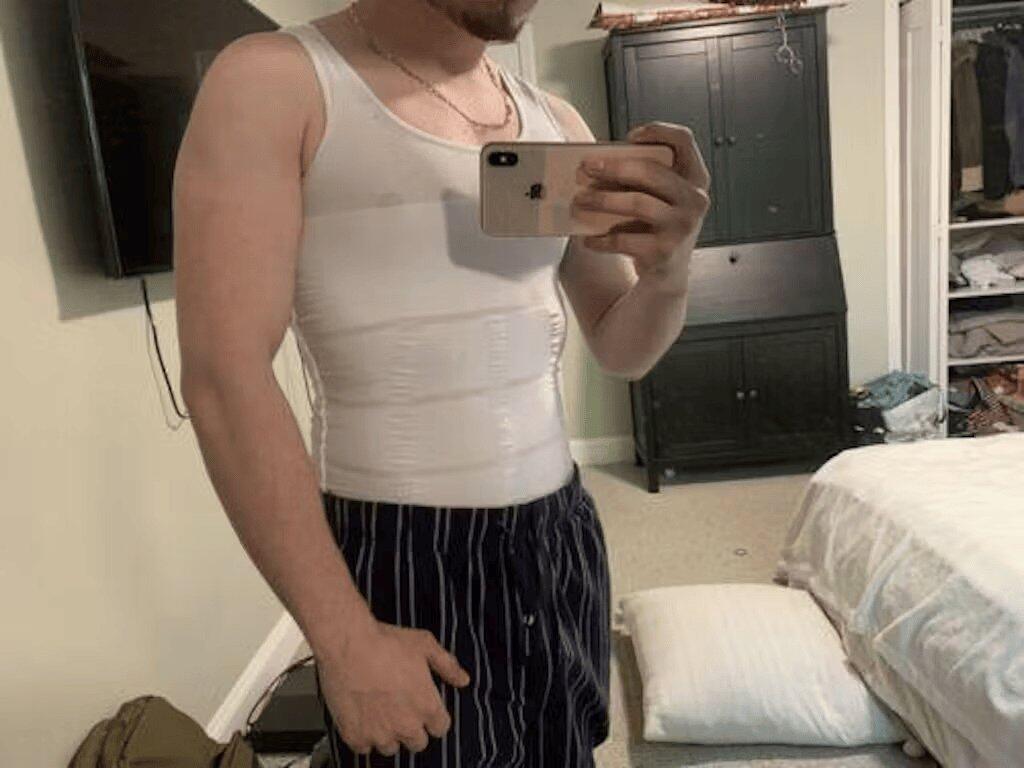
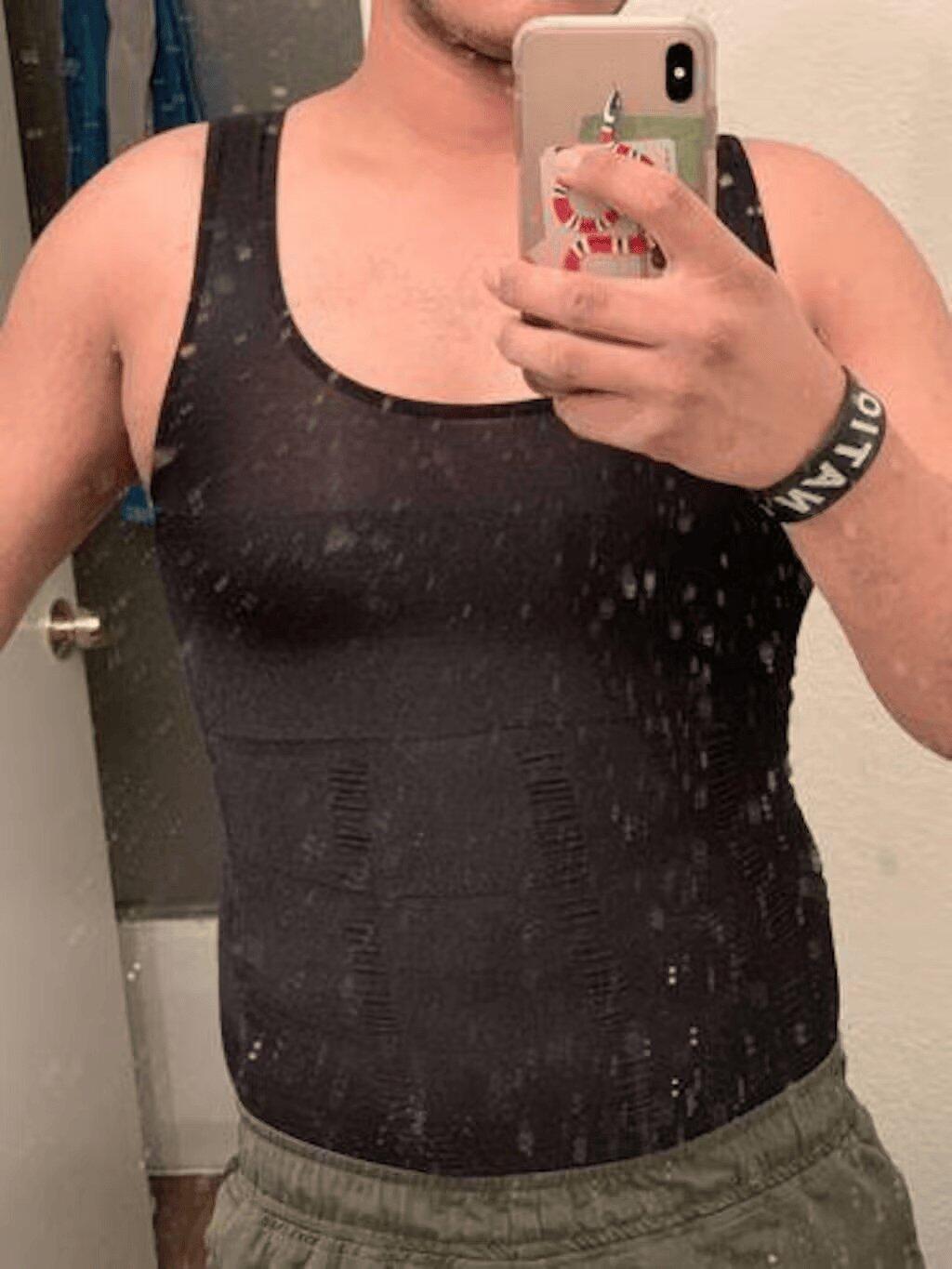
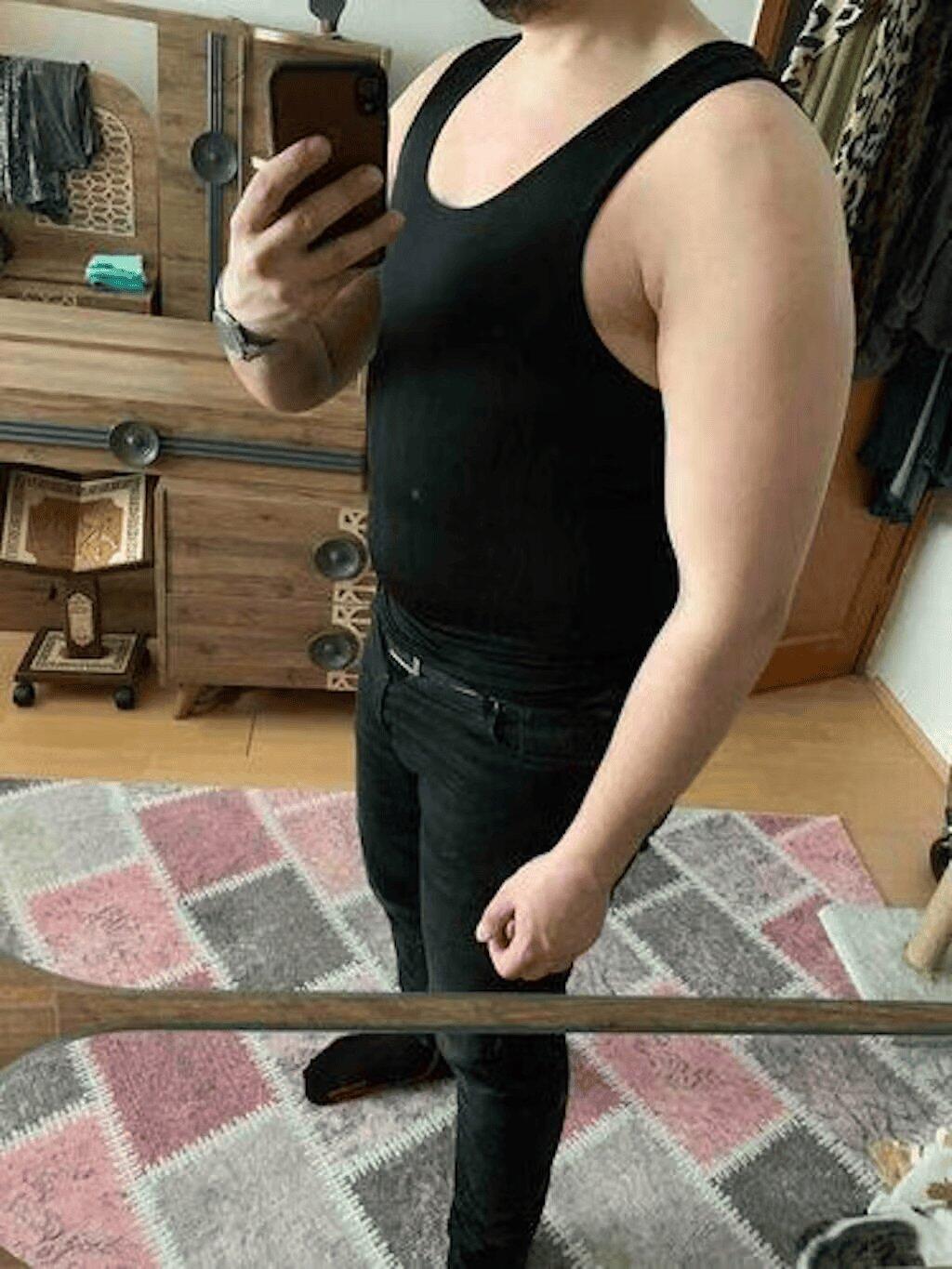
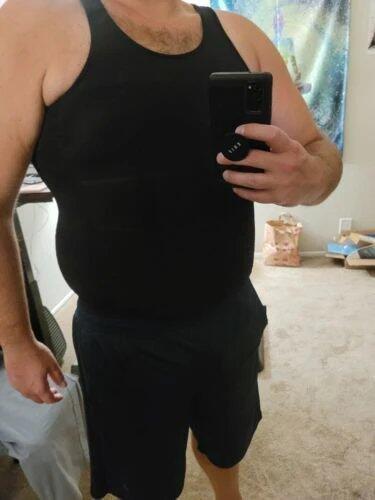
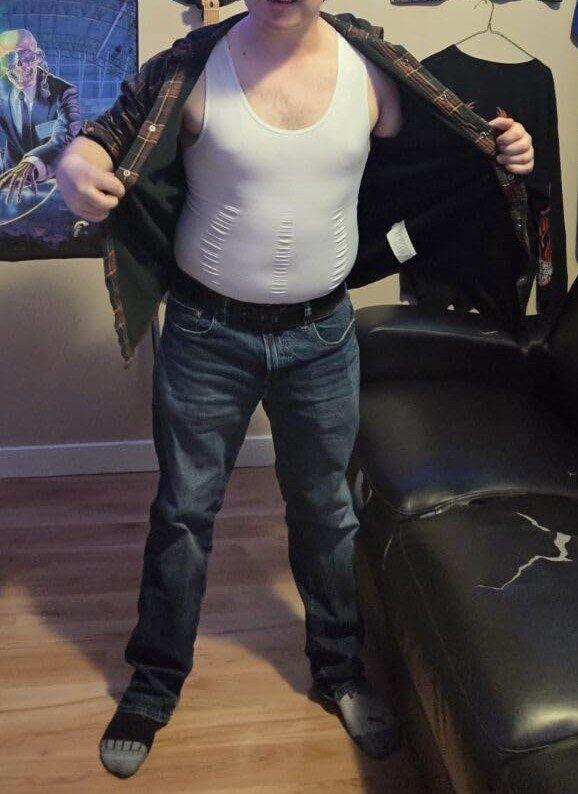
If you prefer a closer outer-shirt fit, an undershirt or compression base layer is another option. You can compare the category in our men’s compression tank guide before deciding whether you need one.
VEROSHAPE is designed to smooth the belly and love handles under shirts. Its long 7 cm hem is designed to stay tucked and reduce ride-up. It does not correct trouser rise or keep poorly fitting pants in place. See the VEROSHAPE Compression Tank.
FAQ About High-Waisted Pants for Men
Can a tailor turn mid-rise pants into high-rise pants?
Do not assume a tailor can convert a true mid-rise pattern into a high-rise one. Some waist and seat alterations are possible, but rise is tied closely to the trouser’s basic structure. Proper Cloth, for example, states that the front and back rise on its tailored trousers cannot be adjusted by a tailor.
Are high-rise pants and high-waisted pants the same thing for men?
They are commonly used for the same general idea: trousers intended to sit higher on the torso. Because brands and bodies differ, compare the actual garment measurements and where the waistband lands rather than relying on the wording alone.
Should high-rise pants stay up without a very tight belt?
A belt can support high-rise trousers, but the waistband should not need extreme belt tension just to occupy its intended position. If the trousers repeatedly slide unless you cinch the belt hard, recheck the waist fit, rise, and top-block shape before assuming more tension is the answer.
Do high-rise trousers need pleats?
No. Rise and pleats are separate design choices. Pleats change front fullness and can affect room and drape, while rise determines the vertical relationship between the crotch and waistband. Flat-front trousers can also be high rise.