Style for Men Over 50: How to Dress Well in Your 50s
Style for men over 50 gets easier when you stop treating 50 as a dress code. If your wardrobe suddenly feels wrong, first identify what actually changed: the fit, your day-to-day life, the way an older piece is styled, or simply how much of your torso you want visible under a shirt. Those problems need different fixes.
The short version: Keep what still fits your body, your life and your taste. Change only the part that is failing: size, cut, alteration, styling, context or—when the clothes already fit—an optional base layer.
Before You Buy Anything: The 4-Part Wardrobe Check
Turning 50 does not automatically make jeans too young, sneakers too casual or a blazer mandatory. Before buying anything, sort the problem into one of four buckets.
- Fit: the clothes no longer fit your current body the way you want.
- Life: your routine changed—work, retirement, dating, travel, social plans or how casually you dress day to day.
- Execution: the garment still fits, but its cut, condition or styling makes the outfit feel dated.
- Outline preference: the clothes fit and suit the setting, but you personally want less chest, stomach or side outline showing through the outer layer.
The distinction matters because each problem calls for a different correction. A fit problem may need a different cut. A life problem may need a different level of formality. An execution problem may need only one updated element. An outline preference may not require changing the outer garment at all.

If Your Clothes No Longer Fit the Same, Diagnose the Fit Before Changing Your Style
A shirt can be too tight at the chest and fine at the waist. Trousers can fit the waistband and still pull at the seat or thighs. A jacket can close comfortably but look wrong because the shoulders are too wide. That is why “go up a size” and “buy a slimmer fit” are both unreliable shortcuts.
With a shirt, look for shoulder seams that sit near the end of your shoulders, a button placket that stays reasonably flat, and enough room to sit and move without the lower buttons straining. Proper Cloth’s chest-fit guidance makes the same distinction: a tailored shirt can be slim, but not so tight that comfort suffers or pull lines appear across the chest.
With trousers, check whether the waistband stays in place without extreme belt tension, the pockets lie reasonably flat, and the seat and thighs stay comfortable when you sit. If one area is tight while the rest is already loose, a larger size can simply move the problem somewhere else. If that mismatch shows up specifically in denim—especially when the waist fits but the thighs, knee or calf do not—use our guide to jeans for men with big thighs to identify which part of the fit actually needs more room.
Try a different cut before assuming you need a different style. Use an alteration when the garment is otherwise worth keeping. If a fuller chest or stomach is what makes shirt sizing difficult, use our guide to how a dress shirt should fit with a belly or fuller chest rather than sizing the whole shirt around one area.
Fit is not the same as slimness. A cleaner silhouette that makes breathing, sitting or normal movement worse is not a better fit. The right cut should follow your shape without relying on constant fabric tension.
If the shirt passes those fit checks but you still want less chest, stomach or side outline showing through it, that is a different clothing decision. A more structured shirt, a regular undershirt, an outer layer or a compression base layer can each change the result in different ways. If compression is the option you want to compare, see our men’s compression tank guide.

If Your Life Changed, Dress for the New Setting—not Your Age
A wardrobe can stop feeling useful even when every garment still fits. A move from a suit-heavy office to retirement, a new business-casual job, dating again, more travel or a mostly casual week can make the old mix of clothes feel wrong because the setting changed.
| What changed | What to adjust first | What not to assume |
|---|---|---|
| You retired or work less formally | Build polished casual combinations from clothes you already like: clean jeans or trousers, knitwear, polos, casual shirts, jackets and comfortable shoes. | Comfort does not require living in gym clothes, and retirement does not require a blazer every day. |
| You moved into an office role | Raise formality through trousers, shoes and an optional jacket before replacing the whole wardrobe. | Business casual is a context problem, not an age rule. |
| You are dating or going out more | Dress for the venue and for the version of your personal style you actually want to show. | You do not need to dress younger; you need to look intentional. |
| You travel or work from home more | Prioritize pieces that stay comfortable while sitting and still look presentable when you arrive or step on camera. | More comfort does not automatically mean less style. |
If office dressing is the new problem and you also need more room through the torso or seat, our business-casual outfit formulas for bigger men handle that narrower fit problem without turning this guide into a separate office wardrobe.

Are Your Clothes Actually Too Young—or Just Styled the Wrong Way?
Jeans do not expire at 50. Neither do sneakers, T-shirts, hoodies or casual jackets. What changes the result is usually the combination of fit, condition, context and how naturally the piece belongs to your style.
Take sneakers. Clean retro trainers can work with jeans and a band tee if that is genuinely how you dress. Low-profile leather sneakers can work with dark denim and a knit polo if you prefer something quieter. Neither outfit becomes correct simply because it looks more “mature.” The useful question is whether the clothes fit, suit the setting and feel like a deliberate choice.
The same logic applies to denim. If your jeans are comfortable, fit cleanly and suit the occasion, you do not need to replace them with “older man trousers.” If a very narrow cut, heavy distressing or oversized branding no longer feels like you, change that variable. Do not ban the entire category.
Graphic tees are similar. A shirt tied to a band, place or interest you genuinely care about can belong in a casual wardrobe. If the graphic dominates an outfit more than you want, use a subtler version or wear it in a different setting. That is a styling decision, not an age prohibition.
A better “too young” test: Ask whether the garment fits, is in good condition, suits the setting and still feels like your style. If those four answers are yes, age alone is a weak reason to stop wearing it.

When Clothes Still Fit but the Outfit Feels Dated
Sometimes nothing is technically wrong with the fit. The outfit just feels frozen in another period. Before replacing everything, isolate the element creating that impression.
Footwear is often an efficient place to check because shoe shape, bulk and condition change the feel of an outfit quickly. The same is true of trouser width, jacket length, collar shape and how many older details are stacked together. One dated-looking element can be fine. Several in the same outfit can make the combination feel much more specific to an earlier era.
Change one variable and look again. Keep the shirt and trousers but try a cleaner shoe. Keep the jeans and sneakers but replace a worn, stretched polo. Keep the jacket but wear it with a simpler shirt. If one change makes the outfit feel current enough for you, stop there.
This is also where “timeless classics” can become a trap. Navy, grey, white, brown, denim and simple leather shoes are useful, but a wardrobe built entirely from safe staples can feel anonymous. Keep at least one element that belongs to you: a texture, color, watch, piece of jewelry, eyewear, jacket or footwear choice you would wear even if no age-based style guide mentioned it.

What Should Men Over 50 Wear? Start With What Still Works
Men over 50 can wear the same broad categories of menswear as other adults. Keep the pieces that still earn their space: they fit your current body, feel comfortable in normal movement, are in good condition, suit a real part of your life and combine easily with clothes you actually wear.
That may include dark or mid-wash jeans, chinos or other casual trousers, solid T-shirts, polos, Oxford-style shirts, knitwear, a casual jacket or blazer, clean sneakers and leather shoes. These are useful categories, not an age-specific shopping list. If you already own good versions, there is no reason to buy them again just because you turned 50.
How to Shop in Your 50s Without Shopping for “50-Year-Old Clothes”
Shop for your measurements, proportions, lifestyle and preferences—not for a demographic label. Labels such as “slim,” “straight,” “classic” and “relaxed” vary by brand, so use them as starting points rather than fit guarantees.
When you try something on, judge it in the position you will actually wear it. Sit down in trousers. Raise your arms in a shirt or jacket. Button the shirt the way you normally wear it. Check whether the waistband stays where you want it without being cinched aggressively. If the garment only looks good while you are standing still and arranging it for a mirror, it has not passed the real test.
A future weight goal should not leave you in badly fitting clothes today. If your size may change, you can limit spending by altering what is worth saving, buying fewer pieces or replacing the highest-use items first. Dressing the body you have now and deciding what you may want to change later are separate decisions.
Spend more where frequency and fit justify it, not because every man over 50 is supposed to own “investment pieces.” A jacket worn twice a year may deserve less of your budget than the trousers, shoes or shirts you wear four days a week.

When the Clothes Fit but You Want a Smoother Base Under Them
This is where fit and appearance preference need to stay separate. If a shirt pulls at the buttons, restricts movement or is simply too small, an underlayer is not the primary fix. Change the shirt, cut or alteration first.
If the shirt already fits comfortably and you mainly dislike how a thin fabric shows your chest, stomach or sides, you have several options. They solve different problems.
| What you want to change | First option to consider |
|---|---|
| The shirt is actually tight or pulling | Different size, different cut or alteration. |
| The fabric feels too thin or clingy | A more structured outer shirt or a different fabric. |
| You mainly want another layer for opacity or everyday undershirt use | A regular undershirt. If that is your decision, compare the options in our guide to wearing an undershirt under a dress shirt. |
| The shirt fits, but you prefer less visible chest, stomach or side outline | A compression base layer is one option. |
| You want more structure through the whole outfit | A jacket, overshirt or other outer layer. |

When a Compression Layer Matches the Problem
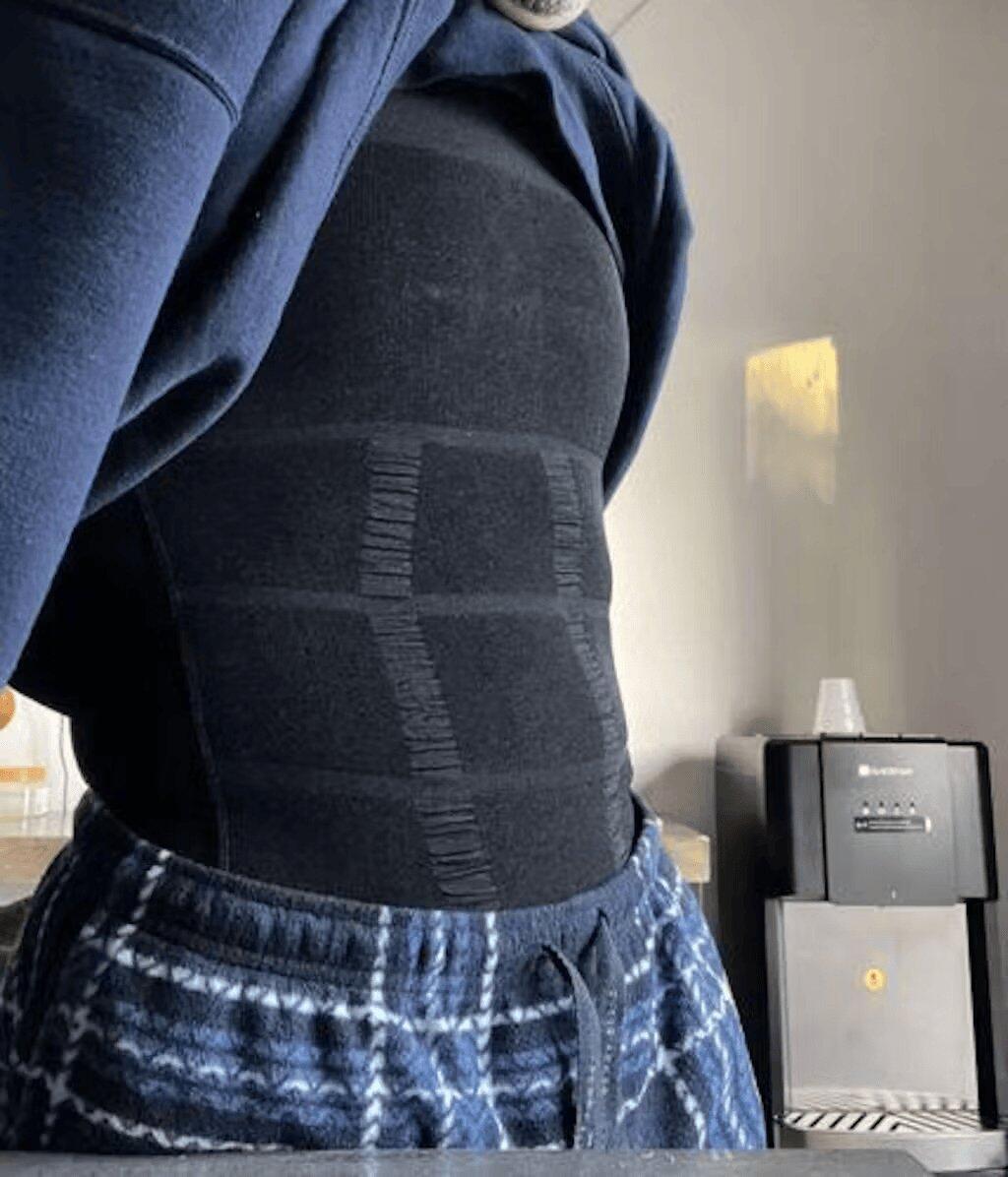
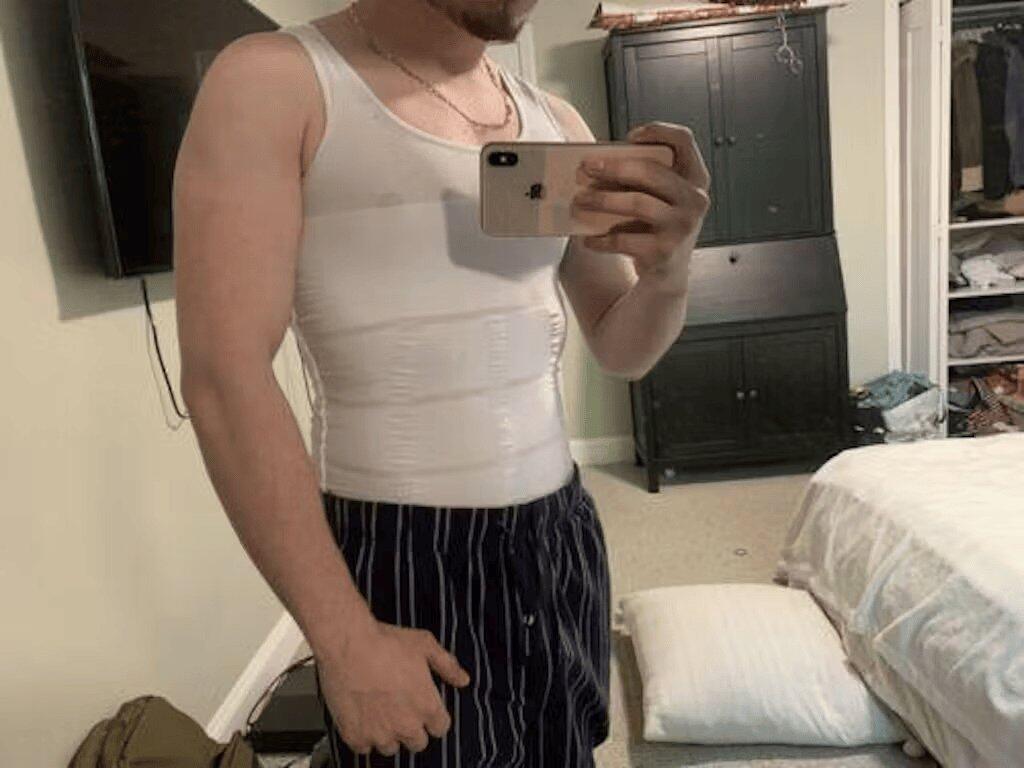
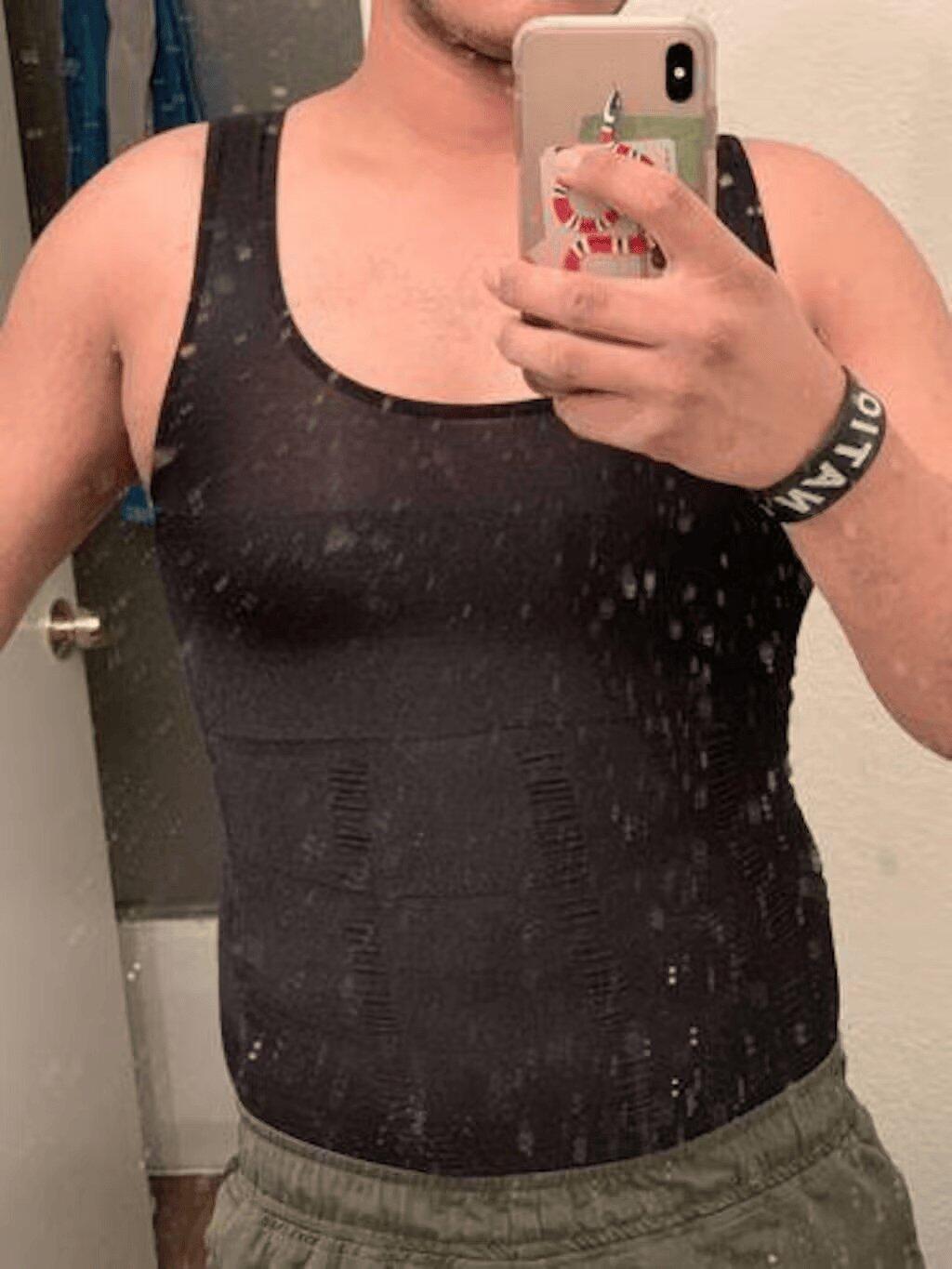
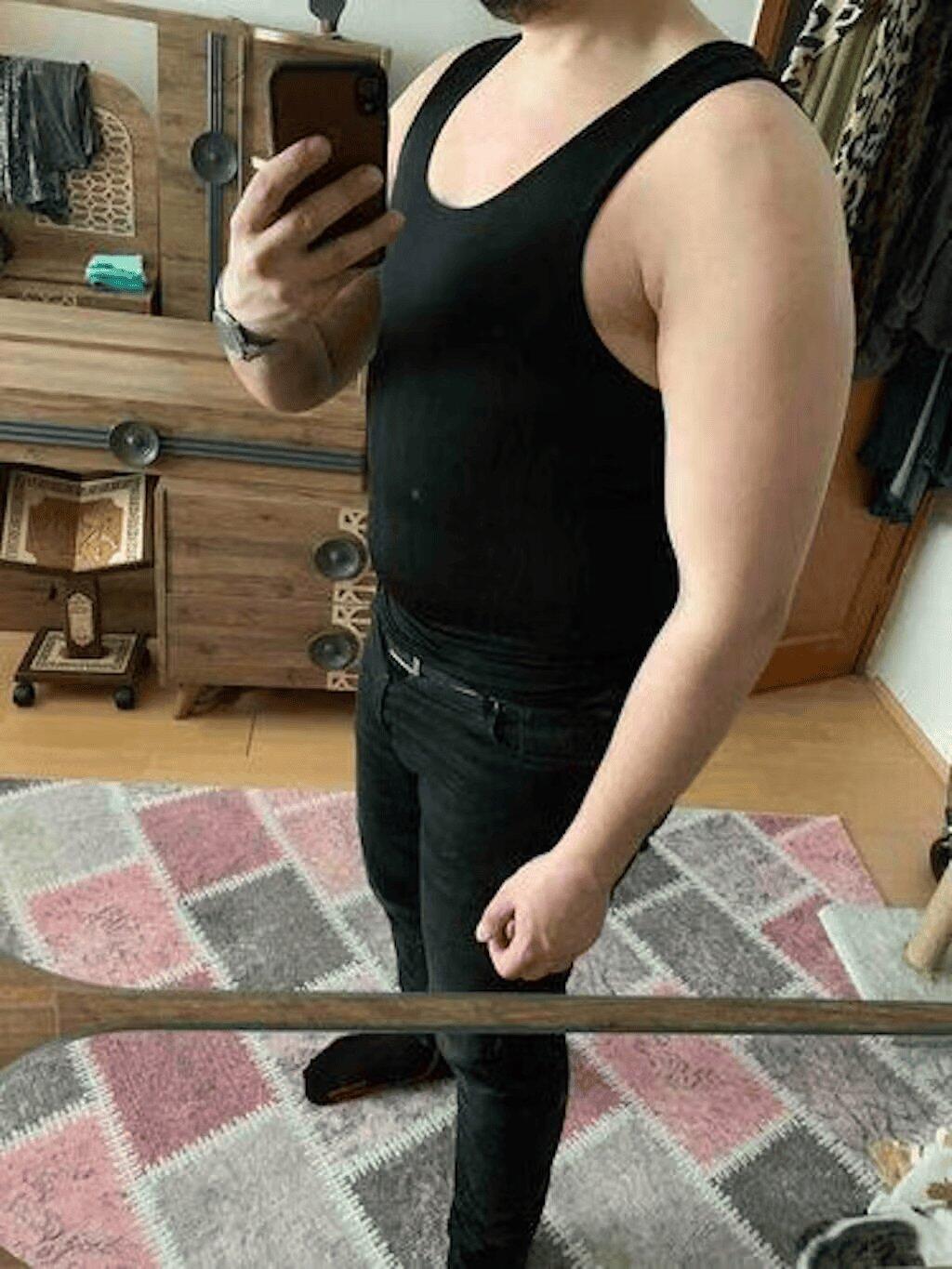
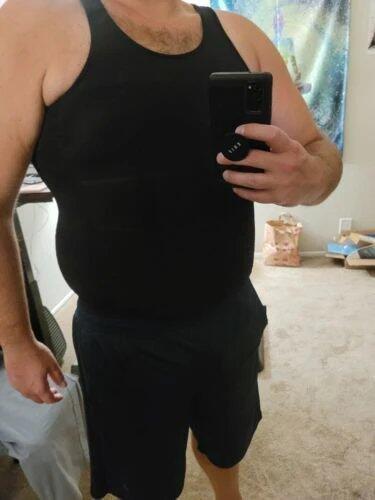
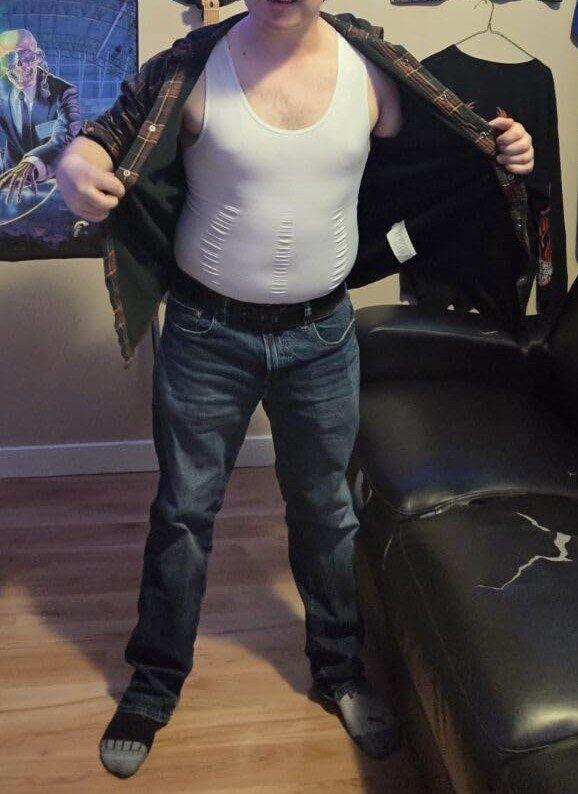
If a compression layer is the option that matches your goal, the VEROSHAPE Men’s Compression Tank uses firmer double-layer support at the chest, firm flexible support across the stomach and sides, and a longer construction that gives you more fabric below the belly to help keep it tucked under everyday clothes.
It does not change your body. It is designed to change how clothes sit while you are wearing it. If a different shirt, regular undershirt or outer layer solves the problem more simply, use that instead.
Review the VEROSHAPE Compression TankUse the Smallest Correction That Solves the Actual Problem
You do not need a separate personality, color palette or dress code because you turned 50. You need a wardrobe that fits the body you have, works for the life you live and still looks like something you would choose for yourself.
- Does the garment fit comfortably while standing, sitting and moving? If not, fix size, cut or alteration first.
- Did your daily setting change? Adjust formality and function to the new context.
- Does the piece fit but feel dated? Change one visible variable before replacing the whole outfit.
- Are you rejecting something only because it seems “too young”? Check fit, condition, context and whether it still feels like you.
- Does everything fit, but you want a different outline under the shirt? Compare fabric, a regular undershirt, an outer layer and an optional compression base layer.
That is how to dress well in your 50s without letting the number choose your clothes for you: diagnose what changed, keep what still works and make the smallest correction that solves the real problem.