How To Hide Love Handles Under A Shirt: What Actually Works
You put on a fitted shirt, check the front view, and it looks fine. Then you turn slightly to the side — and your waist is the first thing you notice. The shirt catches around the sides, the fabric pulls near the seams, and suddenly the whole outfit feels less sharp.
That is usually the real problem with love handles under shirts. It is not only your body. It is the relationship between your side waist, the shirt fabric, the side seams, and what is or is not sitting underneath the shirt.
This is also why the problem can change from shirt to shirt. A thin T-shirt, clingy polo or very slim dress shirt may follow the side waist closely even when another shirt in the same nominal size falls cleanly over it.
Start with the places where the outfit creates pressure or cling: the trouser waistband, the shirt’s fit through the lower torso, and the fabric itself. A shirt that fits cleanly at the shoulders but has room to skim the side waist will usually look better than one that simply squeezes less because it is a size bigger. If the shirt still catches at the sides, a smooth base layer can be an extra tool rather than the starting point.
This guide explains how to hide love handles under a shirt in real life: what fabrics work, what fit mistakes make the sides worse, which shirts that hide love handles actually help, when compression makes sense, and how to build a simple outfit system that still looks natural.
First, Find The Exact Point Where The Outfit Fails
Do not start by buying a larger shirt. A common frustration is that one T-shirt can look fine while another in the same size suddenly makes the side waist much more obvious. The useful question is not “What size am I?” but “Where does this specific outfit start going wrong?”
Check the shirt in four situations: standing normally, after sitting and standing back up, with the shirt tucked, and with it untucked. If the shoulders and chest look clean but the fabric pulls only at the side waist, the lower-torso cut is the likely problem. If it looks fine until you move, the fabric may be catching around the waistband. If the problem appears mainly when tucked, the waistband and trouser position are part of the equation. If only thin or stretchy shirts expose the outline, fabric structure is the bigger issue.
This matters because the wrong fix can create a new problem. Sizing up may add bulk everywhere, pulling the belt tighter can make the side waist more pronounced, and using an oversized shirt as camouflage can hide the waist while making the whole torso look wider.
Once you know the failure point, change one variable at a time: shirt cut, fabric, trouser position, tuck, layering, or underlayer. If you want the deeper explanation of why seams, fabric tension, waistband position, and movement make the outline more visible, read our guide on why love handles show under shirts. This page stays focused on what to wear and how to build the outfit.

The Real System: Shirt Fit, Fabric, And An Optional Base Layer
Most men try to solve love handles with one move. They buy a larger shirt, switch to black, or add another layer. The better approach is to identify which part of the outfit is creating the unwanted line before changing everything else.
Start with the outer shirt, then decide whether anything underneath needs to change:
| Check | What it does | Why it matters |
|---|---|---|
| Correct fit | Keeps the shoulders and chest clean while leaving enough room through the side waist | A larger size is not useful if it fixes the waist but ruins the upper-body fit |
| Structured fabric | Holds more of its own shape instead of collapsing against the sides | The shirt can drape across the waist instead of tracing every contour underneath |
| Optional base layer | Creates a smoother surface underneath the outer shirt while worn | Useful when the shirt still catches at the side waist after its fit and fabric are already working |
Fix the shirt first. If the shoulders fit, the fabric has enough structure, and the shirt still catches at the side waist, then test whether a base layer improves the drape.
Shirts That Hide Love Handles Best
The important distinction is not simply fitted versus loose. Two shirts can have similar measurements and still behave very differently at the side waist because one fabric holds more of its own shape while the other collapses against the body.
That is why structure matters. A fabric with enough body can bridge small changes in shape instead of tracing every contour underneath, while thin or highly stretchy fabric tends to show tension more quickly.
Oxford shirts
Oxford cloth is one of the easiest wins. It has more body than thin t-shirt fabric, which means it drapes across the side waist instead of clinging directly to it. Even after sitting for an hour, the material tends to fall straighter instead of gripping the sides every time you stand up again.
Oxford cloth is especially useful when the shoulders already fit well but the lower torso needs more separation from the fabric. You can keep a cleaner fit through the upper body without asking the shirt to stretch tightly around the waist.
Medium-weight t-shirts
A medium-weight t-shirt is usually better than a thin lightweight tee. Thin shirts show shadows and side tension quickly. They feel soft and lightweight in the store, then start grabbing around the side waist the moment you wear them outside for a full day. A slightly heavier tee gives the outfit more structure without looking stiff.
Overshirts
An open overshirt creates vertical lines down the torso. This breaks up the side outline and makes the waist look less exposed. It also lets you keep a fitted base outfit without relying on oversized clothing.
Because the overshirt stays open, its two front edges break up the outline of the torso instead of wrapping another tight layer around it. That gives you coverage at the sides without making the whole outfit look oversized.
Textured polos
Textured polos can work well if they are not too tight at the waist. Pique cotton, waffle texture, and darker colors usually perform better than shiny athletic polos that cling to the sides.
Pique is a useful middle ground when you want a polo to look fitted without behaving like a thin performance knit. The extra texture and body help it keep more of its own shape around the waist.
Shirt jackets
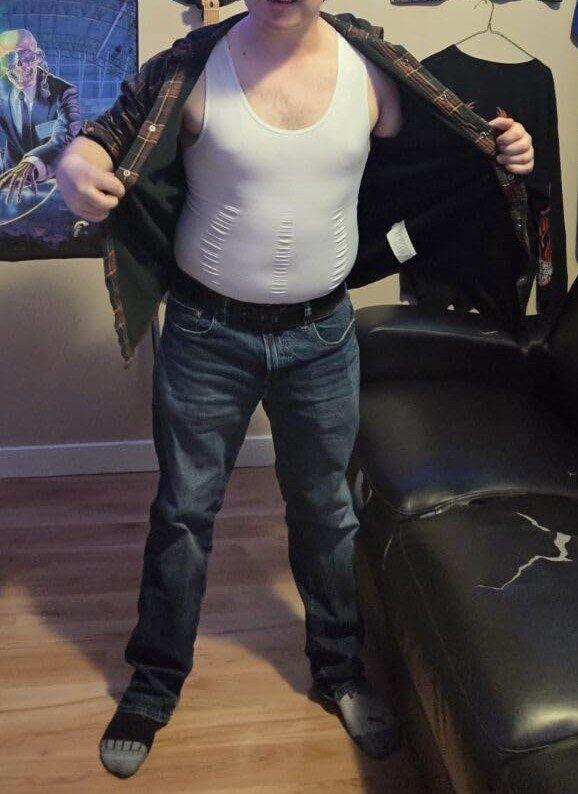
A shirt jacket is useful because it gives the torso structure without looking formal. It works especially well over a compression tank and plain t-shirt.
| Best shirt type | Why it helps | What to avoid |
|---|---|---|
| Oxford shirt | Structured weave, cleaner drape | Very slim cuts at the waist |
| Medium-weight t-shirt | Less cling than thin cotton | Thin white fabric |
| Overshirt | Adds vertical structure | Oversized sloppy fit |
| Textured polo | Breaks up side tension visually | Shiny stretch material |

What Not To Wear If Your Love Handles Show
Some clothing choices make love handles more visible even when the rest of the outfit looks good.
Very tight stretch shirts
Stretch fabric can look sharp on the chest and shoulders, but it often pulls hardest around the waist. That tension makes the sides more visible.
Thin white t-shirts
Thin white shirts show shadows, fabric pull, and side projection more clearly than darker or heavier fabrics. If you wear white, use thicker fabric and a smooth base layer underneath.
Oversized shirts used as camouflage
Oversized shirts can hide the sides, but they often make the entire torso look bigger. Many men trade one problem for another: less visible love handles, but a wider, less polished silhouette.
Check Where The Waistband Meets Your Side Waist
The useful question is not simply “low rise or high rise?” It is where the waistband crosses your body. If it sits directly underneath the fullest part of the side waist, it can create a visible step between the trousers and torso. A shirt that would otherwise drape cleanly can then catch on that change in shape.
Try the same shirt with trousers that sit slightly higher and compare the side view. If the line from waistband to shirt becomes smoother, trouser rise was part of the problem. If the higher position creates a deep indentation or feels unnatural on your proportions, do not force it — keep a more comfortable rise and solve the remaining cling through shirt cut and fabric instead.
Ignore whether the trousers are sold as “mid rise” or “high rise.” Wear them with the actual shirt, then sit down and stand back up. The better rise is the one that leaves the shirt falling more cleanly over the waistband after movement.
Tucked Or Untucked? Test The Waistband Break
Tucking is not automatically bad for love handles, and leaving a shirt untucked is not automatically better. The result depends on where the waistband crosses your side waist and what the shirt does once its hem is held in place.
Try the shirt tucked first. Look from the side and 45-degree angle before and after sitting down. If the waistband creates a stronger ridge and the shirt starts pulling inward directly above it, the tuck is emphasizing the exact area you are trying to soften. Before abandoning the tuck, test the same shirt with the trousers sitting slightly higher or with less belt pressure and compare again.
Then test the shirt untucked. The fabric should fall past the side waist without ending directly at its widest point. If the hem is too short, it can ride up after movement and expose the waistband break. If it is too long or too wide, the extra fabric can make the entire lower torso look larger.
Do not decide from the front view alone. Compare tucked and untucked after sitting, standing, and walking. Keep the version that leaves the cleanest transition from the shirt into the trousers without creating a new ridge, bunching point, or oversized lower torso.
Fit Rules That Matter More Than Size
The most common mistake is thinking the answer is simply "go one size up." That can help sometimes, but often it just creates extra fabric and strange folds.
The better question is: where does the shirt fit well, and where does it pull?
Shoulders first
The shoulders should fit cleanly. If the shoulder seam drops too far, the shirt looks sloppy. If it sits too high, the whole shirt pulls across the torso.
Chest should have room
The shirt should not pull across the chest. If the chest is too tight, tension travels down into the stomach and side waist.
Waist should skim, not squeeze
This is the key. The shirt should follow the body without hugging the side waist. You should be able to move without the fabric grabbing around the love handles.
Length should cover the side waist
If the shirt ends exactly at the widest part of the waist, it can draw attention to that area. Slightly longer shirts usually sit cleaner, especially with compression underneath.
Should I size up my shirts?
Only if the shirt is tight in more than one area. If the shoulders and chest already fit but the fabric pulls at the side waist, going up a full size can drop the shoulder seams and add loose fabric everywhere except the place you actually need room. A better option is a cut that keeps the shoulder fit while giving more space through the lower torso.
Use the side seam as a quick check: if it stays fairly straight through the chest and then bends sharply outward at the waist, look for a roomier lower-torso cut before changing the overall size.
Check the front, side, and 45-degree view. Then sit down, stand up, and raise your arms once. If the shirt only fails after movement, the issue is usually fabric settling — not just size.

Where Compression Fits In
Compression works best when it is treated as a clothing tool, not a miracle body change.
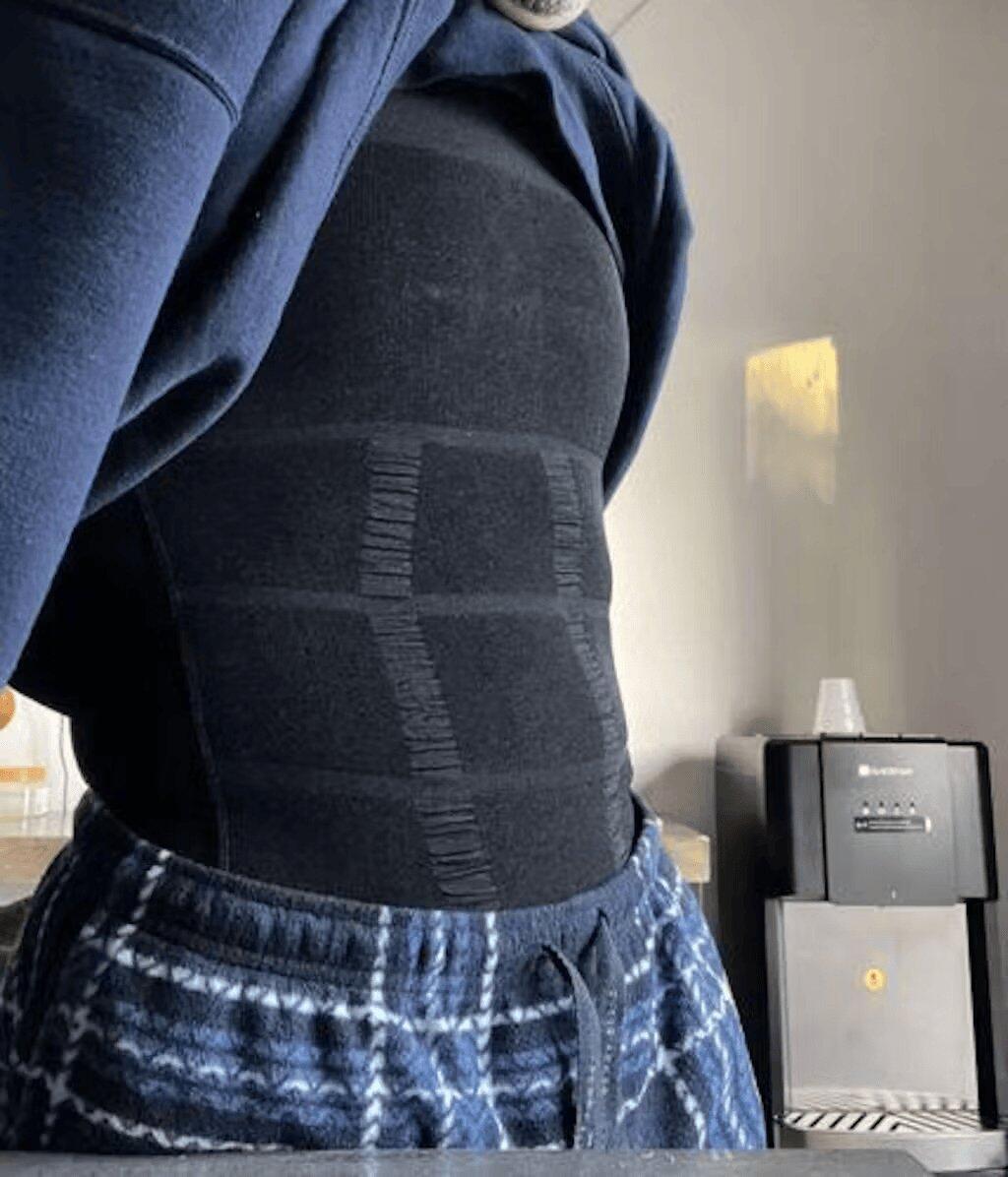
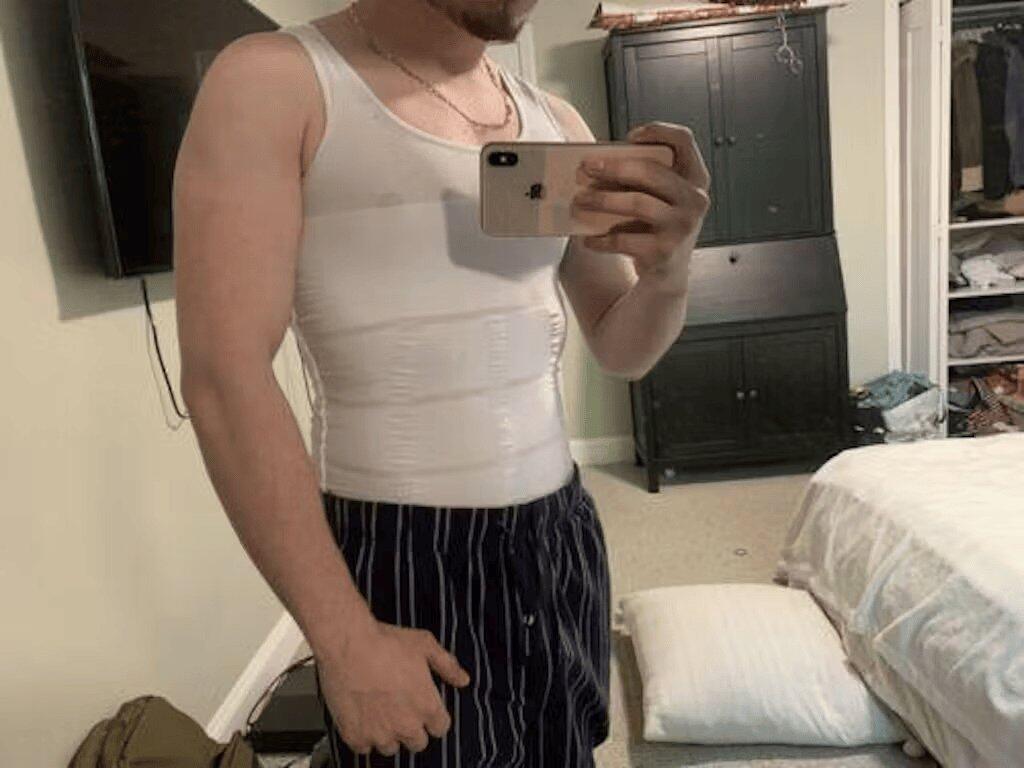
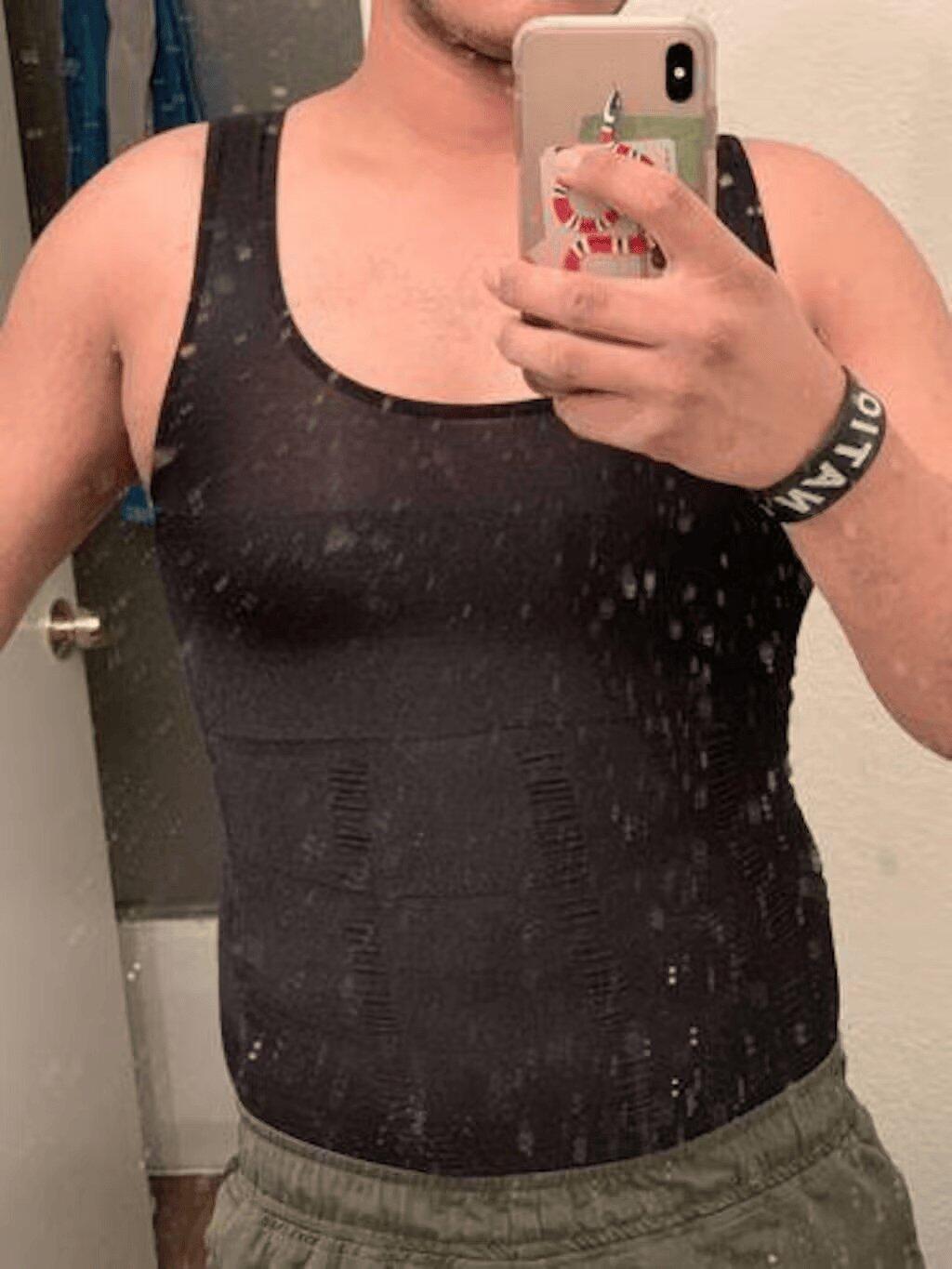
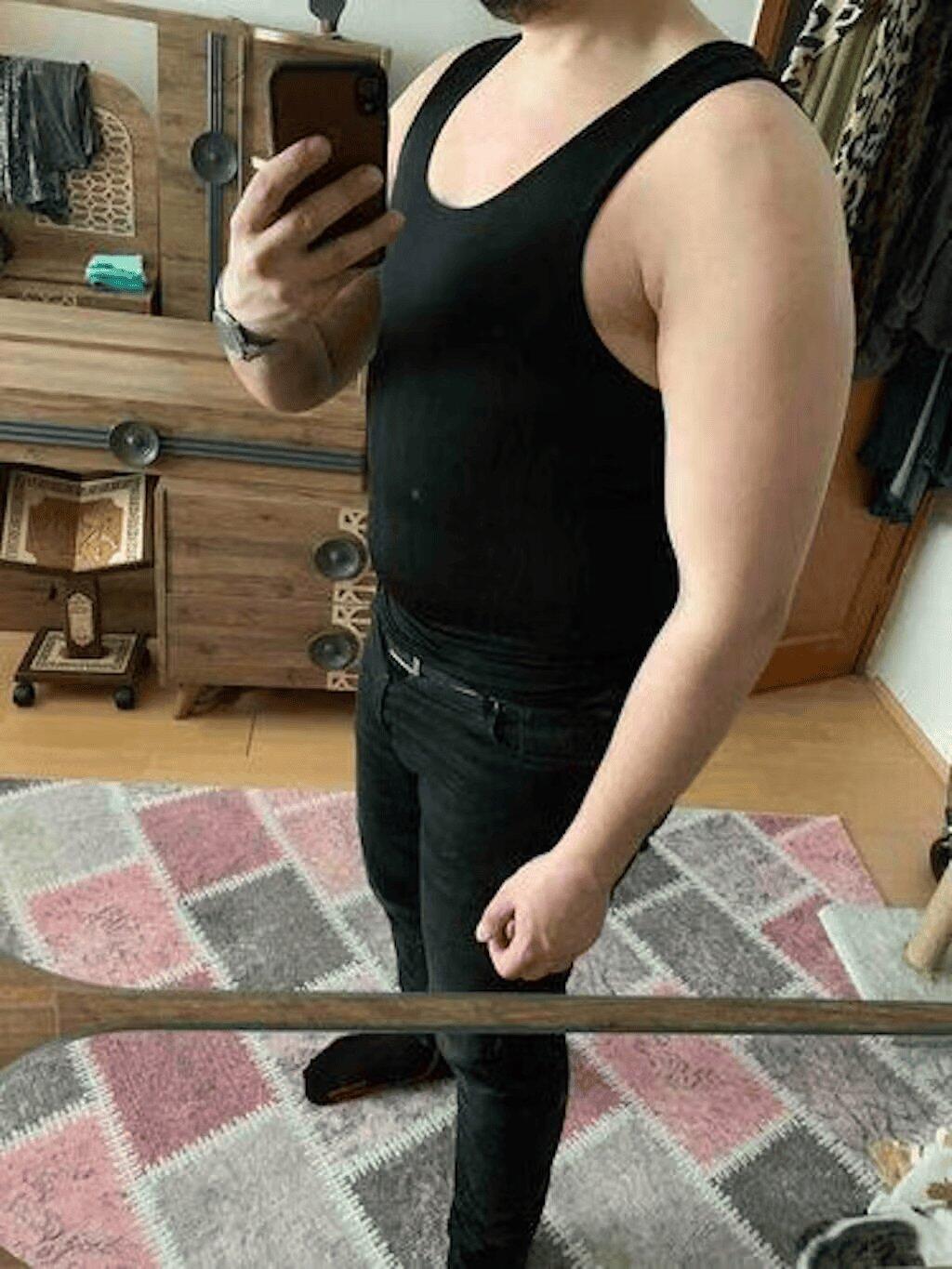
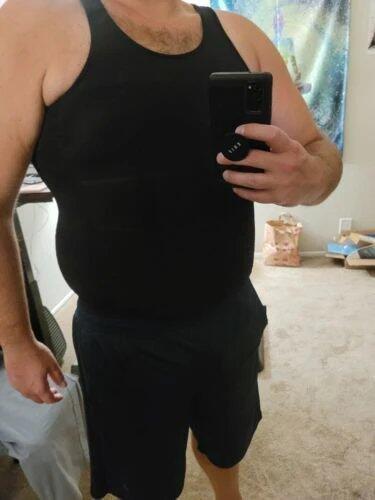
A compression tank helps smooth the side waist while you wear it. It gives the shirt a more stable surface, reduces side cling, and helps the outer fabric fall cleaner across the torso.
The goal is not to squeeze as hard as possible. The goal is controlled, natural-looking improvement under clothing.
If the outer shirt already fits well but still catches at the side waist, a love handles compression tank can be an optional next step. It changes the layer underneath the shirt instead of asking a larger outer size to solve a localized fit problem.
What compression can do
- smooth the side waist while worn
- reduce fabric catching around the love handles
- help shirts sit cleaner after movement
- improve confidence in fitted clothing
- make medium-weight shirts perform better
What compression cannot do
- permanently remove love handles
- replace long-term health habits
- make every bad-fitting shirt work
- look natural if it is too small
For long-term body composition changes, gradual weight management habits matter. The CDC notes that healthy weight management is supported by nutrition, physical activity, stress management, and sleep, and that steady weight loss is more likely to be maintained over time.
For men focused on reducing the waistline itself over time — not only improving how shirts fit meanwhile — our guide on how to get rid of love handles for men explains the realistic long-term side of the process without extreme fitness advice or fake transformation promises.
The VEROSHAPE Compression Tank uses a longer hem to give more fabric below the belly, smooth edges and a low neckline to stay discreet under T-shirts, polos and dress shirts, and firm, flexible support across the stomach and sides to help outer shirts sit cleaner.
Smooth The Side Waist Under Real Shirts
VEROSHAPE compression is designed to give fitted shirts a cleaner base — smoothing the side waist without oversized clothing, fake transformations, or visible shapewear lines.
Shop The Compression TankDoes A Compression Tank Show Under Shirts?
This is usually the question men ask right before buying one.
A good compression tank should disappear under normal clothing. The problem is that many compression products are built too aggressively: thick seams, short torso cuts, shiny fabric, or compression so strong that the edges become visible through the shirt.
Seam construction and torso length can make a noticeable difference under fitted shirts. Shorter tanks are more likely to ride up or lose their position during movement, while flatter seams and enough length can help reduce bunching and visible edges around the waist.
Color matters too. Under thin white shirts, bright white compression can sometimes become visible under strong lighting. Softer off-white tones usually disappear more naturally under lighter shirts, while black works better under darker outfits.
The neckline matters more than most people expect. A compression tank should stay hidden when the top button of a shirt is open or when wearing a fitted t-shirt with a standard collar.
The goal is not extreme compression. It is cleaner shirt drape under clothes men already wear every day.
If you are comparing styles, our guide to the best compression tanks for love handles explains what construction details matter most: side compression, length, flat seams, and daily comfort.
A Simple Daily Outfit System
You do not need to rebuild your whole wardrobe. Start with a simple system that works in real life.
Casual day
For everyday wear, many guys notice the difference most after a few hours outside the house. A medium-weight dark t-shirt over a smoother compression layer tends to keep its shape better while walking, driving, and sitting instead of slowly clinging tighter around the sides throughout the day.
Office day
Office lighting exposes more than most men expect, especially bright overhead lighting during meetings or seated positions around conference tables. Structured oxford shirts usually hold their shape better throughout the workday instead of collapsing tightly around the waist after sitting.
Dinner or social setting
Restaurants and social events create the exact situations where many men become hyper-aware of their waistline: side angles in photos, fitted shirts under warm lighting, and standing up repeatedly throughout the evening.
An open overshirt or lightweight jacket over a fitted t-shirt creates cleaner vertical lines while keeping the outfit natural instead of oversized.
Warm weather
Summer becomes difficult because thinner fabric exposes more side tension. Instead of switching to baggy shirts, many guys get cleaner results from slightly heavier breathable cotton with a smoother base layer underneath.

The Confidence Part Nobody Talks About
When your shirt sits badly, you think about it all day.
You adjust the hem. You avoid certain chairs. You keep your arms close. You check reflections in windows. You choose angles in photos. That constant low-level awareness is what makes the issue feel bigger than the body part itself.
When the shirt sits cleaner, you stop managing the outfit. That is the real value of a good base layer and better fit. Not perfection. Less distraction.
This is the core of VEROSHAPE: discreet confidence through realistic silhouette improvement. You are still you. Your clothes just sit better.
FAQ: How To Hide Love Handles Under A Shirt
Can fitted shirts still work if you have love handles?
Yes, but fabric structure matters more than most men expect. A fitted shirt with structure usually looks cleaner than a stretchy slim shirt that tightens around the waist after movement.
Should I tuck or untuck my shirt if I have love handles?
Neither is automatically better. Compare both with the same trousers and shirt. If tucking creates a stronger ridge above the waistband, adjust the trouser position or try the shirt untucked. If the untucked hem rides up or makes the lower torso look wider, the shirt length or cut may be the bigger issue.
What colors hide love handles best?
Darker colors usually reduce visible shadows and side tension, but fabric structure matters more than color alone. A structured medium-weight shirt in a lighter shade often looks cleaner than a thin black shirt that clings tightly.
Can layering hide love handles without making me look bigger?
Yes, if the added layer stays open and has enough structure. An overshirt or lightweight jacket can break up the outline of the side waist without adding another tight layer around it. Avoid solving the problem with a much larger outer layer, because extra width through the whole torso can create a bulkier silhouette instead.
Can compression tanks roll up during the day?
Short tanks often do. Longer torso cuts tend to stay anchored better while walking, sitting, and bending throughout the day, especially under fitted shirts.
Are oversized shirts the best way to hide love handles?
Not usually. Oversized shirts can hide the waist but often make the entire torso look larger. Structured fabrics and cleaner fit usually create a sharper result.
Stop Fighting Your Shirts All Day
VEROSHAPE helps fitted shirts fall cleaner around the waist using smoother layering and everyday wearable compression designed for real movement.
Shop The Compression TankThis article was written by Mike Sterling, founder of VEROSHAPE. Mike built the brand after years of frustration with compression garments that rolled at the waist, showed under shirts, or felt too restrictive for comfortable everyday wear.