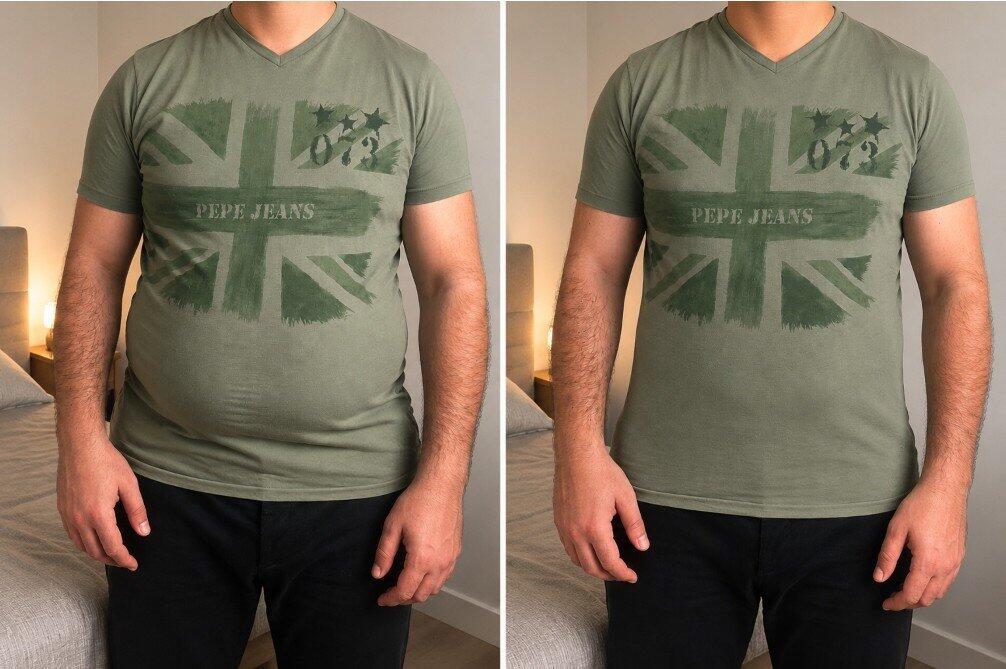
How to Stop Nipples Showing Through a White Shirt
You put on a white T-shirt that looks fine indoors, then step near a window, raise your arms or take off your jacket—and the nipple outline becomes the first thing you notice. You try a looser shirt, a white undershirt or another layer, but the color, projection or edge of the layer can still show. This guide helps you identify the exact failure before you choose a fix.
For men, hiding nipples under a white shirt starts with identifying the failure: visible color, a projected point, chest tension or the underlayer itself. Test a lower-contrast or fitted layer for color, more chest room or smoothing coverage for projection, then check the complete outfit in daylight and after movement.

First, identify what the white shirt is revealing
Men repeatedly describe two different frustrations: seeing darker color through the shirt and seeing a physical point or shadow. Those are separate clothing failures, so a fix that improves one can leave the other unchanged.
You can see the darker areola or skin contrast, but there may be little physical projection.
The main issue is a raised point or small shadow through the fabric.
Horizontal pulling or a tight chest makes the shirt follow every contour.
The nipples are covered, but the neckline, armholes, sleeves or tank outline become visible.
| What you see | First thing to test | What not to assume |
|---|---|---|
| Dark color beneath the shirt | A lower-contrast underlayer or a targeted cover | That white-on-white will automatically disappear |
| A pointed outline or shadow | More fabric coverage, a targeted cover or a smoothing layer | That changing color alone will remove projection |
| Pull lines across the chest | More chest room or a different cut | That simply sizing up will preserve the rest of the fit |
| Visible neckline, sleeves or tank edges | A deeper neckline, cleaner edge or different layer format | That every undershirt is discreet under white |
If this problem also happens under dark, patterned or heavier shirts, start with the broader guide to why men’s nipples show through shirts. This page stays focused on the extra decisions created by white and light-colored fabric.

A properly fitted men’s slimming undershirt can be useful when you need an additional layer without changing the outer shirt. The layer still has to pass the neckline, edge and daylight checks described below.
Why some white shirts reveal more than others
Construction matters more than the color name
Research by Kostajnšek and Dimitrovski on woven-fabric cover factor found that yarn coverage affects radiation transmission through a textile. A separate review of UV transmission through textiles associates density, thickness, mass per unit area and porosity with transmission tendencies.
These studies measured ultraviolet transmission rather than nipple visibility through everyday shirts. They support a general construction principle, not a promise that a named weave or a specific GSM will hide nipples.
Two white shirts can therefore behave differently even when the color name is identical. The finished garment still needs to be tested on the body because the approved studies do not establish a universal opacity threshold for this problem.
Chest tension changes the real-world test
A shirt that looks opaque on a hanger can behave differently when it is pulled across the chest. The studies used here do not prove that stretching makes a white shirt visibly transparent, so treat this as a garment-fit check rather than a scientific rule.
Look for horizontal lines, a collar that shifts backward, or fabric that stays in constant contact with the nipple area. When those signs appear, changing the outer-shirt cut can be more useful than adding another thick layer.
Sweat can change how freely the fabric moves
Gao, Deaton and Barker’s wet-cling study found that sweating conditions and air movement affected friction between fabric and a simulated skin surface. The study did not measure nipple visibility. The practical implication in this article is limited to checking how a damp shirt sits and moves rather than claiming that sweat always increases show-through.
This distinction matches community experiences in hot and humid settings, where men described shirts becoming more difficult to wear once sweat and extra layers entered the decision.

How to hide nipples under a white shirt: match the fix to the problem
When nipple color is visible
Start with a three-way test under the actual white shirt: the white layer you own, a heather-gray option and the closest available skin-adjacent tone. Community comments often favor gray, beige, tan or skin-tone layers, but they also show why no color wins universally.
Gray helps only when it creates less contrast with your skin than the alternatives. One man with a more yellow skin tone described gray as stark beneath his white shirt, while white blended better in that outfit. The useful rule is to minimize the color jump from skin to base layer to outer shirt—not to follow “gray under white” as a universal formula.
Another man described wearing a close-fitting white tank under polos and dress shirts without an obvious tank outline, while the nipple area was covered in those outfits. That experience does not prove that every white tank works; it shows why fit, edge construction and the complete outfit matter as much as the color label.
Community comments also named Uniqlo AIRism, Costco undershirts and American Apparel Baby Rib as items men had personally tried, with outcomes depending on color, neckline and fit. These are individual examples rather than universal product recommendations.
Judge the result by the complete layer, not only by its color. A color may reduce contrast while its neckline, armholes or sleeves remain obvious. The best option is the one that creates the least visible difference across the whole chest in your lighting and shirt.
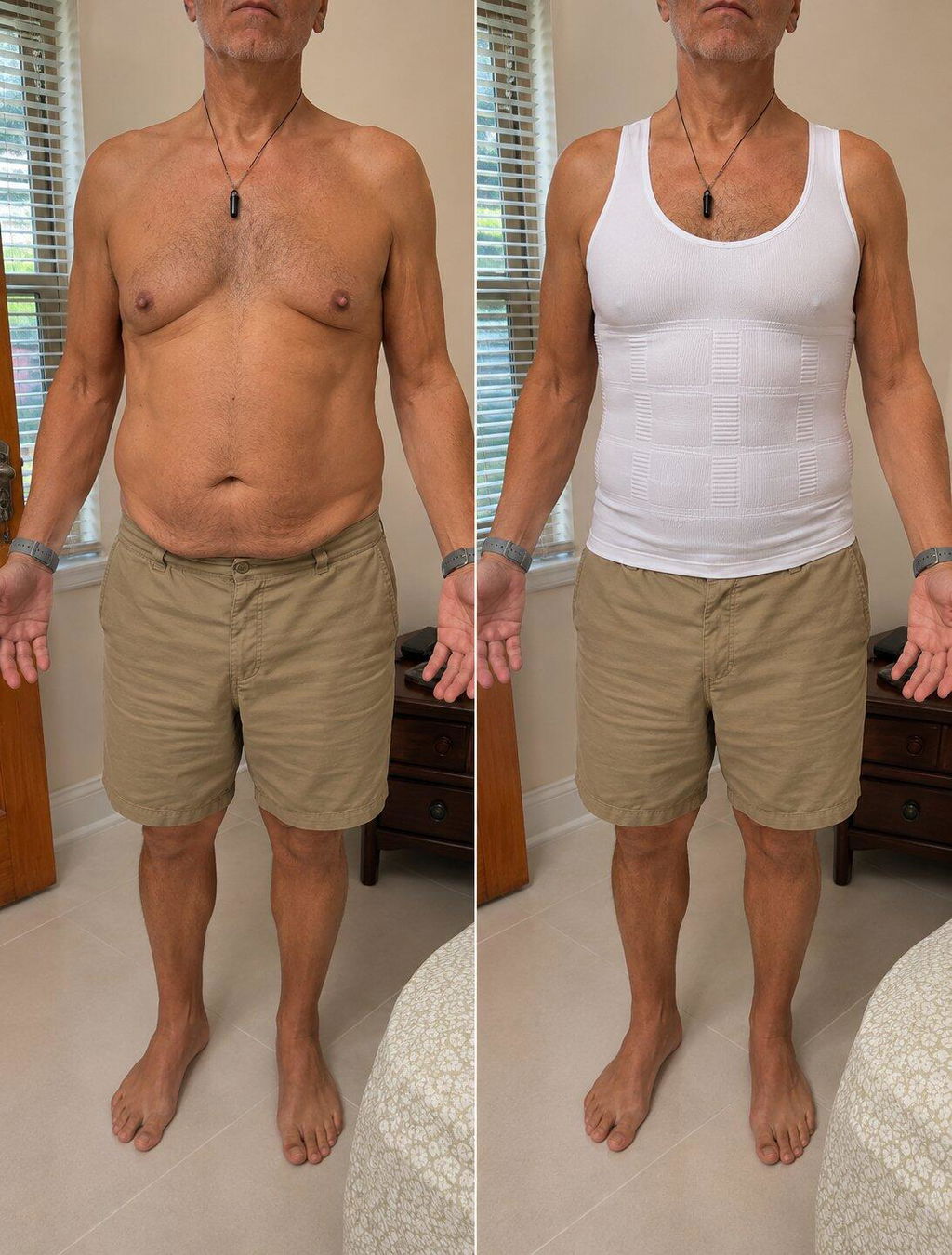
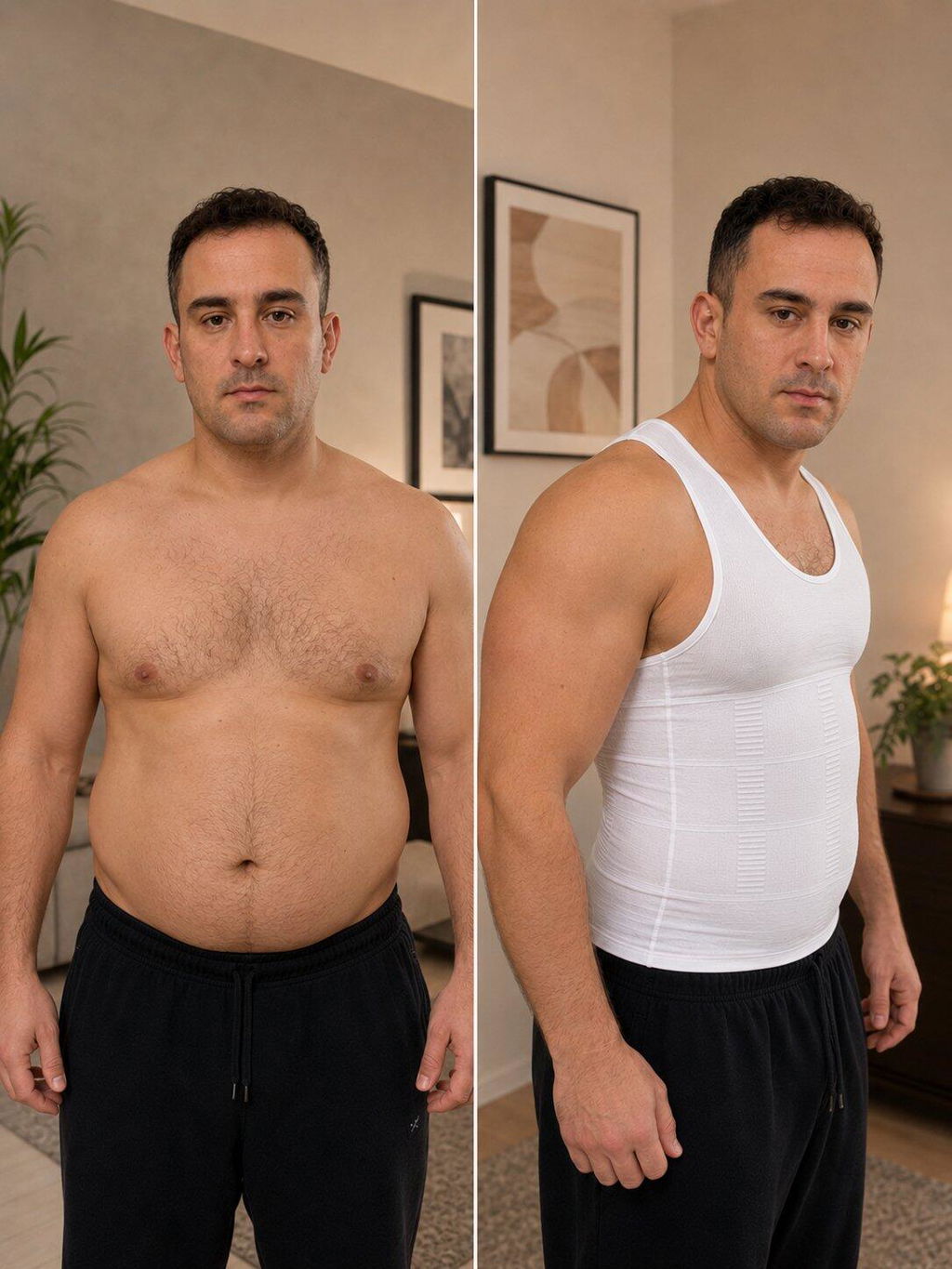
In VEROSHAPE’s internal white-shirt testing, the white compression tank remained discreet under the white shirts tested. That is a first-party product result, not proof that every white base layer works under every white garment.
When the physical outline is visible
Color correction alone cannot remove a raised outline. Test three levels of intervention: a more covering outer shirt, a small targeted cover, or a smoothing base layer that distributes pressure across a wider chest area.
Targeted covers use the least fabric, which can make them attractive in heat, but community discussions raised concerns about body hair, sensitive skin, removal, sweat and visible edges. Those are reported experiences rather than verified dermatological facts, so individual testing matters.
When the whole chest presses into the shirt
If the fabric is tight across the entire chest, deal with the outer-shirt fit before asking a small cover to solve a larger tension problem. A shirt with more usable chest room can reduce pulling, but an oversized body can create excess fabric elsewhere.
For a wider discussion of outer garments, compare shirts that reduce visible chest projection rather than turning this white-shirt guide into a complete shirt-ranking article.
When the base layer becomes visible
Under a dress shirt or polo, check the neckline with the exact number of buttons you normally leave open. Also inspect the armhole, sleeve ending, lower hem and any abrupt color boundary.
If the shirt already fits but a concentrated nipple outline remains visible, compare the construction and fit of a men’s tank top to hide nipples. This is a category decision, not a reason to assume that every tank will disappear under every white shirt.
Will this layer stay hidden under your shirt?
Look for chest coverage, a neckline compatible with the outer shirt, and a fit that smooths projection without creating a new visible edge. The complete outfit still has to pass the daylight and movement test.
White T-shirt vs white dress shirt
The same nipple problem creates different constraints in a white T-shirt and a white dress shirt. A T-shirt lets you replace the outer garment more easily, while a dress shirt introduces an open collar, button spacing, cuffs and visible underlayer edges.
| Decision | White T-shirt | White dress shirt |
|---|---|---|
| First outer-shirt check | Chest tension, knit density and how the tee sits after movement | Fabric coverage, placket area and how the shirt behaves with the collar open |
| Base-layer risk | Neckline or tank outline can show through the tee | Neckline, sleeves, armholes and color boundary can all become visible |
| Easy correction | Try a different tee construction or chest fit | Test a deep neckline and a layer that stays hidden with your normal button position |
| Do not assume | That a loose tee will always solve projection | That a standard white V-neck will remain invisible |
When the issue is mainly dress-shirt pulling rather than color, use the separate guide to how a dress shirt should fit a fuller chest. That keeps fit ownership separate from this page’s white-shirt visibility decision.

Why common fixes sometimes fail
“Just size up”
Men described the nipple outline showing through both loose and tight white T-shirts. More size can reduce tension, but it cannot guarantee more fabric coverage or remove color contrast.
“Wear a thicker shirt”
Denser and heavier textiles generally transmit less radiation in the textile literature, but no approved evidence supports a universal GSM threshold for hiding nipples. Use thickness as one screening clue, then test the finished garment in real light.
“Put a white undershirt under the white shirt”
An ordinary white underlayer may cover nipple color while creating visible sleeves, neckline or tank edges. White-on-white is therefore a testable combination, not an automatic rule.
“Use tape or covers”
A targeted cover can address a small area without adding a full layer. It may be unsuitable for some men because of the reported concerns around hair, skin sensitivity, sweat, removal or visible edges.
“Double up”
Two ordinary shirts add coverage, but they can also add heat, bulk and another set of edges. In hot or humid conditions, the lightest solution that survives the real outfit test may be more practical than maximum layering.
When a compression tank makes sense
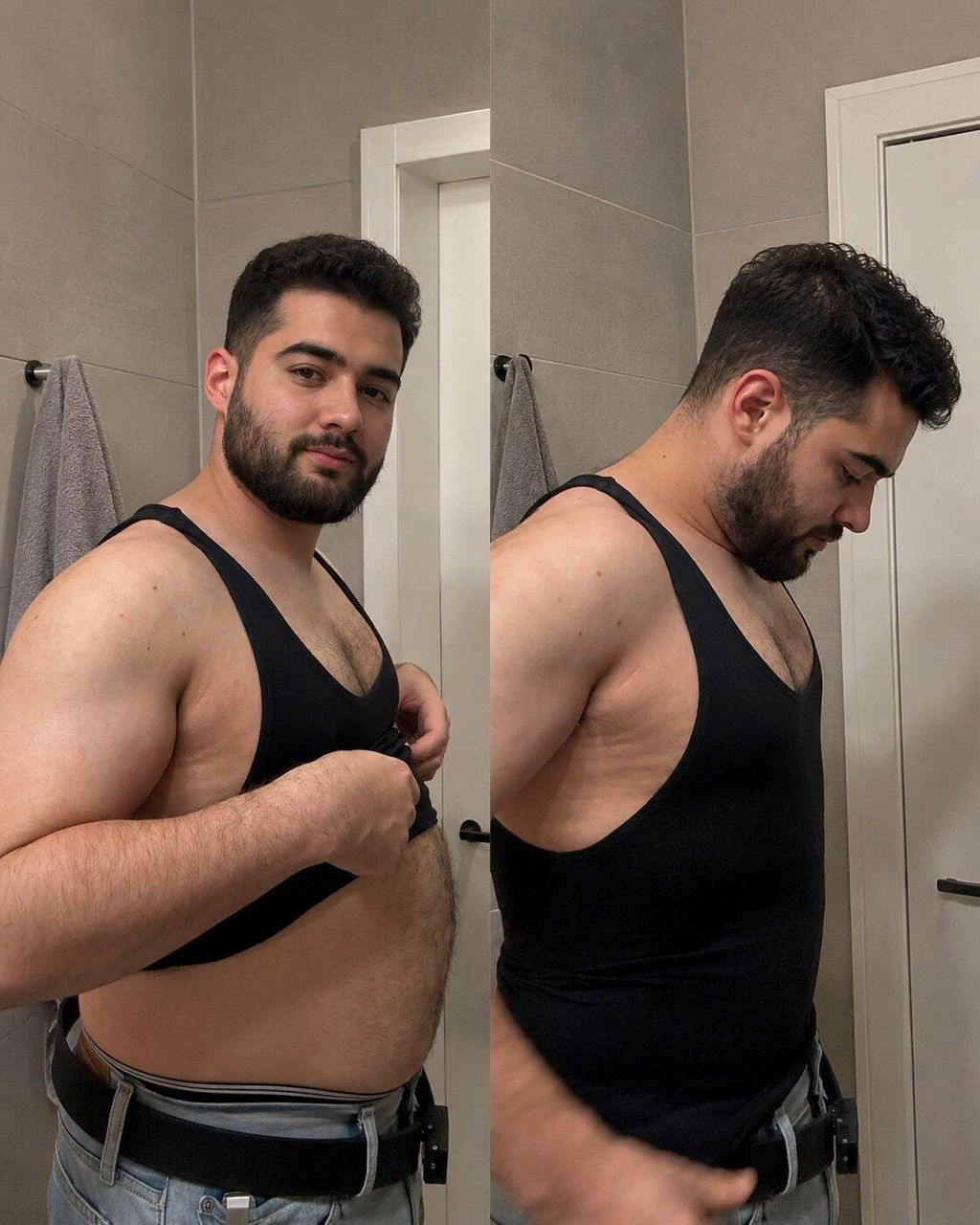
A compression tank is most relevant when the visible problem includes point projection or the way the entire shirt sits over the chest. It is less direct when the only issue is a small color difference that a targeted cover or lower-contrast layer already solves.
VEROSHAPE confirms that its tank uses a sleeveless, super-stretch construction with double-layer compression across the chest and pec area, and is sold in white and black in sizes S–2XL. VEROSHAPE also confirms a moisture-wicking claim, durability beyond 30 washes and a 60-day guarantee. The fabric percentage is intentionally omitted because the historical values in the project records conflict and the current physical label has not been verified.
Would a compression tank solve your version of the problem?
Compare the white and black options, size range and double-layer chest design only after checking whether your main issue is projection, chest tension or color. Test the chosen tank under the exact shirt, collar position and lighting you plan to use.
Compare the VEROSHAPE Compression TankIn VEROSHAPE’s internal testing, the visible nipple outline was no longer noticeable under the white shirts tested. This is an attributed first-party result, not a guarantee for every shirt, body, light source or level of compression.
VEROSHAPE positions and internally tests the tank as a summer-friendly compression layer. Leoz-Abaurrea and Aguado-Jiménez found that one tested upper-body compression garment did not reduce heat strain during cycling at about 40 °C. No compression layer should therefore be described as universally cool in every activity or climate. The deciding test is whether the layer remains comfortable for your duration, activity and outer shirt.

The five-minute white-shirt test
- Stand in normal indoor light. Check whether you see color, a point, whole-chest tension or an underlayer edge.
- Turn slightly. Inspect the shirt from a shallow side angle without changing posture.
- Use daylight. Move near a window or outdoors because men described a difference between private and public viewing conditions.
- Move normally. Raise your arms, sit, retuck the shirt and reopen the collar to your usual position.
- Recheck after a few minutes. The layer should still sit acceptably after body heat and movement, even though this is not a laboratory sweat test.
A pass does not require the shirt to look digitally flat. It means the nipple outline, color and base-layer edges are not noticeable enough to distract you in the real setting for which the outfit is intended.

Choose for the situation, not only the mirror
Office or work uniform
Prioritize a hidden neckline, clean sleeve or armhole edges and comfort over the full workday. A solution that works with a fully buttoned shirt may fail when the collar is opened after the commute.
Wedding or formal event
Test the shirt with the jacket removed, because men described anxiety about taking off an outer layer in public. Photograph the outfit in daylight as well as checking it in the mirror.
White T-shirt in heat or humidity
Choose between a targeted cover, a more covering T-shirt and a light base layer according to the amount of time outdoors and your tolerance for another layer. A “moisture-wicking” label alone does not predict wet cling in the tested textile research.
When the concern is broader than the nipples
If the whole chest looks soft or prominent under several garments, continue with the guide to solutions for a softer chest appearance under clothing. That page owns the broader chest-appearance decision while this page remains specific to white-shirt visibility.

Common questions about nipples showing through white shirts
Is it normal for men’s nipples to show through a white shirt?
Search results and community discussions include men asking about this under white T-shirts, polos, linen shirts and dress shirts. Whether you choose to change it is a clothing preference, not a reason for shame.
Is it common for men’s nipples to show through light-colored shirts?
Men described the same visibility problem under white and other light-colored shirts. Light colors can expose color contrast, projection or an underlayer edge, so the same four-part diagnostic applies.
What color undershirt is best under a white shirt?
No approved study confirms one universal color. Gray may reduce contrast for some skin tones, while one man with a more yellow skin tone described white as less stark in his outfit. Test gray, white and a skin-adjacent option beneath the actual shirt and lighting.
Do nipple covers work under a white shirt?
They can target color or a small outline without adding a full layer. Community experiences also mention hair, skin sensitivity, sweat, removal and visible-edge concerns, so test the exact cover before an important event.
Will a thicker white shirt hide nipples?
Denser and heavier textile construction generally transmits less radiation in the approved literature, but those studies did not measure nipple visibility and do not establish a universal GSM threshold. Treat thickness as a useful clue and verify the actual shirt in daylight.
Can a compression tank hide puffy nipples under a white shirt?
It may help when physical projection is the main failure mode. In VEROSHAPE’s internal testing, the visible nipple outline was no longer noticeable under the white shirts tested, but the result still depends on the outfit and conditions.
Is a compression tank too hot for summer?
VEROSHAPE reports that its tank is designed and internally tested as summer-friendly. One upper-body compression-garment study did not show reduced heat strain during cycling at about 40 °C. Comfort cannot be guaranteed across every garment, climate or activity. Use the real duration and activity as the deciding test.
Sources
- Kostajnšek & Dimitrovski — Use of Extended Cover Factor Theory in UV Protection of Woven Fabric
- Heliyon review — Ultraviolet radiation and functionally modified textile fabric
- Gao, Deaton & Barker — A Novel Method for Measuring the Wet Cling Properties of Textiles
- Leoz-Abaurrea & Aguado-Jiménez — Upper Body Compression Garment in a Hot Environment