How To Know If You Have Gyno: 5 Signs Men Notice First
Someone sends you a photo from last weekend. Dinner, a work thing, a birthday — doesn't matter. You open it, scroll past a few faces, and stop. There's a shot of you from the side. Fitted shirt. Natural light. And something in your chest area looks different from what you expected to see.
You zoom in. You look again. You close the app and reopen it, like the second look will give you a different answer. It doesn't.
That's how most men end up searching "do I have gyno" — not in a doctor's office, not after a diagnosis. In private, on a phone, staring at a photo they weren't prepared for. By the time they search, they've usually been noticing something for weeks. The photo just made it impossible to keep ignoring.
Most men don't find out about gynecomastia from a doctor. They find out from a shirt. The five signs that show up first: your chest didn't shrink when your body did, your shirts reveal something that shirtless doesn't show, your side profile looks different from the front, one side keeps drawing more attention than the other, and you've quietly changed how you dress without a conscious decision. Gynecomastia is not always dramatic. It usually shows up in small, ordinary moments — long before it has a name.
The Moment Men Start Noticing
Gynecomastia — the medical term for enlarged breast tissue in men — is far more common than the silence around it suggests. But the clinical definition is rarely how men first encounter it. The lived version is quieter. It shows up in specific, ordinary moments that are easy to dismiss one at a time.
A shirt that fits fine from one angle and catches from another. A photo where the chest looks different from how the morning mirror felt. A fitting room where the reflection surprised you. None of these feel like a diagnosis. They feel like small frustrations you keep returning to.
These are the five signs that consistently show up before anything else.
Sign 1: Your Chest Didn't Change When Your Body Did
When the progress stops making sense in one specific place
You lost weight. Trained consistently. Got leaner across the stomach, the face, the arms. And then you noticed that the chest didn't seem to follow. While everything else shifted, it stayed — or in some cases became more noticeable as the surrounding tissue reduced around it.
This pattern is one of the clearest early signals men describe. Chest fat responds to the same things as fat elsewhere in the body. The chest tissue involved in gynecomastia often doesn't respond the same way — and men who track their body closely tend to notice the disconnect before they understand why.
The frustrating part is the effort-to-result mismatch. You can be doing everything right — eating better, training harder, getting leaner overall — and still find that one specific area of the chest hasn't moved. That is not a failure of effort. It is a signal worth paying attention to.

If you want to understand why this happens — what is actually behind it — this guide on gynecomastia in men covers the full picture: what drives the development of chest tissue in men, why it behaves differently from body fat, and what factors are typically involved.
The chest that doesn't follow when everything else does. That's often the moment men finally open a search tab.
Sign 2: You Notice It In Shirts — Not Shirtless
The shirt becomes the real mirror
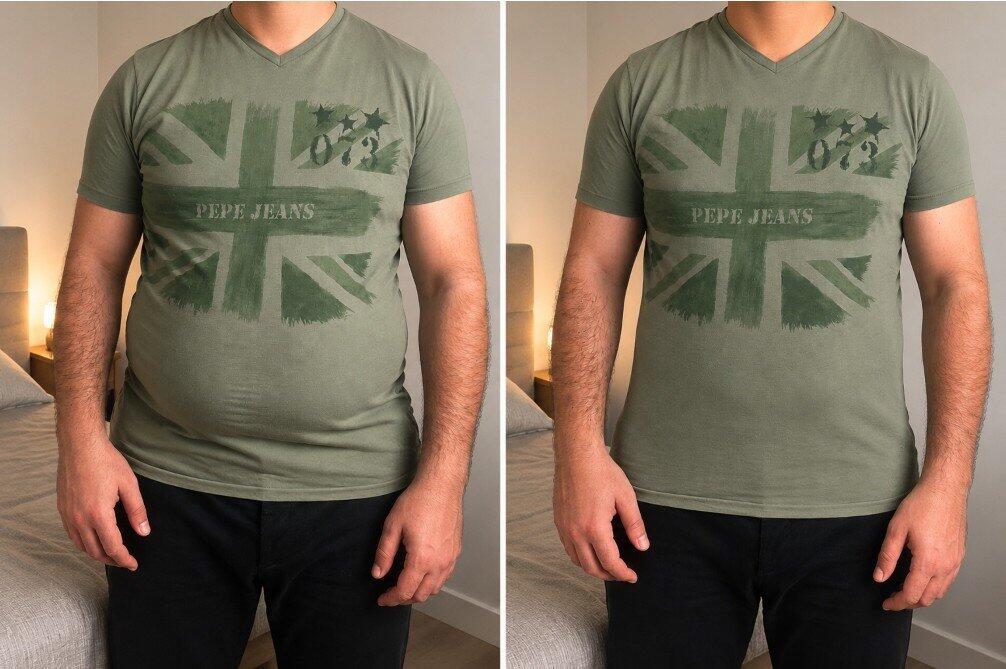
A lot of men are caught off guard by this one. Shirtless in the bathroom, it doesn't look significant. Then they put on a fitted white t-shirt — slightly stretched, direct light — and something is clearly there. The fabric catches across the chest. There is a shape under the material that wasn't what they expected.
This is not an illusion. Fabric follows contour. A small amount of forward projection that disappears under bathroom overhead lighting at a certain angle becomes obvious the moment a shirt drapes over it. The fabric acts as both a shadow caster and a revealer — especially thin, light-colored, or stretchy materials.
Men who wear fitted workwear, polo shirts, or close-cut casual shirts tend to notice this pattern earliest. Not because the issue is more severe for them. Because their clothing makes it visible in a way the shirtless mirror doesn't.

If you've found yourself pulling fabric away from your chest without thinking, layering a second shirt without a clear reason, or gravitating toward darker colors and looser cuts as a quiet default — that is not a styling choice. That is adaptation. And it usually starts before a man recognizes what he is adapting to.
Sign 3: Your Side Profile Tells A Different Story
The angle the front mirror doesn't show you
Most men check themselves from the front. The side view is an entirely different conversation.
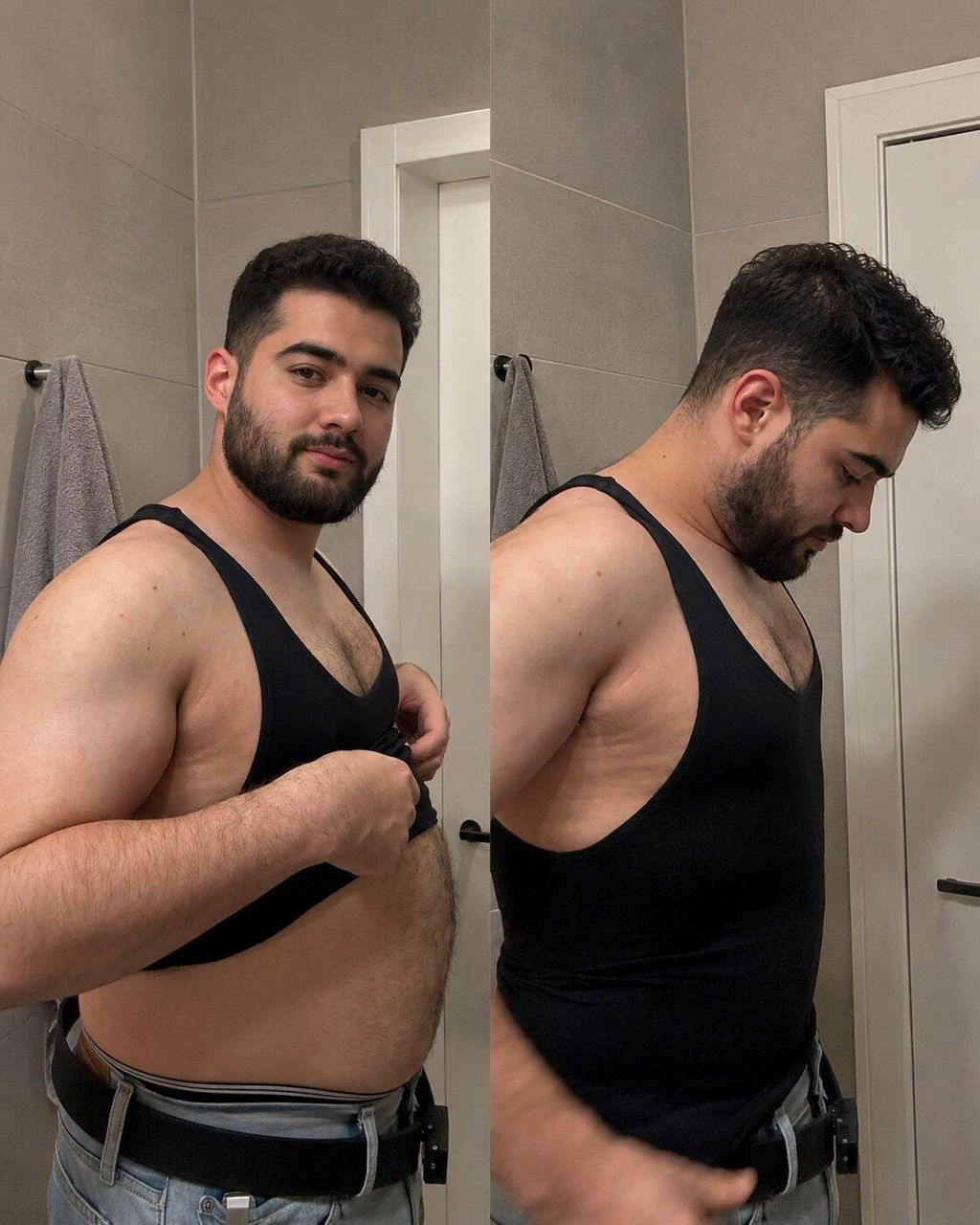
What reads as flat from straight on can look like a clear curve from the side — especially in photos, shop windows, or video calls where the camera was positioned differently than usual. The moment tends to be unexpected: a candid photo from a social event, a reflection in a car window, a screen-share thumbnail that looked unfamiliar.
We hear regularly from men who had no idea until a photo from a dinner or work event showed them something they hadn't seen in their own mirror. Not a bad angle. Not bad lighting. Just a natural side view — and there it was, clearly visible in a fitted shirt. That moment of recognition is one of the most common triggers that pushes men to finally search for answers.

Sign 4: One Side Keeps Catching Your Attention
When the asymmetry becomes impossible to rationalize away
Sometimes it is not both sides — it is one. And once you notice the asymmetry, it is almost impossible to stop seeing it.
Men tend to clock this in specific situations: buttoning a shirt and finding one side pulls differently, a photo where the chest looks uneven, a fitted layer that sits fine on the right and visibly off on the left. No obvious explanation. Just a consistent pattern in the same spot, every time.
The unevenness tends to be more disruptive than the size of the tissue itself — because it is harder to attribute to body composition when two sides of the same body look clearly different. One side being different from the other is harder to rationalize away. It keeps coming back in photos, in shirts, in the mirror.
It is worth knowing that asymmetrical development is not unusual. One side being more prominent than the other is a common presentation — it does not signal anything more serious than a symmetrical case. But it does tend to be the version that finally makes a man stop dismissing what he has been noticing.

If you've moved past the "do I actually have this" question and want to know what men in this situation do first, our guide on the gynecomastia compression shirt covers the practical side — what to wear, how to choose the right fit, and what to expect from day one.
Sign 5: You've Changed How You Dress Without Realizing It
When the wardrobe adapts before the mind does
This is the most quietly significant sign. And the hardest to notice because it happens slowly.
You didn't decide to stop wearing fitted white tees. You just stopped reaching for them. The polos sat unworn through an entire season. The button-ups started staying untucked without a conscious reason. Darker colors, looser cuts, and an extra layer became the default — not because of a decision, but because it kept feeling easier.
None of this was a choice. It was slow, invisible adaptation — the wardrobe adjusting around something the brain hadn't fully processed yet. The choices felt practical. Comfortable. Normal. Until one day you notice you haven't worn certain things in over a year, and you can't explain exactly when that started.

When clothing choices are being shaped by discomfort you haven't named, that is worth paying attention to. Not as a vanity concern. As a real signal that something has been affecting daily life — quietly, consistently, in ways that add up over time.
Men who recognize this sign often describe the same shift: they used to wear whatever looked good. Now they wear whatever draws less attention. The gap between those two states is what gyno actually costs day to day. Not the tissue. The way it rewrites your defaults without asking.
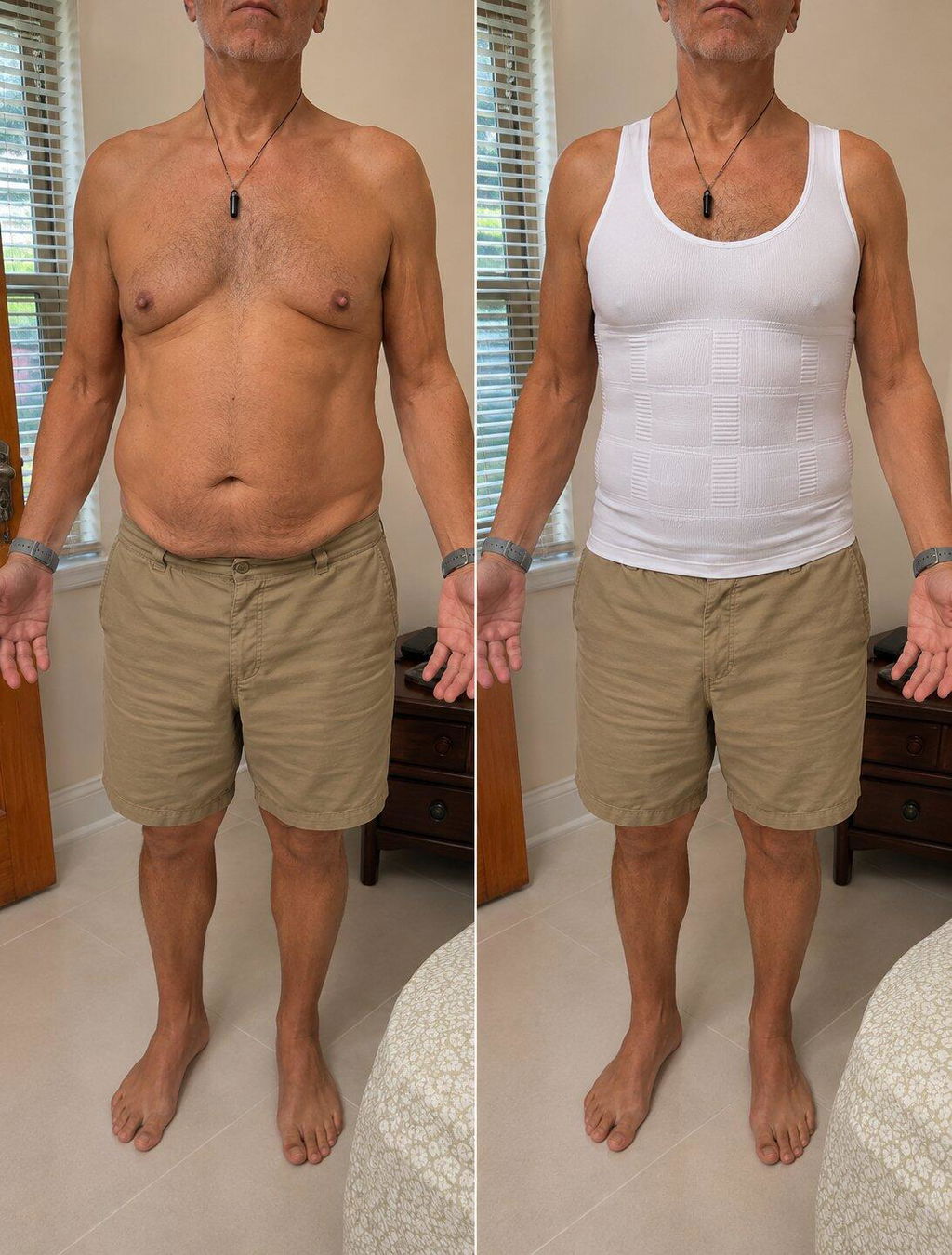
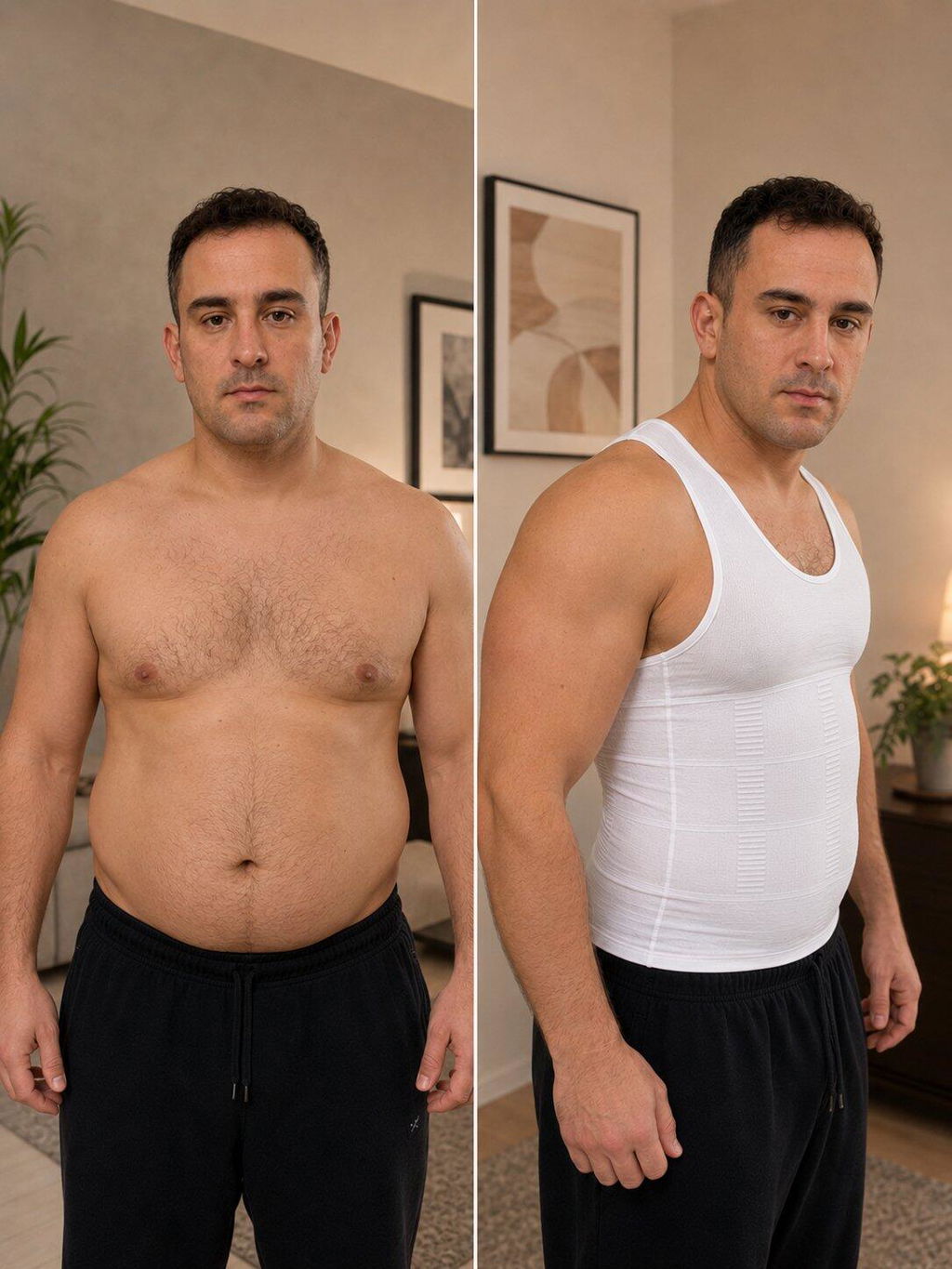
Most men find that a compression tank immediately changes how their shirts sit — flatter chest line, no visible shape under fabric. No waiting, no process. Just a cleaner silhouette starting today.
A Cleaner Silhouette. Starting Today.
VEROSHAPE is designed to sit flat under t-shirts, polos, and dress shirts. No bulk. No show. Firm, breathable compression built for everyday wear — not the gym.
Hide It. Starting Today.What These Signs Do And Don't Mean
Recognizing yourself in these signs does not mean you have a condition that requires surgery. It does not mean your health is at risk. And it does not mean your body has failed you in some fundamental way.
What it means is that your chest has changed in a way that is harder to manage than body composition alone. It is common. It says nothing about discipline, health, or character. Most men dealing with this are not dealing with anything dangerous — just something that showed up, stayed, and started quietly affecting how they get dressed.

Some cases settle on their own — particularly those that develop during adolescence or in connection with a temporary trigger. Others stabilize and don't progress. A smaller number are linked to specific medications or health factors worth discussing with a GP. But the vast majority of men recognizing these five signs are managing something common and non-urgent.
A single GP appointment — a brief, routine physical — can give you a clear picture of what you are actually looking at. Most men delay this far longer than necessary. It takes minutes and removes most of the uncertainty.
| What self-care can help | What it may not change |
|---|---|
| How shirts sit and drape daily | Persistent glandular tissue |
| Confidence in fitted clothing | Immediate body composition |
| Reducing daily shirt adjustment | Permanent tissue removal |
| Side profile appearance under fabric | What shows up shirtless |
Gyno Or Just Chest Fat?
This is the question most men start with — and it is worth addressing directly. The short version: chest fat shifts when the rest of your body does. It is soft, distributed, and responds to how you eat and train over time. What is involved in gynecomastia tends to behave differently — it often stays put regardless of what you do, and it shows more clearly under clothing than it does in a straight-on shirtless mirror.
The full distinction — including visual differences, how each one responds to training, and what they look like under different fabric types — is covered in our guide on gyno vs chest fat. That article exists specifically because the two are frequently confused, and the strategies for managing each one are meaningfully different.
What To Do Next
If you have recognized yourself in several of these signs, here is a practical sequence that makes sense for most men.
Start with clarity, not panic
What you are noticing is common and not an emergency. The vast majority of men who recognize these five signs are dealing with something physiologically normal — not a medical crisis. Starting from that position makes everything that follows easier to approach.
See a GP for a baseline assessment
A brief physical exam can confirm what you are dealing with and whether any contributing factors — medications, hormone levels — are worth investigating further. The appointment is short, routine, and removes most of the uncertainty. Most men wait far longer than they need to.
Deal with the daily reality in the meantime
While you figure out next steps, how your shirts look right now is still a real daily issue. A compression shirt for gynecomastia is the most immediate practical solution — worn under clothing, it creates a flat chest line without anyone knowing it is there. For clothing-specific strategies including fabrics, fit, and layering, our guide on how to hide gynecomastia under a shirt covers exactly that. If your main concern is staying confident in a work setting specifically, see gynecomastia at work.
Make informed decisions on your own timeline
Depending on what a GP finds, options range from doing nothing (if stable and non-bothersome) to addressing contributing factors, to exploring further treatment in more significant cases. That is a conversation to have with a professional after a real assessment — not a decision to make from online research alone.
FAQ: How To Know If You Have Gyno
What does it actually feel like if you press on the chest area?
Chest fat feels soft and diffuse — no distinct boundary. What is involved in gynecomastia often feels firmer and more defined, sometimes described as a raised or slightly rubbery area. It can be mildly tender to the touch, particularly in early-stage cases. The presence of something with a clearer edge directly beneath or around the nipple area is one of the most common physical observations men describe. A GP can assess this properly in a routine physical.
I've always been slim. Can I still have gyno?
Yes — and this is more common than most men expect. Gynecomastia is not caused by body fat. Slim men with low overall body fat can have a clearly visible chest concern precisely because there is little surrounding tissue to blur the contour. Being lean can actually make it more apparent. Many slim men report that it became more noticeable as they lost weight or trained harder — everything else reduced while the chest remained unchanged.
Is it normal for only one side to look different?
Yes. Development on one side more than the other is a common presentation, not an unusual one. It does not indicate anything more serious than a symmetrical case. What men tend to find harder about it is that the asymmetry is more difficult to explain away mentally — two sides of the same body looking visibly different is harder to attribute to body composition. If the pattern is consistent over time, a GP visit is the straightforward next step.
Why does it show more in some shirts than others?
Fabric behavior is the main factor. Thin, light-colored, or stretchy materials follow body contour closely and catch projection and shadow differently. Structured fabrics, darker colors, and better-fitting cuts tend to drape more smoothly. This is why the same body can feel fine in one shirt and very visible in another. The shirt is not changing the body — it is changing how the fabric maps onto it. Understanding this makes it easier to make practical clothing choices while sorting out the longer-term picture.
What is the real difference between gyno and chest fat day to day?
The clearest behavioral difference: chest fat tends to follow the same trajectory as body fat elsewhere — it shifts gradually with changes in diet and training. What is involved in gynecomastia tends to stay put regardless of those changes, which is why the effort-to-result mismatch is such a consistent early signal. Under clothing, chest fat usually looks soft and rounded. The projection in gynecomastia often shows more sharply under fabric, especially from the side. Both can appear together.
If I use compression, will people notice I am wearing something underneath?
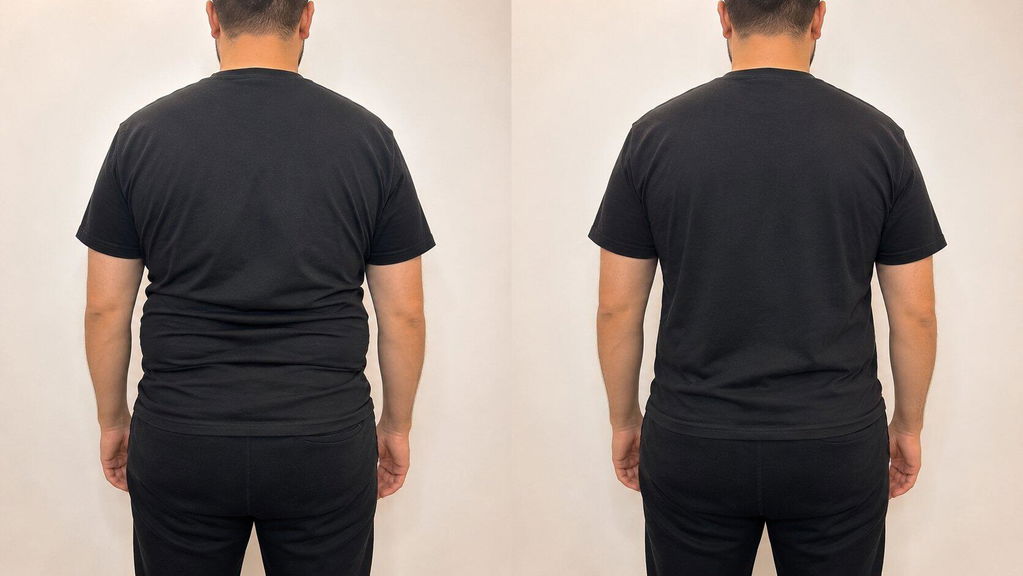
No — and this is the concern most men raise first. A properly fitted compression tank sits flush under fabric without adding bulk or creating visible lines. The outer shirt sits cleaner, not tighter. Under a fitted t-shirt, polo, or dress shirt, a well-designed compression layer is not detectable. The objective is exactly the opposite of visibility: a smoother foundation that lets the outer clothing behave more predictably across the chest and torso.
Can compression actually flatten the chest line?
Yes — with one important clarification. Compression does not remove tissue. What it does is apply firm, graduated pressure that flattens the visual projection of the chest under clothing while worn. The mechanism is real and immediate — it is clothing-based, not body-based. The result is a cleaner silhouette under shirts, particularly from the side angle and in fitted fabrics. It works every time it is worn, and the effect stops when it is removed. No permanent change, no transformation claim.
What should I wear while I figure out what is going on?
A compression tank is the most practical immediate option. Worn under any shirt — t-shirt, polo, dress shirt, fitted workwear — it creates a flat chest line so the outer fabric sits cleanly rather than catching across the chest. VEROSHAPE is built specifically for this: firm enough to flatten the chest silhouette under any fitted shirt, breathable enough for all-day daily wear. It is not a treatment. It is a way to stop letting this control what you wear while everything else gets sorted on your own timeline.
Stop Letting Gyno Pick Your Outfit
VEROSHAPE sits flat under any shirt. Invisible compression, all-day comfort, built for real men who want to wear what they want — not what hides the problem.
Get Your Wardrobe Back.
This article was written by Mike Sterling, founder of VEROSHAPE. Mike built VEROSHAPE around one idea: men should be able to improve how shirts sit without fake transformation claims, medical overpromises, or uncomfortable layers. Every article is written to give honest, practical information first.