Gyno vs Chest Fat: How To Tell The Difference (And Why Men Get Confused)
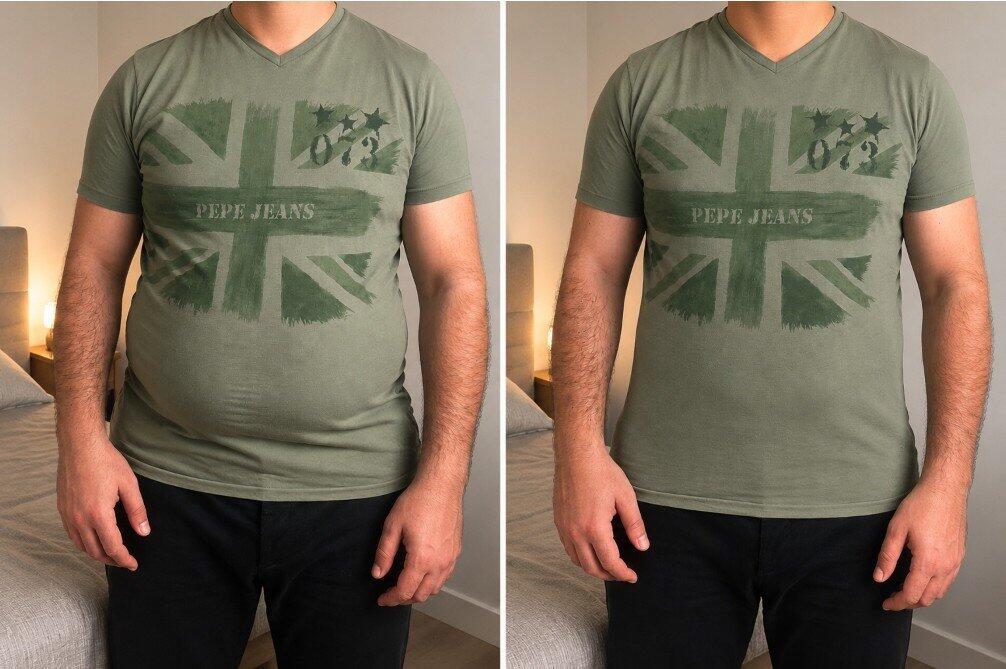
You pull on a fitted shirt. Front view: fine. You turn slightly to the side. And for a second you stop — is this chest fat? Is this gynecomastia? Or are these just pecs that photograph badly?
Most men asking this question have been asking it for months. Sometimes years. The problem isn't that they're imagining things. Gynecomastia and chest fat genuinely look similar — especially under clothing — and almost nobody explains the actual difference in a way that's useful for a man standing in front of a mirror at 7 AM.
Here's the thing most guides skip: most men don't actually care about the medical label. They care because certain shirts stopped landing right. The fit was there. The size was correct. Something was just reacting differently — at certain angles, in certain fabrics, under certain light. That's why you're here. And that's what this guide addresses.
Quick Answer: Gynecomastia is actual breast gland tissue that grows behind the nipple — firm or rubbery when pressed directly. Chest fat is softer, more broadly distributed, and responds to body weight changes. Some men have both simultaneously. The fastest visual test: look at the nipple area in a side-angle mirror. In gynecomastia, the areola tends to puff or project slightly forward. With chest fat alone, the nipple sits flat. Full step-by-step guide below.

Why Men Confuse Gyno And Chest Fat
There's a simple reason the confusion persists: both conditions create a chest that looks softer than the man looking at it would like. The result — a rounder, less defined chest with visible softness under a fitted shirt — is nearly identical on the surface. Different causes. Same appearance problem.
You've probably lived this in specific moments. Not always the bathroom mirror — you've made a certain peace with that one. It's the shop window when you're walking past at the wrong angle. The changing room with the three-way mirror that shows you angles you never chose. The group photo from last summer that you saw on someone's phone and quietly asked them not to share. Something was off and you couldn't exactly name it.
Gynecomastia is actual glandular tissue. It develops behind or around the nipple because of a hormonal shift — typically an imbalance between estrogen and testosterone. This can happen during puberty, with significant weight changes, through certain medications, or for no identifiable reason. The tissue is structural. It doesn't shrink with diet or exercise.
Chest fat is adipose tissue. In the chest, it distributes across the pectoral area rather than concentrating in one spot. It's softer, more movable. And unlike glandular tissue, it does respond to overall body fat reduction — just more slowly than most men would like.
Both can exist in the same chest at the same time. When fat sits on top of breast tissue, the visual distinction nearly disappears. This is why men cycle through the same question for years — because on some angles, in some shirts, it looks one way. In a different light, at a different angle, it looks completely different.
"We hear from men who've spent years convinced they either had full gynecomastia or just needed to lose weight — when the honest answer was somewhere in between."
Most online information frames this as binary: either it's gynecomastia (a medical issue) or it's fat (just lose weight). For the majority of men, the reality is more nuanced than either extreme — and that nuance determines what you can actually do about it. If you're still trying to confirm what you're actually seeing, here's exactly how to know if you have gyno using the signs men usually notice first. If muscle is part of the picture too, our guide on pecs vs moobs covers the flex test and other visual checks.
The Mirror + Pinch Test
You don't need a doctor to make an initial assessment. What follows isn't a medical diagnosis — it's a practical way to understand what's actually happening with your chest. Think of it as narrowing down the possibilities before deciding what to do about it.
The Three-Angle Visual
Stand shirtless in front of a mirror in completely relaxed, natural posture. Not flexed. Not slouched. The way you'd stand in a changing room between shirts.
Front angle. Look at the overall chest distribution. Is the fullness spread evenly across the pectoral area — a broad, soft layer? Or is there a distinct shape concentrated specifically around the nipple — a slight raised mound, a puffiness that doesn't look like a pectoral muscle?

Side angle. Turn 90 degrees. Look specifically at the nipple and areola. Does it project slightly forward — sitting visibly ahead of the surrounding chest surface? With chest fat alone, the nipple sits flat against the chest wall. With gynecomastia, even mild cases produce a subtle forward projection or a slightly domed appearance of the areola.
45° angle. Typically the most revealing view. At 45 degrees to the mirror, look at where the nipple sits relative to the chest surface around it. Chest fat creates a rounded, softly graduated contour. Glandular tissue tends to produce a more distinct shape — a concentrated area directly behind the nipple that looks structurally different from the surrounding chest.
The Pinch Test
Using two fingers, gently pinch the tissue directly behind your nipple — right at the areola, not to the side. Press slowly and steadily.
What you're feeling for: a defined, firm structure that doesn't compress easily. Rubbery. Disc-shaped. Roughly the size of a large coin, sitting clearly and distinctly beneath the skin.
If you feel that firm mass — glandular tissue is likely involved. If what you're pinching feels soft, moves around freely, and compresses the same way fat does elsewhere on your body — you're most likely dealing with chest fat, or fat on top of a small amount of glandular tissue.
This is exactly why a lot of men end up trying compression first — not to change their body, but to stop their shirt from reacting differently depending on which way they're standing. Not a solution to the underlying cause. A way to remove the daily variable while everything else gets figured out.
Signs It Might Be Chest Fat
You've probably lived the signs before you knew what they meant. The changing room in a clothing store where the lighting is harsh and overhead — and for a second the shirt you're trying on looks fine, and then you turn slightly and something shifts. Not dramatic. Just enough to make you put the shirt back.
Chest fat has specific behavioral tells that distinguish it from glandular tissue. Not clinical signs. Things you actually notice.
You stop buying certain fabrics. Not consciously at first. Stretch knits, lighter cotton, anything that clings a little — you find yourself reaching past them. You don't frame it as a decision. You just end up with a wardrobe full of structured shirts and looser fits and you're not entirely sure when that happened.
Certain shirts seem fine until direct light hits from the side. Your bathroom mirror at home, with soft diffused morning light — no issue. The office bathroom with overhead fluorescents. The restaurant window seat. That's when you notice it, and you adjust your posture slightly without thinking about it.
It responds to your weight — just slowly. When you've gained a few kilos, you notice your chest filling out alongside your stomach. When you've been consistent for a few weeks, it starts to reduce — later than your face, later than your arms, but it does move. That responsiveness is fat. Glandular tissue doesn't follow the same pattern.
The fullness is even. Run your hand across the entire pectoral area — upper, lower, and the sides toward the armpit. If the tissue feels consistent in softness throughout, without a clearly firmer or more distinct area directly behind the nipple, you're dealing primarily with fat.

Pseudogynecomastia is the medical term for chest fat that visually mimics gynecomastia. It's more common than most men realize and gets misidentified regularly — by the men who have it, and sometimes by non-specialist doctors. It creates exactly the same shirt problems as true gynecomastia. The distinction matters for treatment decisions, but changes nothing about the daily appearance challenge, which is identical regardless of label.
The practical reality for chest fat: a sustained reduction in overall body fat — eating consistently below your daily energy needs over weeks and months — will reduce it. Most men see meaningful chest changes after 12–20 weeks of consistent effort. That timeline matters for how you think about the period in between.
Signs It Might Be Gynecomastia
Gynecomastia is not unusual. Research suggests it affects between 30–65% of men at some point — most commonly during puberty, but also in adult years due to hormonal shifts, certain medications, or natural testosterone decline with age. The majority of cases are mild. Not a dramatic medical situation. A chest that dresses differently.
The nipple projection. The clearest single visual sign. In a side-angle mirror view, the areola appears to dome outward slightly — projecting ahead of the chest surface around it. Even mild gynecomastia tends to produce this. It's not always obvious. But once you know what to look for, you see it clearly.
The firm disc. The pinch test: a rubbery or firm structure directly behind the nipple — distinct from the surrounding tissue, clearly concentrated in one area — is the hallmark physical sign of glandular growth.
No response to fat loss. If you've lost 15 to 20 pounds or more and your chest has barely changed while your stomach, face, and arms have slimmed noticeably — the residual chest fullness is almost certainly glandular. This is the most common way men confirm what they have: they get lean, and the chest issue remains exactly where it was.
What does mild gynecomastia actually look like? In loose clothing, often completely invisible. Under a fitted shirt, it creates a specific point where the fabric doesn't lie flat — a subtle nipple projection that shows up at certain angles, in certain light, under certain fabrics. Men with mild gynecomastia often describe it not as seeing something dramatic, but as noticing that shirts never sit the way they expect, even when the sizing is technically correct.
For men with glandular tissue, the shirt problem becomes structural. Diet doesn't move it. Training doesn't touch it. This is the point where most men start looking at what they can realistically do right now — before any longer-term decision gets made about addressing the underlying cause.
Can Skinny Men Have Moobs?
Yes. And this surprises a significant number of men who assumed the chest issue would resolve once they got leaner.
Chest fat disappears with overall body fat reduction. Glandular tissue does not. A lean man can have significant gynecomastia because the tissue is driven by hormonal conditions — not by body weight or composition. During puberty, the hormonal environment that triggers glandular growth has nothing to do with how much someone weighs. The same is true for adult gynecomastia caused by hormonal imbalance, medication use, or age-related testosterone decline.

You've probably seen this in friends or noticed it yourself — a lean man in a fitted shirt whose chest looks soft in a way that doesn't match his overall body composition. He catches his reflection in a car window walking down the street and adjusts the shirt. Nothing dramatic. Just the quiet habit of a man who knows which angles don't work for him.
The reverse is equally true: a heavier man who loses significant weight sometimes watches his chest reduce substantially — confirming it was primarily fat. And sometimes the chest remains unchanged after 30 or 40 pounds of fat loss — which is when the glandular component becomes clear for the first time. Body weight is one part of the picture. It was never the whole picture.
Whatever category you end up in after this — gyno, fat, or both — most men at this point aren't thinking about biology anymore. They're thinking about the fitted shirt they stopped wearing six months ago.
Can You Have Both?
Yes — and this is the most common real-world scenario. Most men with chest concerns carry a combination of chest fat (pseudogynecomastia) and some degree of glandular tissue. The fat amplifies the visual effect of the glandular tissue. The two conditions coexist, and they don't require the same response — but they produce the same daily shirt problem.
The binary — gyno or fat — doesn't reflect how most men's chests actually work. Glandular tissue can be present in small amounts and be almost invisible alone. Add chest fat on top, and the visual effect multiplies. The chest looks fuller and softer than either condition would produce in isolation.
This matters practically. Men who reduce their body fat often find their chest improves substantially — that's the fat component reducing and the glandular tissue becoming less amplified. But a residual firmness or nipple projection often remains at low body fat. That's the glandular component, and fat loss was never going to move it.
The reverse also happens: men who address the glandular component medically sometimes find the overall chest still reads as fuller than expected — because the fat component was also present, just overshadowed in the pre-treatment visual assessment.
"We hear from men who've spent months fixated on figuring out which category they belong to — when the daily reality was the same regardless: a shirt that didn't sit the way they wanted."
The more useful reframe: the question "do I have gyno or chest fat" is less actionable than "what does my chest look like under fitted clothing right now, and what changes tomorrow morning while I figure out the longer-term picture."
Whether it's gyno, chest fat, or both — the shirt problem is the same. And it has an immediate answer.
See How VEROSHAPE Works →A Flatter Chest. The Same Shirts.
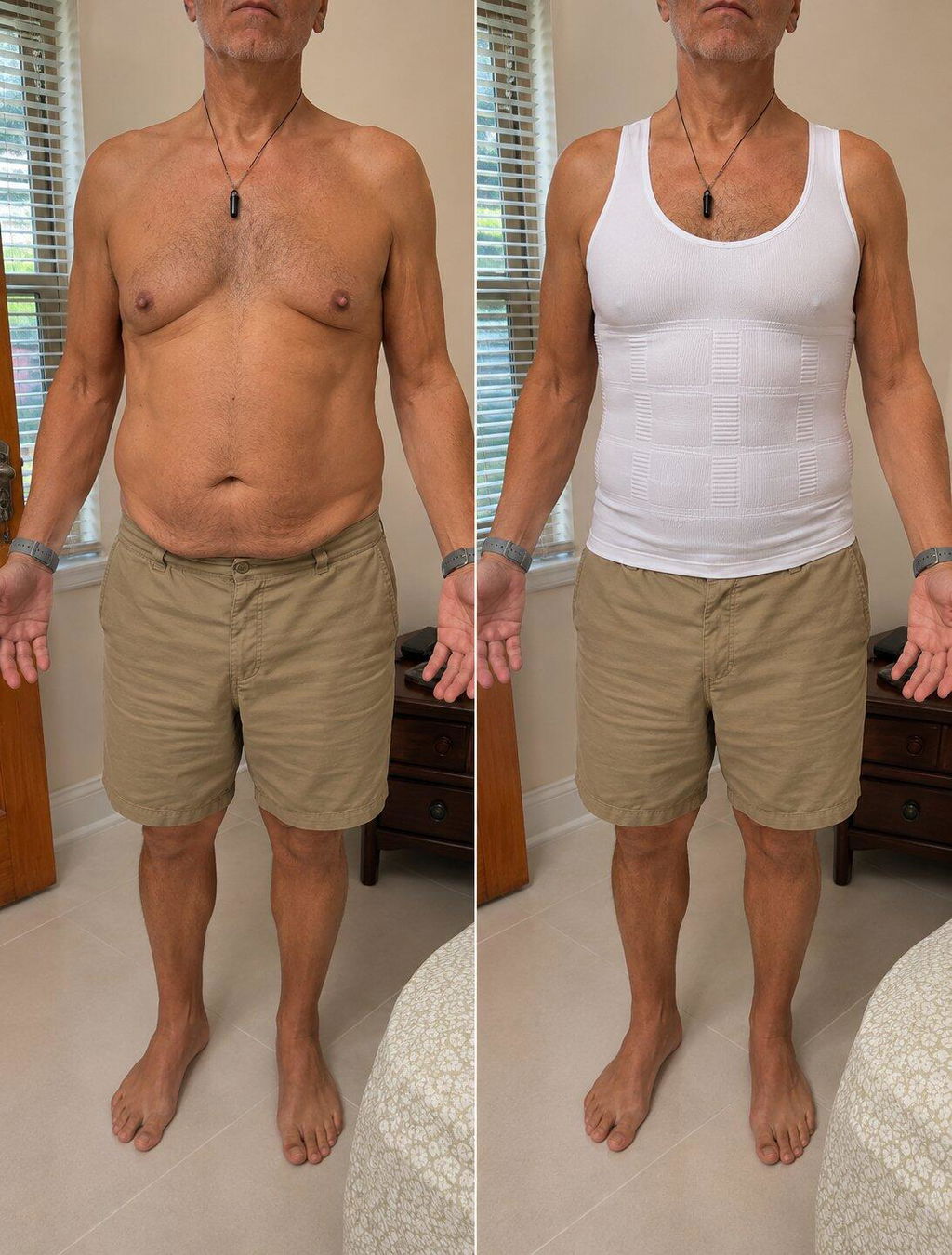
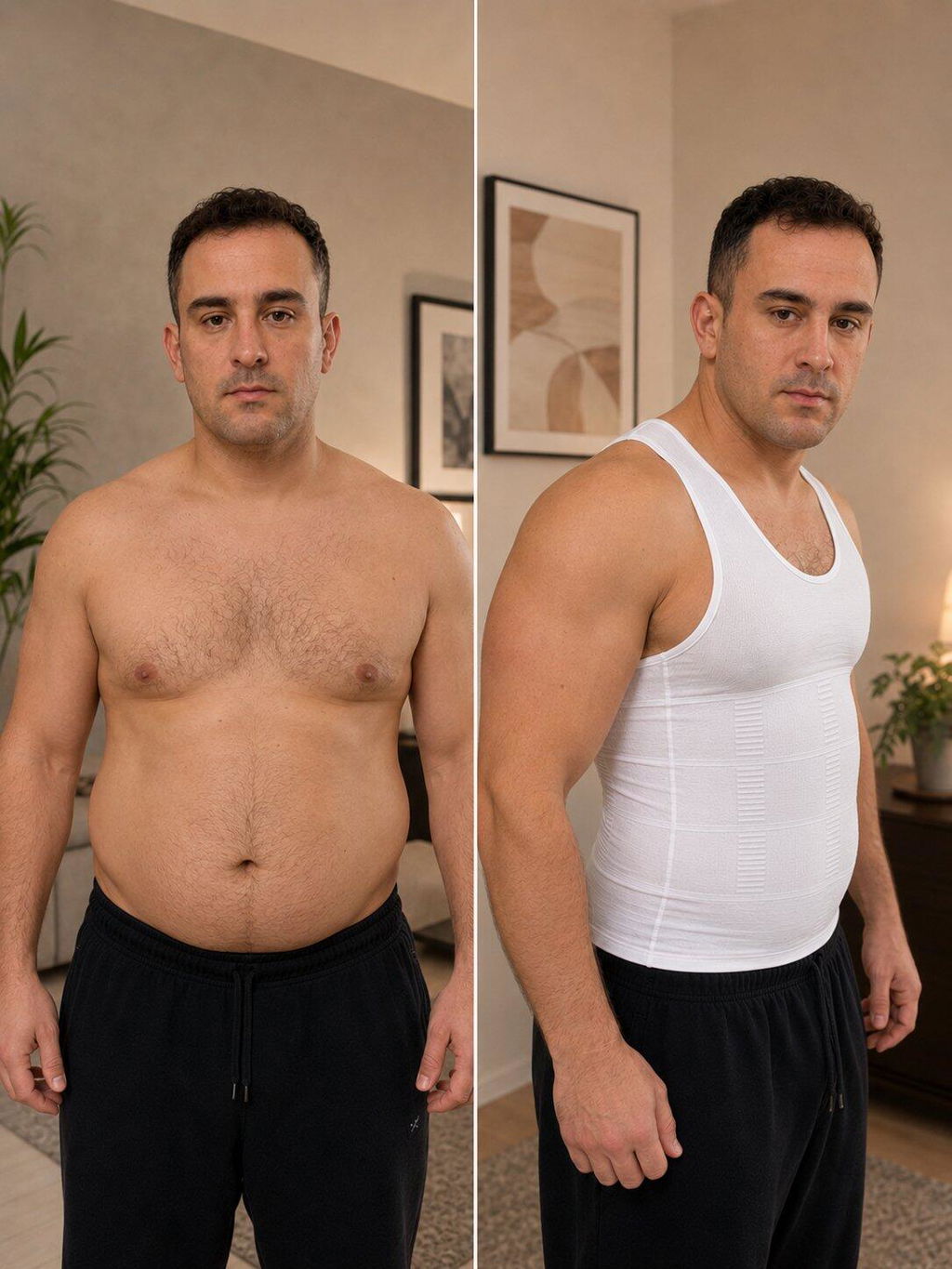
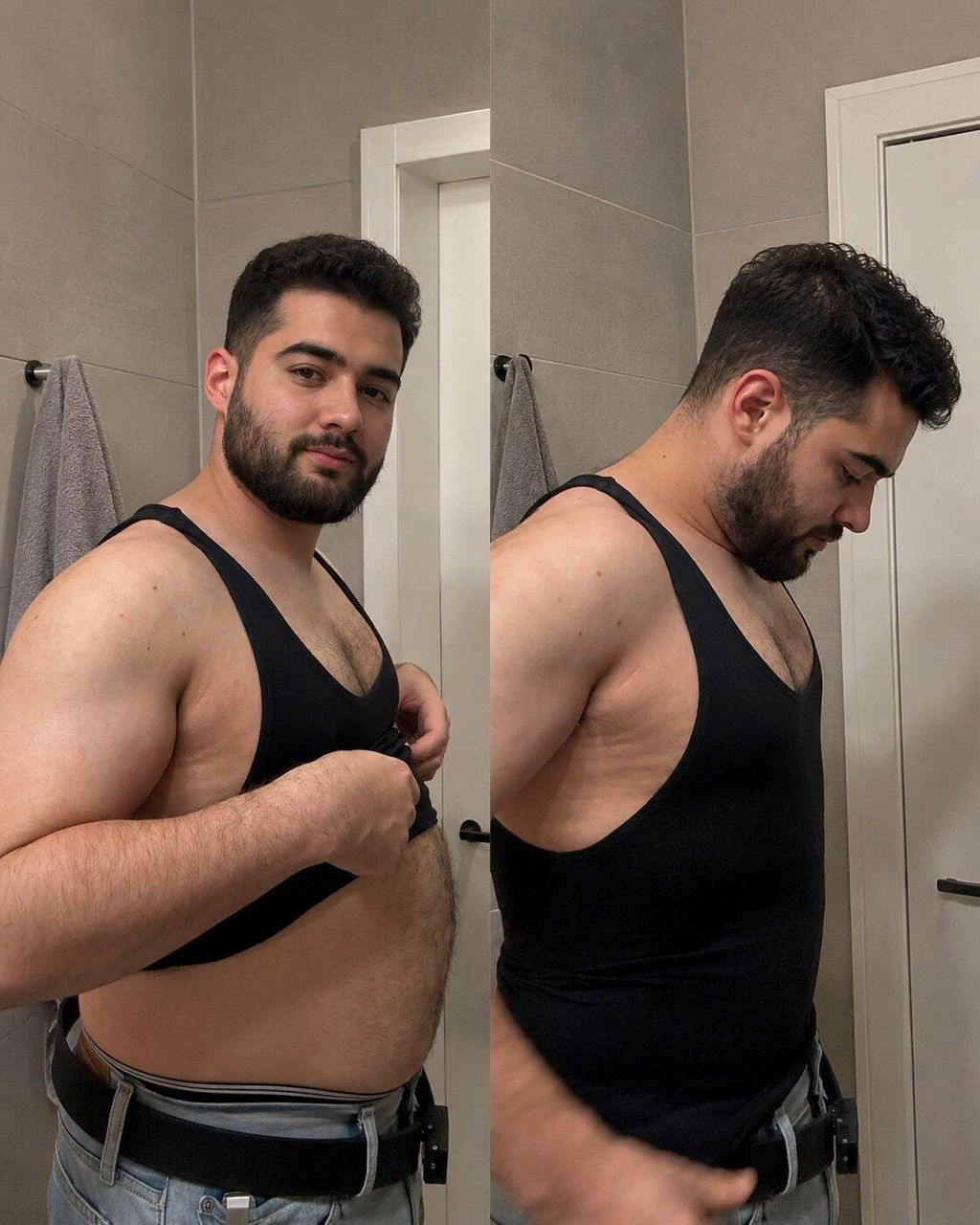
The VEROSHAPE compression tank sits flat against the chest wall — compressing glandular projection and smoothing chest fat simultaneously. A clean foundation under any fitted shirt. Designed for daily wear. Invisible under clothing.
Explore VEROSHAPE →Why Shirts Change Everything
Whether it's gyno, fat, or both — the shirt variable is the one you can actually fix right now. A compression layer under the shirt removes the problem entirely, regardless of which category you're in. The rest takes time. The shirt problem doesn't have to.
There's a reason the same man looks completely different in two shirts of the same stated size.
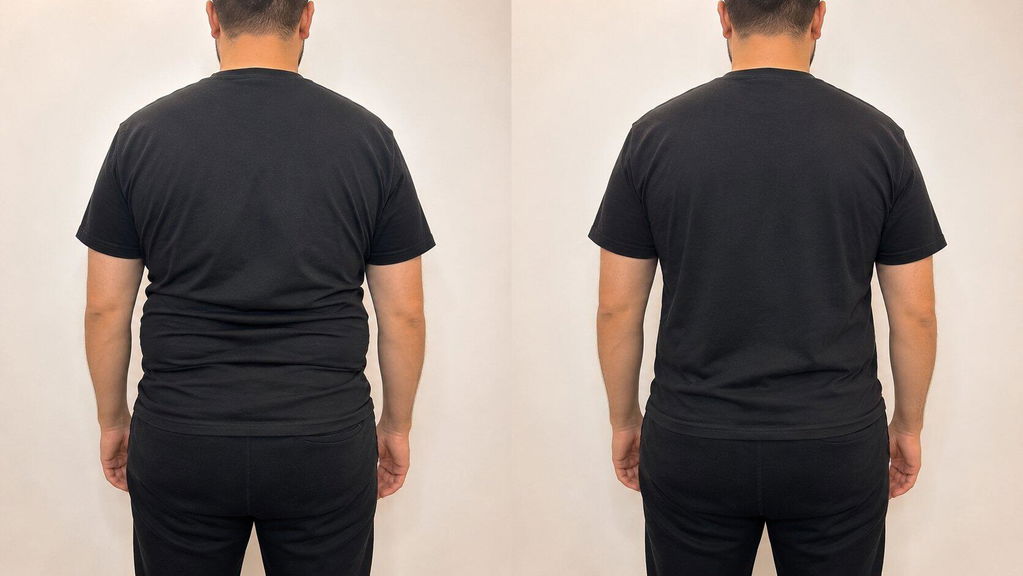
Fabric under tension acts as an amplifier. Wherever there's a surface variation — a projection, a soft area that catches the material — the shirt shows it. Fitted knits cling. Woven fabrics drape. Both react differently to what's underneath. Same chest, different shirt, completely different result. This is why the problem feels inconsistent and difficult to explain to anyone who hasn't experienced it.

Glandular tissue interacts with fabric differently from fat. It's firmer, more concentrated directly behind the nipple — creating a specific point of contact with stretch fabric, a small but distinct projection that catches in certain light at certain angles. Fat is softer and more distributed, but in a fitted shirt it can catch at the sides and lower chest in a way that reads as bulk even on a man who isn't significantly overweight.
Most men eventually realize the biggest frustration wasn't the diagnostic question. It was how shirts reacted to what was underneath. The medical question has a clinical answer. The shirt problem has an immediate one.
A compression layer — specifically one designed to sit flat and firm against the chest wall — removes the variable entirely. The shirt sits clean. You can read more about which shirt styles work best on top of compression, explore the complete guide to hiding gynecomastia under a shirt, or go directly to the VEROSHAPE layer designed specifically for gynecomastia and chest softness and the full range for man boobs.
FAQ: Gyno vs Chest Fat
What is the difference between gynecomastia and chest fat?
Gynecomastia is the growth of actual breast gland tissue behind the nipple, driven by hormonal changes that shift the estrogen-to-testosterone balance. The tissue is firm or rubbery and concentrated directly behind the areola. Chest fat — also called pseudogynecomastia — is adipose tissue distributed across the pectoral area. It's softer, more evenly spread, and responds to overall body weight changes. Both conditions create a similar visual appearance under clothing, and both can be present at the same time in the same person.
How do I know if I have gynecomastia or just chest fat?
The most reliable self-assessment combines a three-angle mirror test with a physical pinch test. Standing shirtless, examine your chest from the front, side, and 45 degrees. In gynecomastia, the areola often projects slightly forward in the side view, even in mild cases. Then pinch the tissue directly behind the nipple: glandular tissue feels like a firm, rubbery disc that doesn't compress easily. Chest fat feels soft and movable. A doctor can confirm with a brief, straightforward physical examination.
Can skinny men have gynecomastia?
Yes, and it's more common than assumed. Gynecomastia is driven by hormonal conditions, not body weight. Lean men can develop significant glandular tissue during puberty, as a result of hormonal imbalance, through medication side effects, or due to age-related testosterone decline. A lean man with a soft-looking chest isn't necessarily looking at a fat problem. Body composition alone is not a reliable indicator of whether gynecomastia is present or absent.
Can you have both gynecomastia and chest fat at the same time?
Yes — this is the most common real-world scenario. Most men with chest concerns carry both chest fat (pseudogynecomastia) and some degree of glandular tissue. The fat amplifies the visual effect of the glandular tissue, making the chest look more pronounced than the gland alone would produce. Significant fat loss often improves chest appearance substantially but doesn't fully resolve it when glandular tissue is also present. See our guide on how to address man boobs more broadly.
What does mild gynecomastia look like?
In loose clothing, typically invisible. Under a fitted shirt, it shows as a subtle nipple projection or slightly domed areola visible from the side or at an angle. In certain lighting — particularly direct overhead light — it casts a small distinct shadow. Many men with mild gynecomastia describe it not as seeing something dramatic, but as noticing that specific shirts never sit flat the way they expect, even when the sizing is technically correct for their measurements.
Does gynecomastia feel different from chest fat when touched?
Yes, physically they feel distinct. Glandular tissue presents as a firm, rubbery, disc-shaped structure directly behind the nipple — often described as feeling like a small, firm button beneath the skin that doesn't compress the way surrounding tissue does. Chest fat compresses easily, moves around, and has the same soft feel as fat anywhere else on the body. When both are present, there is typically a firmer core directly behind the nipple surrounded by softer, more compressible tissue.
Can gynecomastia go away on its own?
It depends on cause and duration. Pubertal gynecomastia resolves in the majority of cases within six months to two years as hormone levels stabilize. Medication-induced gynecomastia typically resolves after discontinuing the medication. Gynecomastia present for more than two years tends to become fibrous and is unlikely to resolve without medical intervention. A GP can assess duration and trajectory. Our complete guide to gynecomastia in men covers causes, timelines, and management options in more detail.
Do compression shirts help with gynecomastia appearance?
Yes — for the appearance problem, compression is the most immediate practical solution available. A compression tank designed for chest flattening sits against the chest wall and reduces the visible projection from glandular tissue, creating a smooth surface under fitted clothing. It doesn't address the underlying tissue, but it solves the daily shirt problem entirely. Men with gynecomastia use compression as a management tool — particularly in professional or social situations. The VEROSHAPE gynecomastia compression layer is designed specifically for this, and the full men's shapewear range covers all compression needs.

The Shirt Problem Has An Answer.
Whether the cause is gyno, chest fat, or both — the VEROSHAPE compression tank creates a smooth, flat foundation under any fitted shirt. Discreet. All-day wearable. Invisible under clothing.
Shop VEROSHAPE →