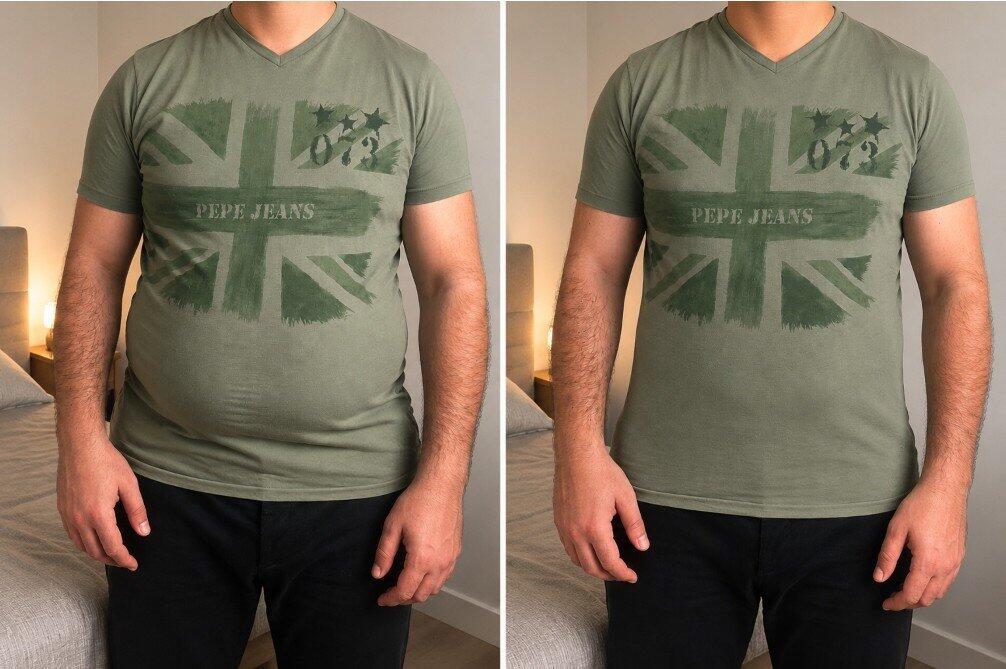
Pecs vs Moobs: How To Tell The Difference
You flex in the mirror and your chest looks like it makes sense. Then you relax, turn sideways, or put on a fitted shirt — and suddenly you are asking a question you did not expect to ask: are these pecs, or are they moobs?
That confusion is more common than most men admit. It does not always come from being out of shape. Some men who train consistently still feel like their chest looks soft in certain shirts. Some men with visible muscle still worry about the lower chest. Some men look fine from the front and completely different from the side.
The problem is that most articles treat the question as if it has only two answers: muscle or fat. Real bodies are not that simple. Chest appearance can be affected by muscle development, body fat distribution, posture, genetics, chest insertions, glandular tissue, shirt fabric and how much you are flexing in the moment.
Quick Answer: Pecs are chest muscles that usually feel firmer and become more defined when flexed. Moobs are a softer or rounder chest appearance usually caused by chest fat, glandular tissue, chest projection, or how clothing sits over the torso. Some men have developed pecs and still look like they have moobs in certain shirts because lower-chest fullness, posture, body fat and fabric can all change the way the chest reads.
| What you notice | More likely pecs | More likely moobs / chest projection |
|---|---|---|
| Feel when flexed | Firmer, tighter, muscle contracts clearly | Softness or projection remains even when flexed |
| Shape | Broader, flatter, more connected to shoulders and upper torso | Rounder, lower, more forward from the side |
| Shirt behavior | Fabric follows a chest frame but still falls cleanly | Fabric catches, tents or highlights the lower chest |
| Training response | Shape improves gradually as chest, shoulders and posture develop | May persist if body fat, tissue distribution or glandular tissue is involved |
| Side profile | Chest looks projected but structured | Chest looks rounder or softer than expected from the front view |
VEROSHAPE's core angle: most men are not really asking whether muscle exists under the skin. They are asking why their chest looks normal in one situation and like moobs in another. The answer is usually not one factor. It is the interaction between muscle, tissue, posture and clothing.
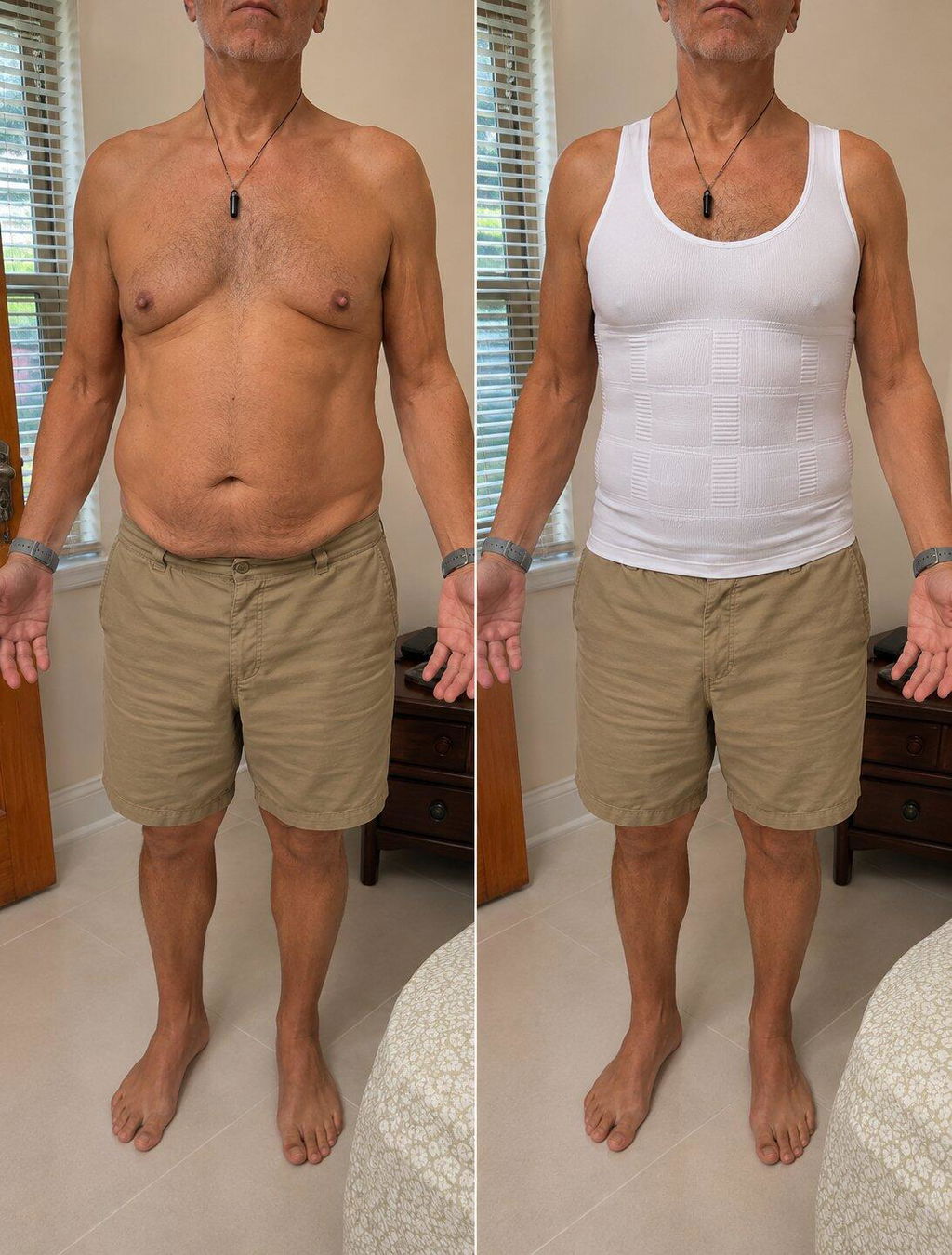
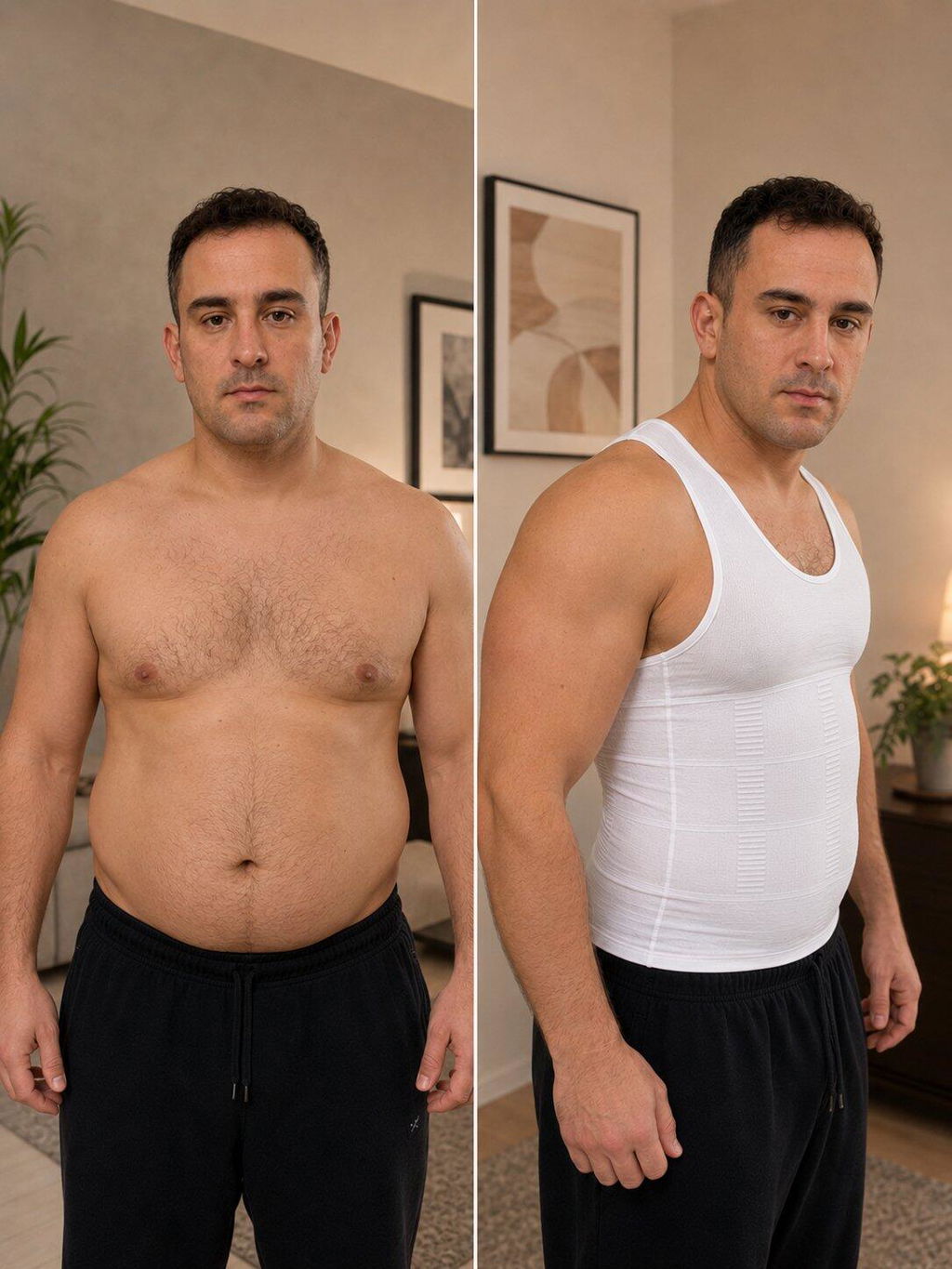
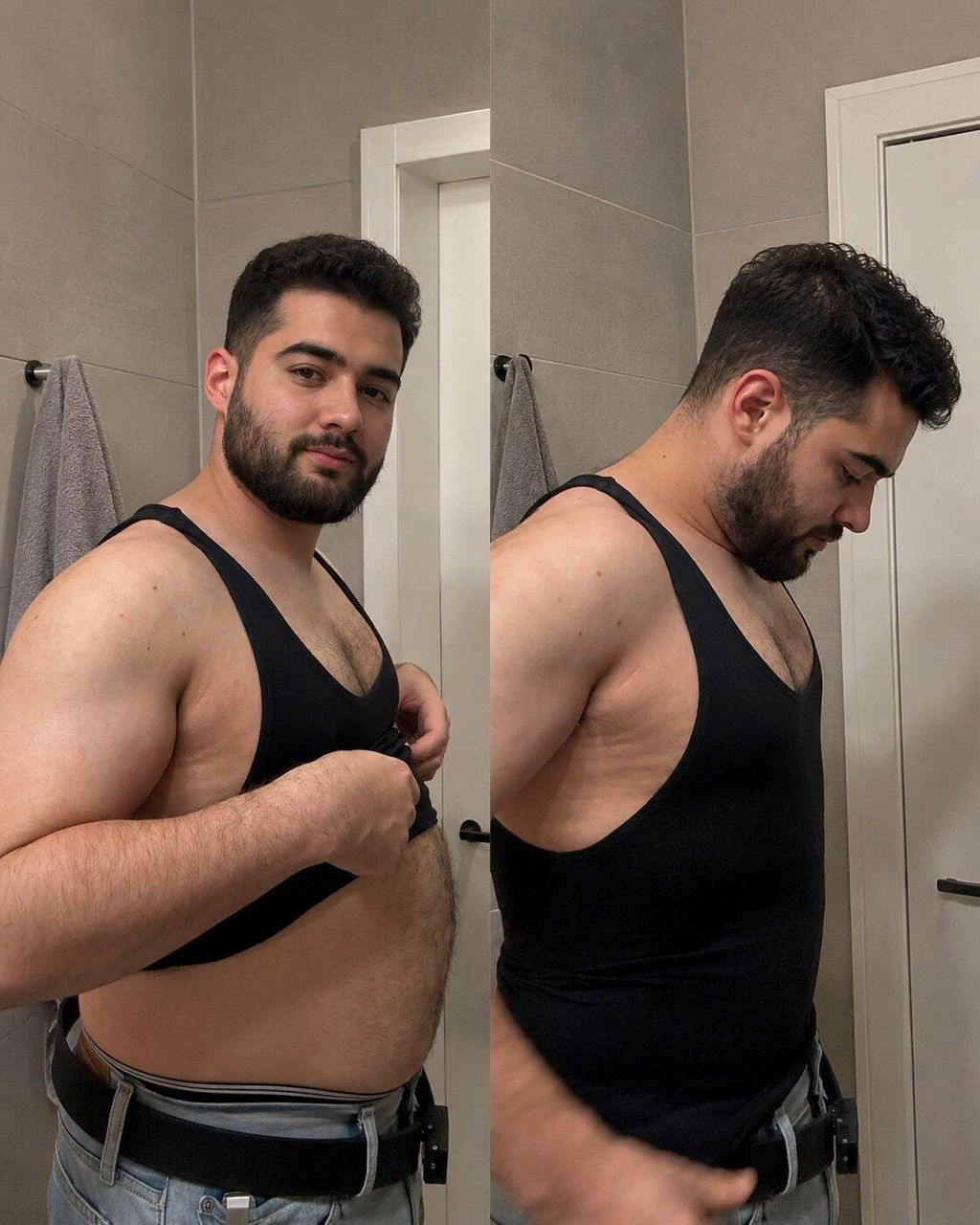
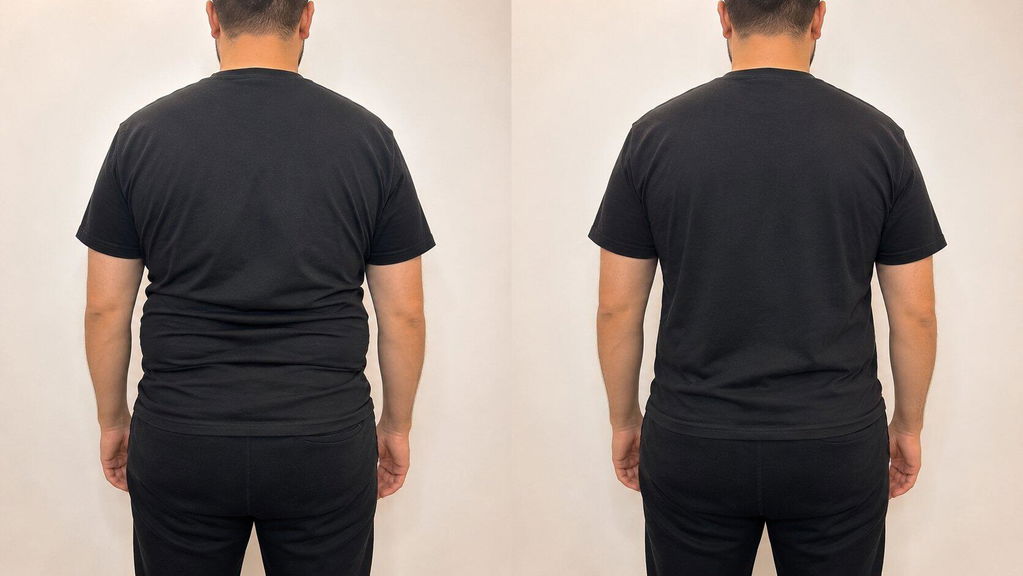
Many men discover the issue is not only their chest shape — it's how clothing sits over it. A VEROSHAPE Compression Tank can help create a smoother profile under T-shirts, polos, and button-downs while you figure out what's muscle, posture, or chest projection.
Pecs vs Moobs: The Real Difference
The simplest difference is this: pecs are muscle shape; moobs are a softer chest appearance that may come from fat, glandular tissue, projection, posture or shirt behavior. The reason men get confused is that both can exist in the same chest.
A trained chest can still carry fat. A lean chest can still have glandular tissue. A strong lower chest can still look rounded if the upper chest is underdeveloped. A normal chest can look like moobs in a bad shirt. A chest that looks flat while flexed can look softer when relaxed.
That is why the question should not be reduced to “muscle or fat?” A better question is: what part of the appearance is muscle, what part is tissue, and what part is the way the shirt is presenting it?
The chest you see in a flexed mirror pose is not always the same chest your T-shirt shows from the side.

What Do Pecs Actually Look Like?
Pecs usually look like structure. They are part of the upper-body frame. When developed, they connect visually with the shoulders, upper arms, collarbone area and ribcage rather than sitting as an isolated round shape on the front of the torso.
But pecs do not look identical on every man. Genetics decide a lot: where the muscle attaches, how wide the chest is, how the ribcage sits, how the shoulders frame the torso, and whether the upper or lower chest dominates visually.
This matters because some men expect pecs to look like a perfectly flat armor plate. When their chest has a softer lower curve or less upper fullness, they assume something is wrong. Sometimes it is simply normal muscle shape.
| Pec feature | What it usually means | Why men confuse it with moobs |
|---|---|---|
| Lower chest fullness | The lower portion of the pectoral muscle is more visually dominant | Can create a rounded lower edge in shirts |
| Wide chest insertions | Muscle shape spreads more across the torso | May not create the sharp center line men expect |
| Underdeveloped upper chest | Less fullness near collarbone and upper pec | Lower chest looks heavier by comparison |
| Relaxed muscle | Muscle is not contracted | Can look softer even when muscle is present |
Have I got pecs or moobs?
If your chest firms clearly when you flex, if the shape connects with your shoulder and upper torso, and if you can feel the muscle contract under your hand, pecs are definitely part of the picture. That does not automatically mean there is no chest fat or no projection. It means the answer is not simply “moobs.”
Reddit pattern: many men ask this question after they start lifting, not before. Any new chest growth feels unfamiliar, especially for men who used to be thin or never had much upper-body size. Growth can feel strange before it feels like progress.

What Do Moobs Look Like?
Moobs usually describe a softer, rounder or more projected chest appearance. The word is not a diagnosis. It is the casual term men use when the chest looks more visible under clothing than they want.
Moobs can come from different causes. Sometimes it is chest fat. Sometimes it is glandular tissue. Sometimes it is a mix. Sometimes it is the combination of mild chest softness, rounded posture and a shirt that clings in the wrong place.
The most common visual clue is the side profile. From the front, the chest might look acceptable. From the side, the lower chest or nipple area may project forward more than expected. That is the moment many men notice the difference.
| Moob-like appearance | What may be happening | Best next step |
|---|---|---|
| Softness spread across chest | May be general chest fat or body fat distribution | Read about gyno vs chest fat if unsure |
| Puffiness near nipple | May involve local tissue or nipple-area projection | Check signs you have gyno |
| Looks worse in thin shirts | Fabric may be copying chest contour | Change fabric, fit or base layer |
| Looks rounder with shoulders forward | Posture may be increasing projection | Check side profile and shoulder position |
The important distinction is that “moobs” describes what you see. It does not automatically tell you why it is happening.
How to tell if you have pecs or moobs?
Do not rely on one mirror angle. Check the chest relaxed, flexed, from the side, in a normal T-shirt, and with better posture. If the chest changes dramatically when flexed, muscle is involved. If the same rounded or puffy projection remains across situations, read the related guides on chest fat and gyno before assuming it is only training.

Why Your Chest Looks Different Relaxed vs Flexed
This is one of the biggest reasons men confuse pecs and moobs. A flexed chest and a relaxed chest can look like two different bodies, especially in photos or fitted shirts.
When you flex, the muscle shortens and hardens. The chest can appear higher, tighter and more defined. When you relax, muscle tension drops. The chest settles. Skin, fat and fabric behave differently. The same area can look softer without meaning the muscle disappeared.
That is why the common advice “just flex and see if it gets hard” is helpful but incomplete. Flexing tells you whether muscle is there. It does not tell you whether chest fat, glandular tissue, posture or clothing are also affecting the result.
Recognition moment: some men say part of the chest gets hard when flexed, while the inner or lower area still feels different. That does not always mean one simple answer. It often means more than one layer is influencing the appearance.
| Test | What it tells you | What it cannot tell you |
|---|---|---|
| Flex test | Whether muscle contracts clearly | Whether all chest fullness is muscle |
| Side profile | How much the chest projects when relaxed | Exact tissue type |
| Shirt test | How fabric reacts to chest shape | Medical cause |
| Training response | Whether shape changes over time | Whether one area is glandular |
The practical takeaway is simple: judge patterns, not one pose. If your chest looks completely different depending on flexing, fabric or posture, the answer is probably not one-dimensional.
Why Some Men Build Bigger Pecs but Still Think They Have Moobs
Building chest muscle does not always make the chest look flatter in clothing. Sometimes it makes the chest larger before it makes the shape look cleaner.
This is where a lot of men get frustrated. They train, build muscle, see progress in strength, but still feel like the chest looks “booby” in certain shirts. That does not mean training failed. It means muscle size and clothing appearance are not the same thing.
Underdeveloped upper chest
If the upper chest is less developed than the lower chest, the lower chest can look heavier. From the side, the bottom of the pec may project more than the top. Some men read that as moobs even when the issue is more about proportion than fat.
Lower chest dominance
Some men naturally develop lower pec fullness more visibly. If training is mostly flat pressing or lower-chest dominant, that effect can become stronger. This does not mean lower-chest training is “bad.” It means proportion matters if your goal is a chest that looks balanced in shirts.
Chest genetics
No two pec shapes are identical. Muscle insertions, ribcage angle, shoulder width and torso structure all change how the chest looks. Some men will never have the exact chest shape they see in fitness content, even if they train well.
Body image distortion
One of the strongest Reddit patterns is that some men with visibly developed chests still believe they look like they have moobs. Sometimes the issue is not the chest itself. It is the mental loop of focusing on one body part until every angle feels wrong.
Important: this article can help you understand visual differences, but it should not become a reason to obsess over your chest. If you are constantly checking, comparing or feeling distressed about your body despite reassurance from others, it may help to talk to a professional or someone you trust.
A chest can be muscular and still not match the shape you imagined. That does not automatically make it moobs.

Why Your Chest Looks Worse in a T-Shirt Than at the Gym
If clothing is where you notice the problem most, our guide to shirts that hide man boobs explains which fabrics, fits, and base layers create a cleaner chest silhouette.
Clothing can make the pecs vs moobs question much more confusing. A chest that looks normal shirtless can look completely different once fabric sits over it.
Thin shirts copy shape. Stretch shirts create tension. Compression workout tops can outline the lower chest. White fabric can reveal shadows. A shirt that cuts across the chest at the wrong point can make the area look more projected than it really is.
This explains why some men feel fine at the gym but uncomfortable in everyday shirts. In the gym, you may be flexing more, standing taller, under different lighting and wearing performance fabric. In a normal T-shirt, the chest is relaxed, the fabric is moving, and the side profile is more obvious.
| Shirt type | How it affects chest appearance | Better choice |
|---|---|---|
| Thin white tee | Shows shadows, nipple outline and lower-chest contour | Heavier cotton or textured fabric |
| Skin-tight gym tank | Can outline every curve and make pecs look rounder | Better cut or more structured outer layer |
| Stretch polo | Pulls across the chest and emphasizes tension | Pique polo with more structure |
| Oversized shirt | May hide projection but add width everywhere | Fitted-not-tight shirt with clean shoulder line |
| Good base layer | Can smooth shirt behavior without becoming the outfit | Low-profile compression layer under normal shirts |
This is where the question becomes less about “what is my chest?” and more about “why does this shirt make my chest look different?”
If your goal is a same-day appearance improvement, our guide on how to get rid of moobs fast covers practical clothing and styling strategies.
Some men discover the issue is not only the chest itself — it is how clothing sits over it. A properly fitted compression shirt for man boobs can help create a smoother chest profile under everyday shirts.

Can You Have Pecs and Moobs at the Same Time?
Yes. Many men have both muscle and chest fullness at the same time. This is why the question feels so frustrating. It is not always pecs or moobs. It can be pecs with chest fat, pecs with glandular tissue, pecs with lower-chest dominance, or pecs that look softer because of posture and clothing.
This is especially common for men who have trained for a while but still carry some body fat. The chest muscle may be there, but the surface appearance may still be softened by fat distribution. It can also happen when the rest of the body gets leaner before the chest changes much.
The mistake is treating the situation like a personal failure. It is not. It is normal for body composition, genetics and tissue distribution to produce mixed signals.
Will building chest muscle get rid of moobs?
Building chest muscle can improve the frame and make the chest look more structured, but it does not automatically remove chest fat or glandular tissue. If the issue is mostly underdeveloped pecs, training may help over time. If the issue is mostly fat or tissue projection, training alone may not fully change the appearance.
For a deeper solution-focused breakdown, read how to get rid of man boobs. This article is focused on identification and visual confusion, not a full transformation plan.

When It Might Not Be Pecs or Moobs
Sometimes the issue is not simply muscle shape or chest fat. If the fullness is concentrated behind or around the nipple, feels firmer or rubbery, appears uneven, is tender, or does not change much despite lower body fat, it may be worth learning more about gynecomastia.
This article is not here to diagnose that. The safe next step is to understand the signs and speak with a healthcare professional if anything feels sudden, painful, one-sided or concerning.
If you are trying to separate fat from glandular tissue, read our guide to gyno vs chest fat. If you are unsure whether your chest pattern matches common gynecomastia signs, read signs you have gyno.
Clothing note: if the underlying cause is still unclear but your immediate concern is how the chest looks under shirts, a gynecomastia compression shirt can help manage clothing appearance while worn. It does not diagnose, treat or remove tissue.
The 60-Second Pecs vs Moobs Mirror Check
The best home check is not one test. It is a sequence. You want to see how the chest behaves across flexing, posture, side profile and clothing.
| Step | What to do | What it helps reveal |
|---|---|---|
| Relaxed front view | Stand normally without flexing | Baseline chest shape |
| Flexed front view | Flex the chest gently | How much muscle definition appears |
| Side profile | Turn 90 degrees in normal posture | How much projection exists when relaxed |
| Posture reset | Stand taller, shoulders relaxed back | Whether rounded shoulders exaggerate chest shape |
| Shirt test | Wear a thin tee, structured tee and button-down | Whether clothing is causing the problem to look worse |
If the chest looks dramatically different across shirts, posture and flexing, the answer is probably not simple. That is useful information. It means you can make better choices rather than assuming the worst from one bad angle.

What This Means for Training, Clothing and Confidence
The healthiest takeaway is not to obsess over every chest angle. It is to separate what you can evaluate clearly from what needs time, training or professional input.
If your chest looks mostly like pecs but the upper chest feels underdeveloped, training balance may help over time. If the chest looks softer because of general body fat, overall body composition may change it gradually. If the issue appears centered around the nipple or does not respond as expected, read the gyno-specific guides. If the issue mainly appears in shirts, clothing strategy may be the fastest relief.
For everyday wear, the goal is simple: stop letting one shirt angle decide how you feel about your entire body.
Handle the Shirt Problem Without Guessing
If your chest looks more noticeable in fitted shirts than it does in the mirror, start with the layer that changes how fabric sits over the torso.
Explore Compression Shirts for Man BoobsFAQ — Pecs vs Moobs
What is the easiest way to tell pecs from moobs?
The easiest first check is flexing. Pecs usually firm up and become more defined when flexed. Moobs or chest projection may remain softer or rounder, especially from the side. This is only a visual clue, not a diagnosis.
Have I got pecs or moobs?
You may have pecs if your chest hardens clearly when flexed and connects visually with your shoulders and upper torso. You may be seeing moobs or chest projection if the chest stays soft, round or forward-projecting when relaxed, especially in shirts.
Why do my pecs look like moobs?
Pecs can look like moobs because of lower-chest dominance, underdeveloped upper chest, body fat distribution, posture, genetics, or the way tight shirts contour around the chest.
Can you have pecs and moobs at the same time?
Yes. Many men have developed chest muscles while also carrying some chest fat, lower-chest fullness, glandular tissue or shirt projection that makes the chest look softer in certain situations.
Will building chest muscle get rid of moobs?
Building chest muscle can improve chest shape and upper-body structure, but it does not directly remove chest fat or glandular tissue. It may help if the issue is mostly weak pec development, but not if tissue or fat distribution is the main cause.
Do moobs turn into pecs?
No. Fat does not turn into muscle. However, training can build pecs while fat loss may reduce chest fat over time. These are separate processes that can change how the chest looks together.
Can posture make your chest look like moobs?
Yes. Rounded shoulders and forward head posture can make the chest project more and cause shirts to hang poorly. Better posture will not remove fat or tissue, but it can change how the chest appears in clothing.
Why do shirts make moobs look worse?
Thin, tight or stretchy shirts can copy the shape underneath and create more visible chest projection. Heavier fabric, better fit and a smoother base layer can make the outer shirt sit cleaner.
Are moobs always gynecomastia?
No. Moobs can be caused by chest fat, glandular tissue, posture, clothing fit or a combination. Gynecomastia is a specific medical condition involving male breast gland tissue.
Should I see a doctor if I am unsure?
Speak with a healthcare professional if your chest changes suddenly, feels painful, has a firm lump, is one-sided, or causes concern. Articles can help you understand patterns, but they cannot diagnose you.
Most men are not really asking whether they have chest fat. They are asking why their chest looks normal in some situations and like moobs in others. That is the real question this guide answers.
If the chest looks different depending on what you wear, the outer shirt may need a smoother foundation underneath.
Build a Cleaner Chest Profile Under Any Shirt
If your chest looks different depending on the shirt you wear, the fastest change is often not another workout plan — it's creating a smoother base layer underneath. The VEROSHAPE Compression Tank helps shirts sit cleaner across the chest while remaining invisible under everyday clothing.
Shop the VEROSHAPE Compression TankSources and References
- NIH / PMC — Gynecomastia: Clinical Evaluation and Management
- CDC — Physical Activity Guidelines for Adults
- Mayo Clinic — Gynecomastia Symptoms and Causes
- Reddit community research synthesis — fitness, bodybuilding and male chest-shape discussions reviewed for relaxed vs flexed appearance, shirt visibility, posture, lower-chest dominance and body image concerns.