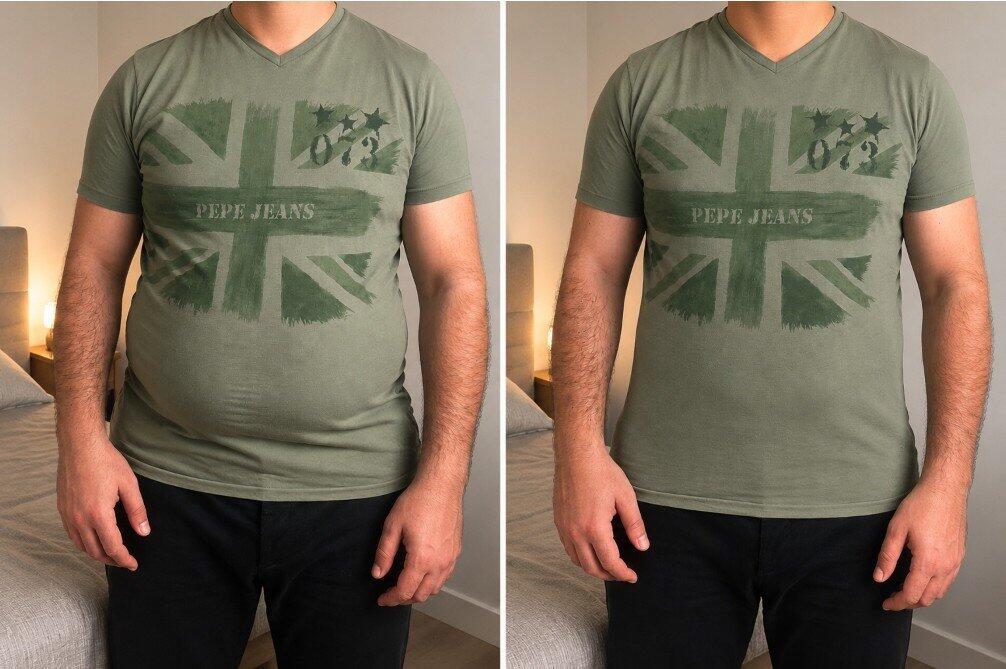
Puffy Nipples in Men: Causes, Stages & What to Do
Last updated: May 2026 · By Mike Sterling
You pulled on a white t-shirt. The fabric felt fine — not tight, not unusual. Then you caught yourself in the mirror at the wrong angle, or worse, in a photo someone took without warning. And there it was. A slight dome at the chest. A rounded forward push through the fabric that wasn't there in your head.
You've probably noticed it before and moved on. You've likely switched shirts without really thinking about why. Maybe it's been there since you were a teenager. Maybe you noticed it more this winter under thinner layers, or when someone's camera flash hit you from the side at an event.
Puffy nipples in men — or male puffy nipples as it's commonly searched — are more common than almost anyone mentions out loud. This is what's actually happening, why some cases stay and some go, and what men actually do about it day to day. No waiting room language. Just honest answers.
Puffy nipples in men are most commonly caused by gynecomastia — glandular breast tissue that develops behind the nipple area — or by localized chest fat, hormonal shifts, or both together. They are rarely dangerous. But they are usually permanent once established, which is why most men eventually shift from waiting for change to managing how shirts sit. The clothing solution is faster than any other option and works the same day.
What Puffy Nipples in Men Actually Are
What you're probably experiencing is this: the nipple-areola area pushes slightly forward — a small dome shape — while the rest of the chest sits more or less flat. It's localized. It's not the whole pec. It's not chest fat spreading broadly. It's specifically that area, and it's most visible under thin fabric, certain lighting, or at a side angle.
That distinction matters. Because what causes localized nipple puffiness is different from general chest heaviness — and that means the approach is different too.
Are puffy nipples in men normal?
Yes — significantly more common than most men realize. Research suggests that between 32% and 65% of men develop some degree of gynecomastia — glandular tissue behind the nipple — at some point in their lives. Peak occurrence: adolescence, and again after 50. The majority of men with male puffy nipples developed the issue during their teenage years. Most never addressed it. Most never talked about it. It exists in a quiet majority that social silence has made feel like a private exception.
You are not unusual. You just noticed it properly today.

The reason it catches your attention today — when it may have been present for years — is almost always a context shift. A different mirror angle. A phone camera from slightly below. A fitted shirt that's thinner than the ones you've been defaulting to. A cold morning where the fabric reacts differently.
The chest didn't suddenly change. The context just made it visible.
The Main Causes of Male Puffy Nipples
There are three root causes — or a combination of all three. Understanding which one you're dealing with changes everything about what happens next.
What causes puffy nipples in men?
Cause 1: Gynecomastia — glandular tissue.
This is the most common cause of puffy nipples male. Gynecomastia is the development of actual breast tissue — firm, glandular — directly behind the nipple. It is hormonally driven. The most common trigger: a shift in the ratio between estrogen and testosterone, which most often happens during puberty.
This tissue is not fat. It behaves differently:
- It feels firmer than surrounding chest tissue
- It sits centrally and specifically behind the nipple — not spread across the chest
- It may feel slightly tender in earlier stages
- It does not reduce with exercise or diet
Cause 2: Pseudogynecomastia — localized fat.
No glandular tissue. Soft fat accumulated in the chest area creates a similar-looking result under fabric. More responsive to body composition changes — but it rarely disappears fully without reaching a very low body fat percentage. And it rarely resolves completely on its own either.
Cause 3: The combination — which is most common after 30.
Glandular tissue from adolescence that never fully resolved, now layered with normal adult fat accumulation. The visual result under a shirt: the same dome. The same thin-fabric problem. Two separate causes producing one consistent daily irritation.

Press gently on the raised area. Firm, circular, centered directly behind the nipple = likely glandular tissue (gynecomastia). Soft, spreads across the broader chest = more likely localized fat. Both textures present = combination, which is the most common adult presentation.
Common hormonal triggers include puberty (affecting up to 70% of adolescent males at some point), natural testosterone decline with age, certain medications — anabolic steroids, some antidepressants, proton pump inhibitors, anti-androgens — and occasionally thyroid or liver conditions. In the vast majority of cases, however, no underlying condition is identified. The tissue developed, stabilized, and stayed.
Is This Gynecomastia — Or Something Else?
Most men searching "puffy nipples men" are not asking whether something is medically wrong. They already suspect gynecomastia or localized fat. What they actually want to know is: which one is it, is it going to stay, and what do I do about it under shirts? That's the real question. Here's how to get there.
Is nipple puffiness the same as gynecomastia?
Not always — but it's the most common cause. Gynecomastia specifically refers to glandular tissue growth. Nipple puffiness is the visible result of that tissue (or fat, or both) pushing the nipple-areola complex forward through fabric. You can have gynecomastia without dramatic visible puffiness. You can have obvious puffiness from fat alone with no glandular component. The terms are used interchangeably in everyday search — technically they're different things, but the practical question is the same: why does my chest look like this under shirts, and what changes that?
For a detailed breakdown of how to tell the difference clinically — and what that distinction changes about your options — the full gynecomastia guide covers the diagnostic criteria, staging, and treatment spectrum in depth.

The practical conclusion most men reach at this stage: if it's been stable for more than two years since it first appeared — it's not going to resolve without action. That's worth knowing. Not as a reason to panic, but as a reason to stop waiting and start making active decisions about how you handle it.
The Three Stages: What You're Likely Experiencing
Gynecomastia-related nipple puffiness progresses through three observable stages. Here's how to identify which one describes you — and what each stage means for your options.
Do puffy nipples go away on their own?
During puberty, yes — around 75% of adolescent cases resolve within two to three years without intervention. After that window closes, the answer shifts significantly. Adult glandular tissue that has been present for more than 18 months is considered stable and fibrosed — very unlikely to reduce without direct intervention. For most men reading this, the tissue has been present since their teens. The answer is: not without doing something about it.
| Stage | What it looks like under a shirt | What you feel when pressing gently | Spontaneous resolution likely? |
|---|---|---|---|
| Stage 1 — Mild | Only visible under thin fabric or in certain light — most shirts fine | Slight firmness directly behind nipple, subtle | Possibly — if onset under 18 months |
| Stage 2 — Moderate | Consistent dome through most fitted shirts — shows in photos | Firm disc-shaped tissue, may be mildly tender | Unlikely after 2+ years |
| Stage 3 — Pronounced | Visible through most fabrics — affects overall shirt silhouette | Established firm tissue, stable, not tender | No — management required |

Why Certain Shirts Make It Worse
Same chest. Completely different result under different fabric. This is not perception — it's physics. And understanding it is the most immediately actionable thing most men can take from this article.
Why do puffy nipples show more under thin t-shirts?
Thin, lightweight fabric — jersey cotton under 120g/sqm, modal, polyester blends — has almost no structural body of its own. It copies whatever sits beneath it. A forward projection of even 5–8mm at the chest registers as a visible dome through these fabrics, particularly under camera flash, side-angled light, or overhead fluorescent lighting.
The thinner the fabric, the higher the fidelity with which it traces your underlying contour.
Shirts that amplify it:
- Thin plain-weave cotton tees (100–130g/sqm) — the most common culprit
- White, pale grey, pale blue — shadow-casting colors that add visual contrast
- Synthetic athletic fits — lycra, polyester, elastane blends that cling actively
- Fitted polos in piqué cotton — surface texture highlights underlying shape
- Washed-out older shirts that have lost structure and stretched slightly
Shirts that manage it better:
- Mid-weight chambray or Oxford cloth — structured enough to hold their own shape
- Heavier jersey cotton (180g+) with enough body to drape rather than cling
- Textured fabrics: linen, brushed twill, herringbone — visual complexity breaks the silhouette read
- Darker base colors: navy, charcoal, olive, black — reduce shadow contrast
- Relaxed cuts through the chest that don't pull against the body
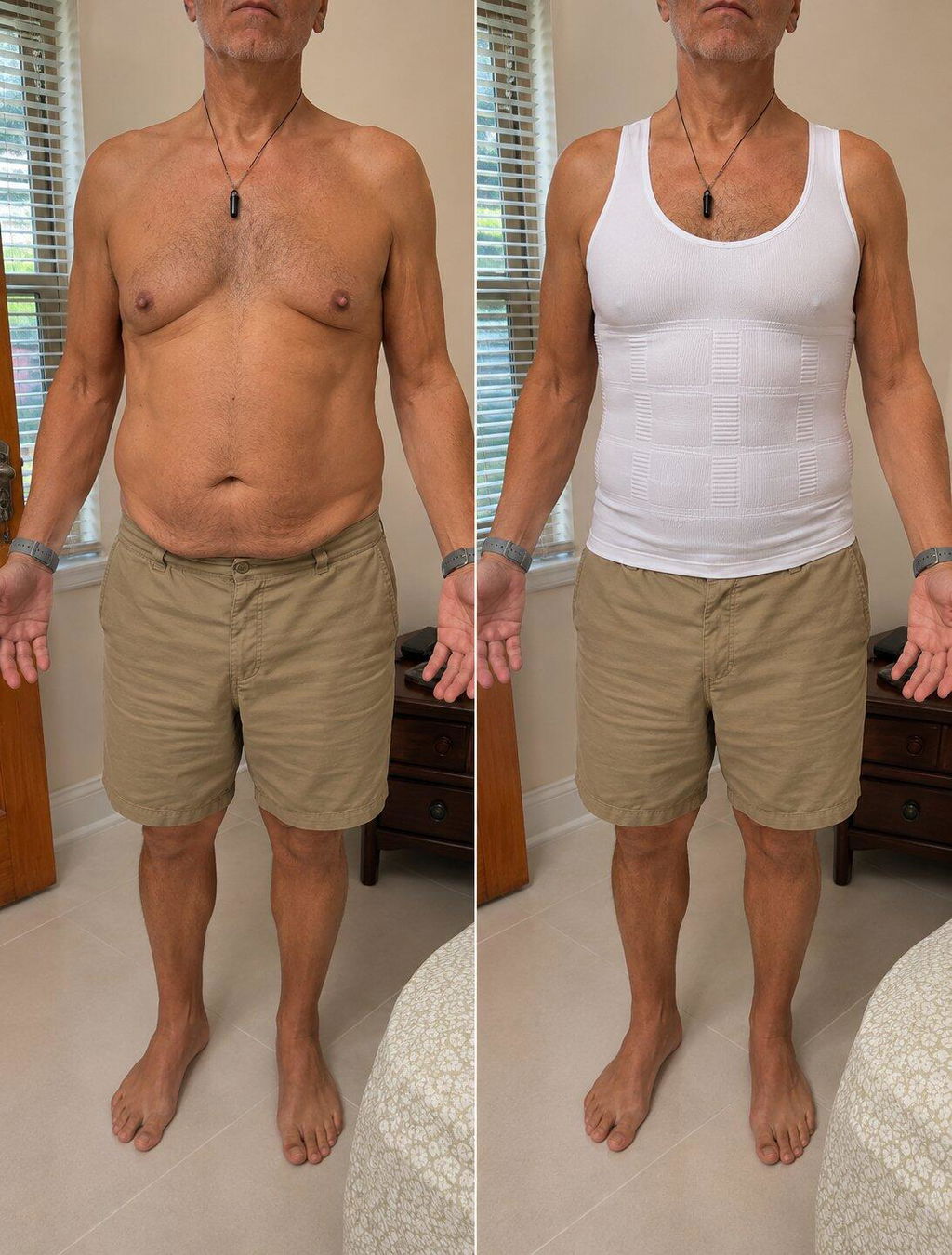
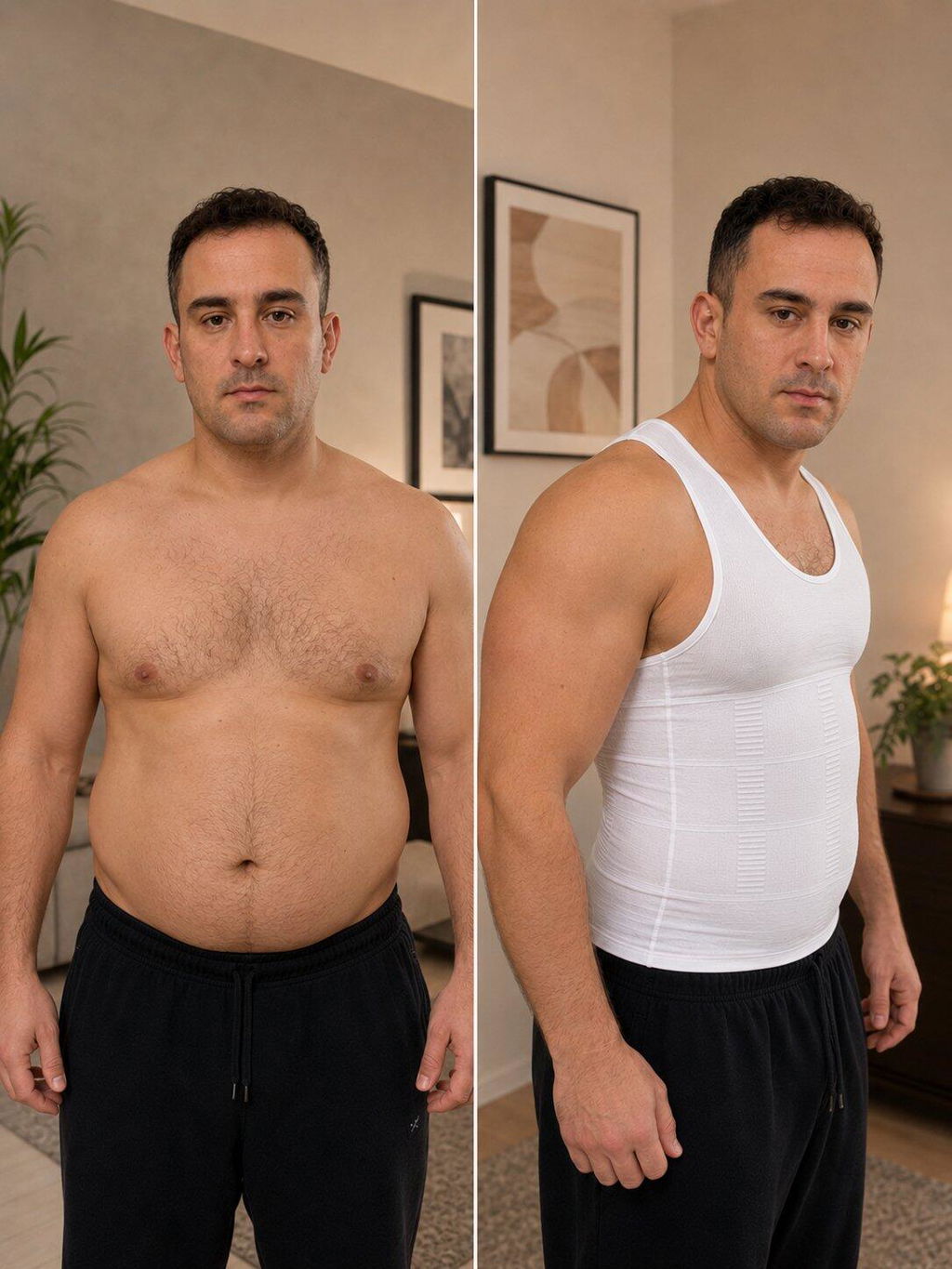
For men who want consistency across every shirt — not just forgiving fabrics — a daily compression shirt designed for chest smoothing under clothing becomes the more scalable solution.

Here's the problem with relying entirely on fabric and shirt selection: your wardrobe quietly becomes a system of workarounds. You stop reaching for the shirts you actually want. You default to navy without asking yourself why. The calculation runs automatically every morning — "does this shirt show it?" — before you've finished your coffee.
That daily cognitive overhead is quiet. But it accumulates. And it's exactly why most men who've dealt with this long-term eventually stop managing their wardrobe around the problem and start managing the problem directly.
What Actually Helps — And What Doesn't
You've likely already tried or considered most of the options. Here's an honest account of what each one can and cannot do — because the answer depends almost entirely on whether your puffiness is glandular, fat-based, or both.
Can you get rid of puffy nipples without surgery?
For glandular tissue — no, not permanently. Exercise is one of the most persistent misconceptions here. Chest-specific training builds the pectoral muscle beneath the tissue, which can improve the overall chest contour. But it cannot dissolve or shrink glandular breast tissue. The tissue is not metabolically active in the way fat is. Incline presses, cable flyes, push-up variations — none of these address the glandular disc that creates the projection.
For fat-dominant pseudogynecomastia — yes, body composition changes can help significantly. Reducing overall chest fat through sustained caloric deficit can reduce the volume and improve the appearance considerably. But this rarely resolves completely, and it requires reaching a body fat percentage most men don't maintain year-round.
| Approach | Genuinely works for | Does not work for | Timeline |
|---|---|---|---|
| Exercise + fat loss | Fat-dominant pseudogynecomastia, overall chest contour improvement | Established glandular tissue | Months to years |
| Surgery | Permanent removal of glandular tissue — definitive result | Not suitable or financially accessible for everyone | Weeks recovery |
| Compression layer | Immediate visual flattening under any shirt — same day result | Permanent tissue change — effect ends when removed | Immediate |
| Shirt selection only | Moderate reduction in visibility through fabric choice | Consistent across all shirts — restricts wardrobe long-term | Immediate but limited |
The reason compression becomes the practical answer for most men is not that it's the ideal solution in a vacuum — it's that it's the only option that works immediately, requires no lifestyle change, and applies equally to every shirt in your wardrobe. You are not solving the underlying tissue. You are solving the daily shirt problem. Those are two different goals, and they don't need to be resolved simultaneously.
If you're weighing immediate appearance management against permanent removal, our comparison of compression vs surgery for gynecomastia breaks down what each option realistically changes — and what it doesn't.
We hear from men regularly who have had this since their teens — some in their 20s, some well into their 40s — who spent years adjusting their wardrobe around it before finding that a compression layer under a fitted shirt was the first thing that actually made the problem disappear on the same day they put it on. Not managed. Disappeared — as far as the shirt was concerned.
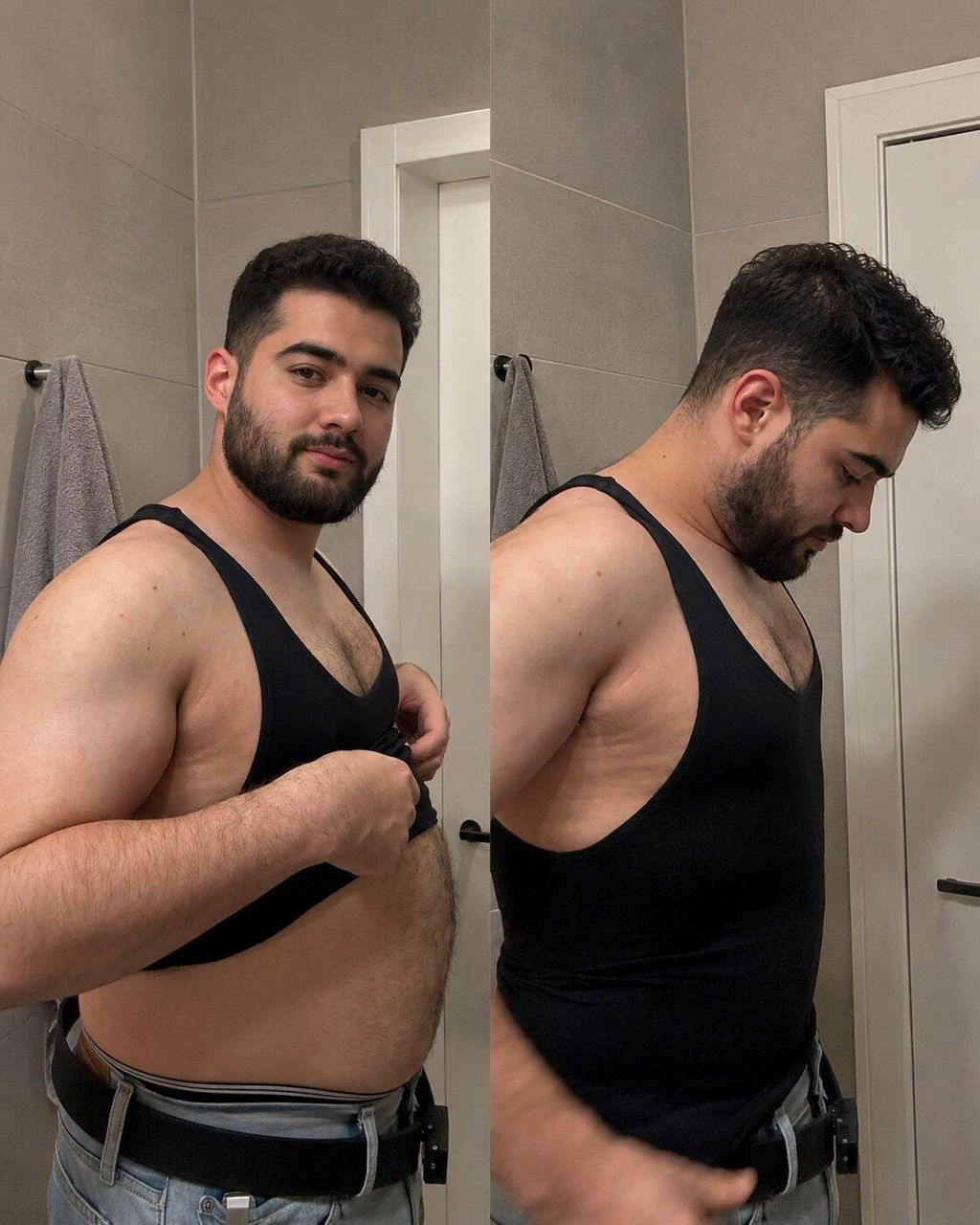
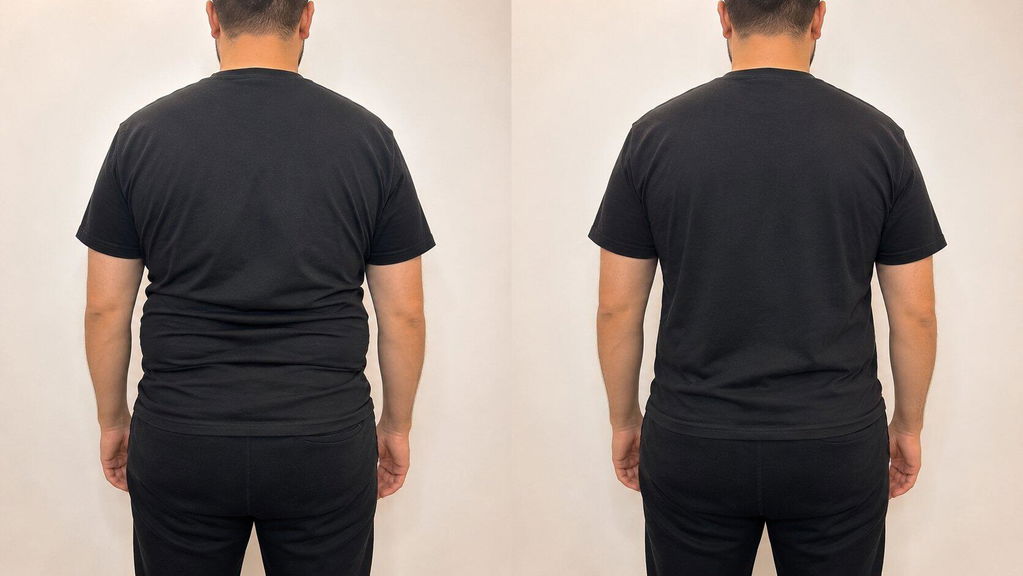
A compression base layer gives the outer shirt a flat, even surface to sit on — instead of tracing whatever is underneath. The chest area stops being the first thing you assess every morning. See how men who deal with this handle it in daily wear with compression.

Find a Shirt That Actually Handles It
VEROSHAPE creates a flat compression base layer under any shirt — fitted t-shirt, dress shirt, polo — so the chest area stops projecting through fabric. Built for daily wear, not gym sessions. Invisible under a fitted shirt. Works the first time you wear it.
Find a shirt that actually handles it →What To Do Starting Today
This is the part where most articles send you to a GP referral or a 12-week training program. That's not wrong — but it's not the most useful answer for the Tuesday morning when you're trying to wear a fitted shirt to work.
Here is what's actually actionable, in order of immediacy:
- Identify what you're dealing with. Stable, present since your teens, firm tissue behind the nipple = almost certainly established gynecomastia. Soft, broad chest fullness = more likely fat-dominant. The self-check described in Section 3 is enough to orient you without a clinical visit for most cases.
- Separate the clothing problem from the tissue question. They're two different timelines and two different decisions. The appearance problem — fitted shirts not sitting flat — has an immediate solution. The underlying tissue question has its own timeline (medical review, surgical consultation, or long-term acceptance). You do not need to resolve one before addressing the other.
- Stop managing it with wardrobe restriction. Defaulting to baggy, avoiding thin fabrics, rotating away from white tees — this is avoidance, not management. A compression layer built specifically for this handles the problem across every shirt in your wardrobe, not just the forgiving ones.

Continue Reading
Puffy Nipples vs Gynecomastia: What's the Actual Difference?
Now that you know the causes and stages, here's exactly how to determine which category applies to you — and why the distinction changes the approach.
Read the guide →Frequently Asked Questions
What exactly causes puffy nipples in men?
The most common cause is gynecomastia — glandular breast tissue that develops behind the nipple area, driven by a hormonal shift in the estrogen-to-testosterone ratio. This most often occurs during puberty and in many cases remains permanently. A second cause is pseudogynecomastia — localized fat accumulation in the chest area, which produces a similar appearance. Most adult men with this concern have a combination of both: glandular tissue from adolescence layered with normal adult fat. Medications (some antidepressants, steroids, anti-androgens), testosterone decline with age, and rarely thyroid or liver conditions can also contribute.
Do puffy nipples ever go away without treatment?
During puberty, approximately 75% of cases resolve within two to three years without any intervention. Once glandular tissue has been present for more than 18 months, it is considered stable — the tissue has matured and fibrosed and will not reduce on its own. For men whose nipple puffiness developed during their teens and is still present as adults, spontaneous resolution is not a realistic expectation. The question shifts from "will it go away?" to "how do I manage how shirts look in the meantime?" — which is where clothing solutions become the most immediately useful answer.
Is it just me — or is this actually common?
It is significantly more common than it feels. Research suggests gynecomastia affects between 32% and 65% of men at some point — with the highest incidence during adolescence. The reason it feels uncommon is that it's almost never discussed openly. It exists inside a social silence that makes every man feel like a private exception. In reality, millions of men make quiet wardrobe decisions around this every day without ever naming it. The isolation created by that silence is not an accurate picture of how widespread male puffy nipples actually are.
Can I wear fitted shirts when I have puffy nipples?
Yes — with the right base layer underneath. A fitted shirt worn directly over the chest traces the contour of whatever sits beneath it, particularly in thin fabrics or light colors. A compression undershirt worn underneath creates a flat, even surface for the outer shirt to sit on — effectively neutralizing the forward projection through fabric. The compression layer adds no visible bulk and sits invisibly under most necklines. This approach lets you wear the fitted shirts you actually want to wear, rather than managing your wardrobe around the problem indefinitely.
Is compression better than just choosing different shirts?
Shirt selection helps at the margins — heavier fabric, darker colors, textured weaves all reduce visibility. But relying on it exclusively means your wardrobe becomes a set of permanent workarounds. You stop wearing certain shirts not because you choose to, but because you've been trained out of them. A compression layer solves the same problem across every shirt in your wardrobe — thin white tee, fitted dress shirt, summer polo — without restriction. For most men who've dealt with this for years, switching from fabric management to compression is the first time the problem feels solved rather than accommodated.
Will exercise get rid of puffy nipples?
It depends on the cause. For fat-dominant pseudogynecomastia, significant fat loss can reduce the volume and improve appearance considerably. Chest-specific training also builds the underlying pectoral muscle, which can improve the overall chest contour. However, exercise cannot dissolve or shrink glandular breast tissue — the firm disc behind the nipple that is the most common cause of localized puffiness. If glandular tissue is present, no amount of incline pressing or cable flyes will change its size or position. The tissue is not metabolically active in the way fat is.
Is surgery the only permanent solution?
For glandular tissue, yes — surgical excision (male reduction mammoplasty) is the only intervention that permanently removes it. Liposuction alone is insufficient when glandular tissue is present; the glandular disc requires direct excision. Surgery has a high patient satisfaction rate, but it involves recovery time (typically one to two weeks), cost (£3,000–£6,000 in the UK, $5,000–$8,000 in the US privately), and surgical risk. Many men choose not to pursue surgery and manage the appearance through compression and clothing — a completely valid decision that requires no justification.
What compression shirt works best for puffy nipples?
The most effective option for daily wear is a mid-compression tank with full torso coverage, flat seams, and a cut low enough to be invisible under most necklines. Sport compression is too restrictive for 8–12 hours of daily wear and often creates its own visible lines. The VEROSHAPE Compression Tank was designed specifically for this use case — firm enough to flatten chest projection under a fitted shirt, comfortable enough for an entire work day, and constructed to give the outer shirt a smooth, even surface rather than tracing the chest's underlying contour. It works the first time you wear it.
You've Done the Research. Here's the Next Step.
Most men reading this have had this question quietly for months or years. The practical answer — a compression layer that makes fitted shirts sit flat today — doesn't require a waiting room or a training program. It works the same day.
See the VEROSHAPE Compression Tank →